Since I planned to weave with my loose spun Herdwick which wouldn’t be strong enough as a warp (not to mention being too thick to fit through any of my reeds), I decided I would use a commercial yarn as the warp and would make a breed study square before my project as a sample to test how the yarns behaved. I picked up some grey commercially spun yarn cones from EAYF 2023, which judging on their coarseness and colour are probably Herdwick or a Herdwick blend, so thought they would make a perfect warp, particularly since my handspun Herdwick was a lighter cream colour.
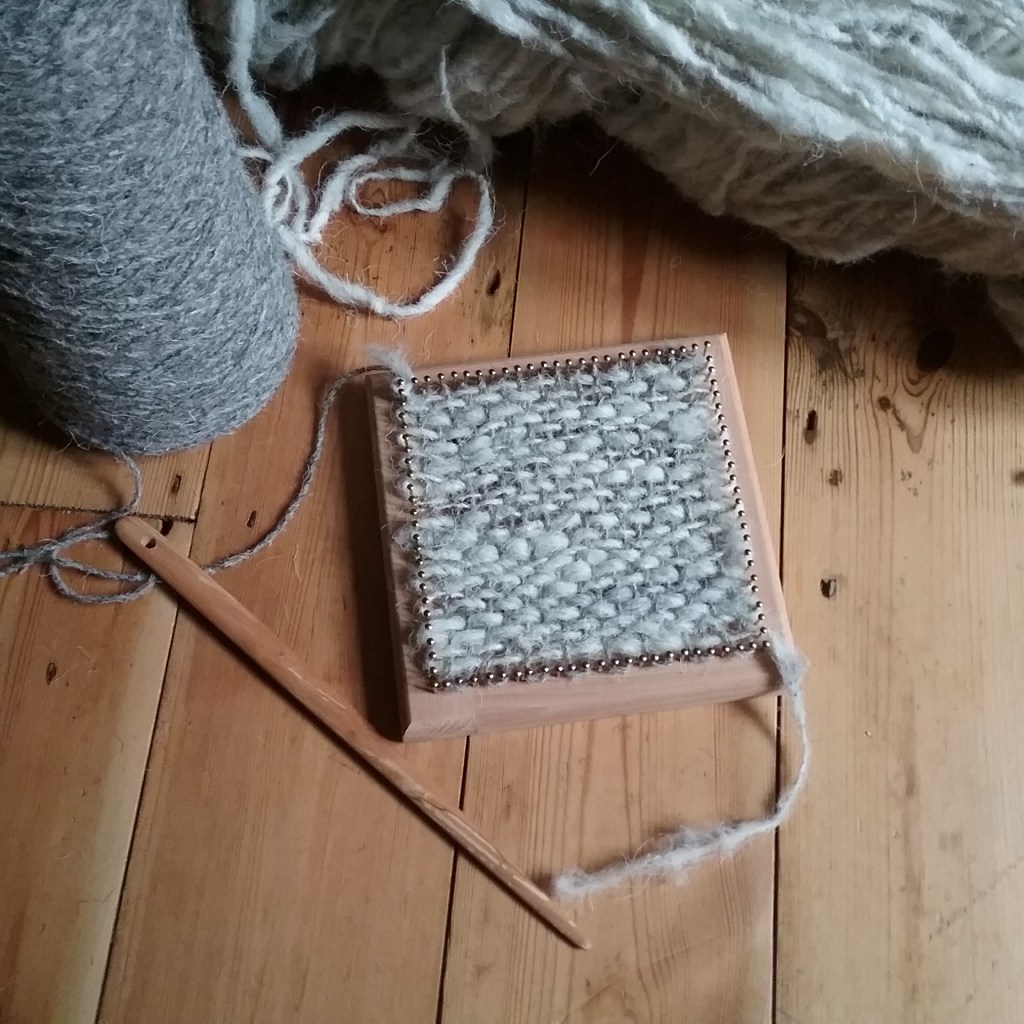
I made a simple warp on my pin loom, passing my warp yarn around 2 pegs each time and missing one either end so the warp would be wider and the handspun more dominant in the weave (you can just about see in the photo below). I then repeated the process with the weft yarn threaded through a large weaving needle, which was pleasant enough to begin with, but became challenging as I neared the other end of the pin loom where my needle was too thick to pass through, so I had to do my best with a tapestry needle that had a very small eye!
Completed Herdwick Breed Square on the Pin Loom
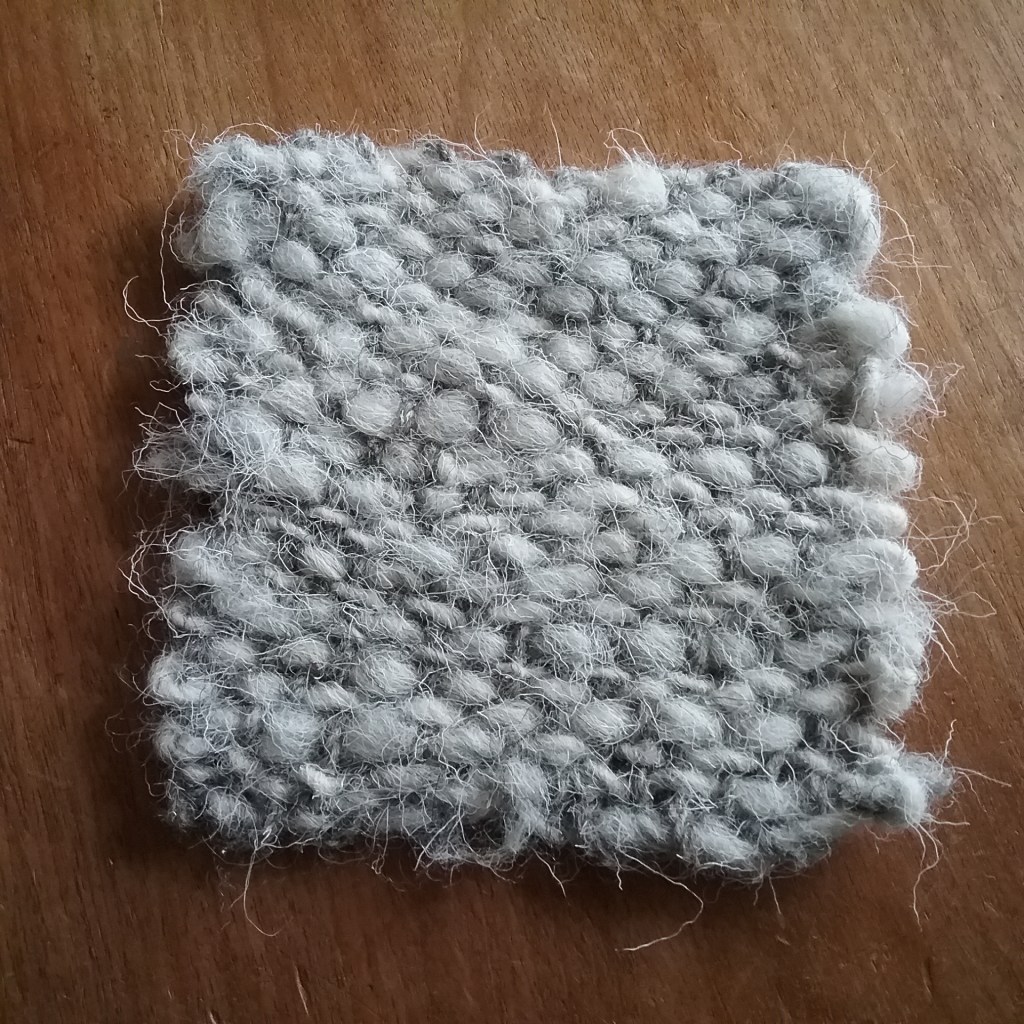
Although I loved the look of the sample (it reminds me of drystone walls, which is quite appropriate considering Herdwicks originate from the Lake District), I was worried that it wouldn’t hold it’s structure after coming off the loom, however after washing, the weave tightened up (as shown in the top photo) and I was happy to move onto my rigid heddle loom for the final project…
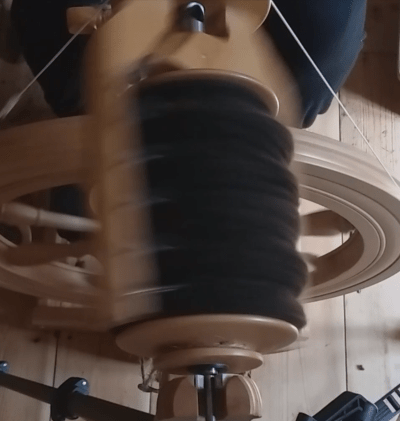
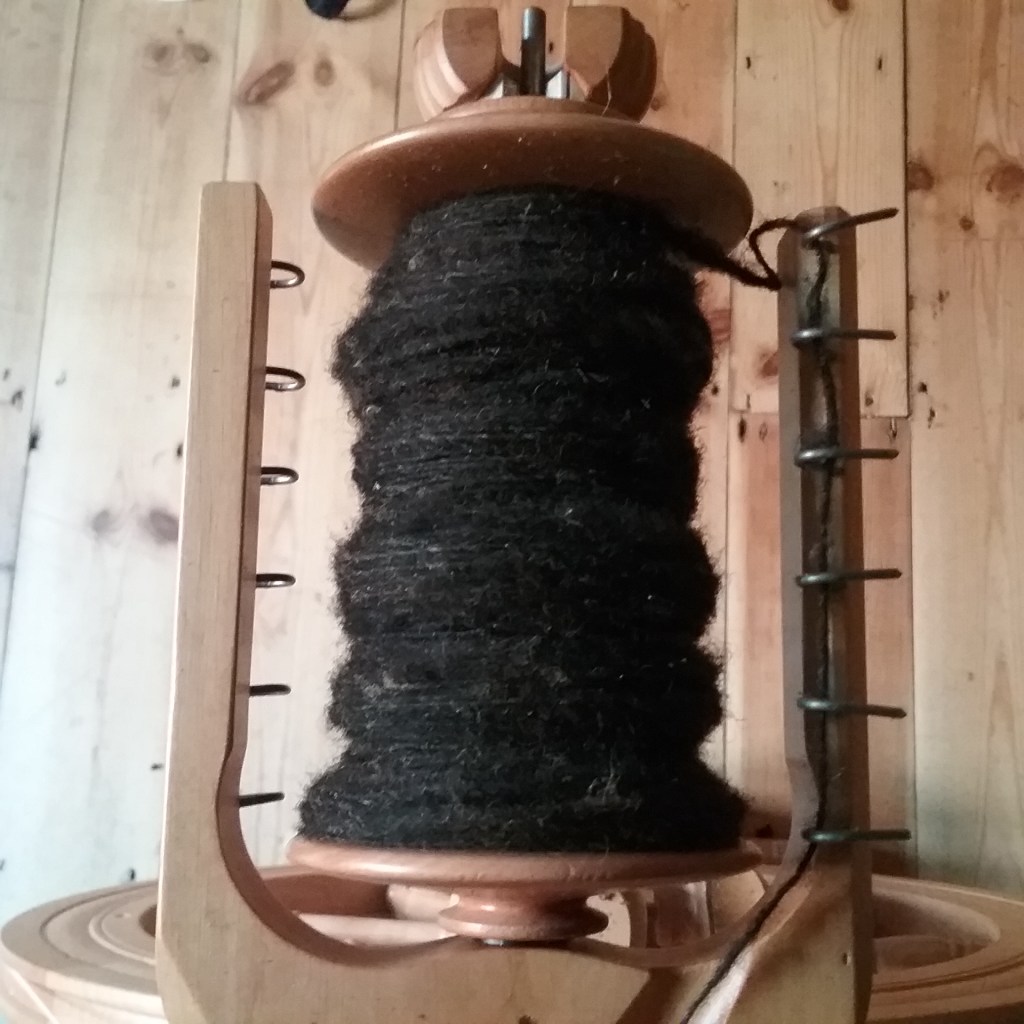
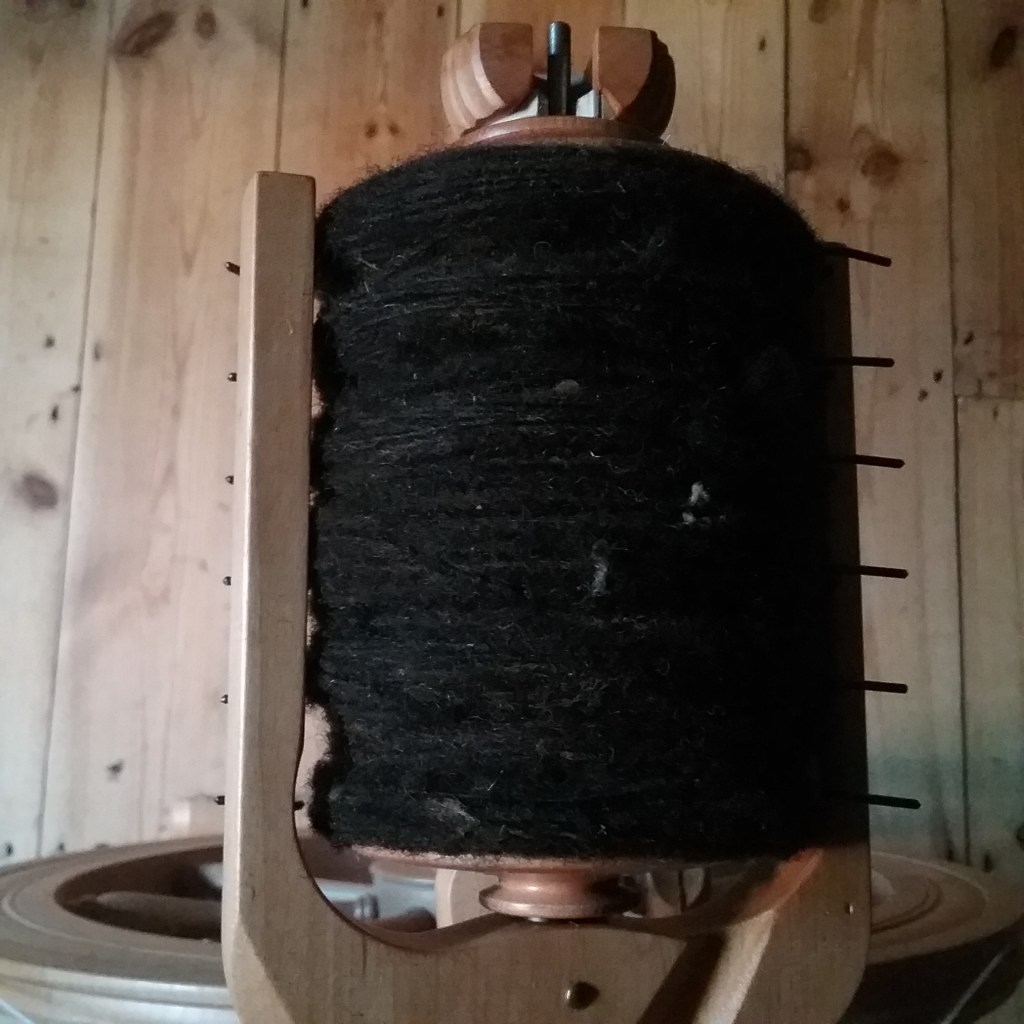
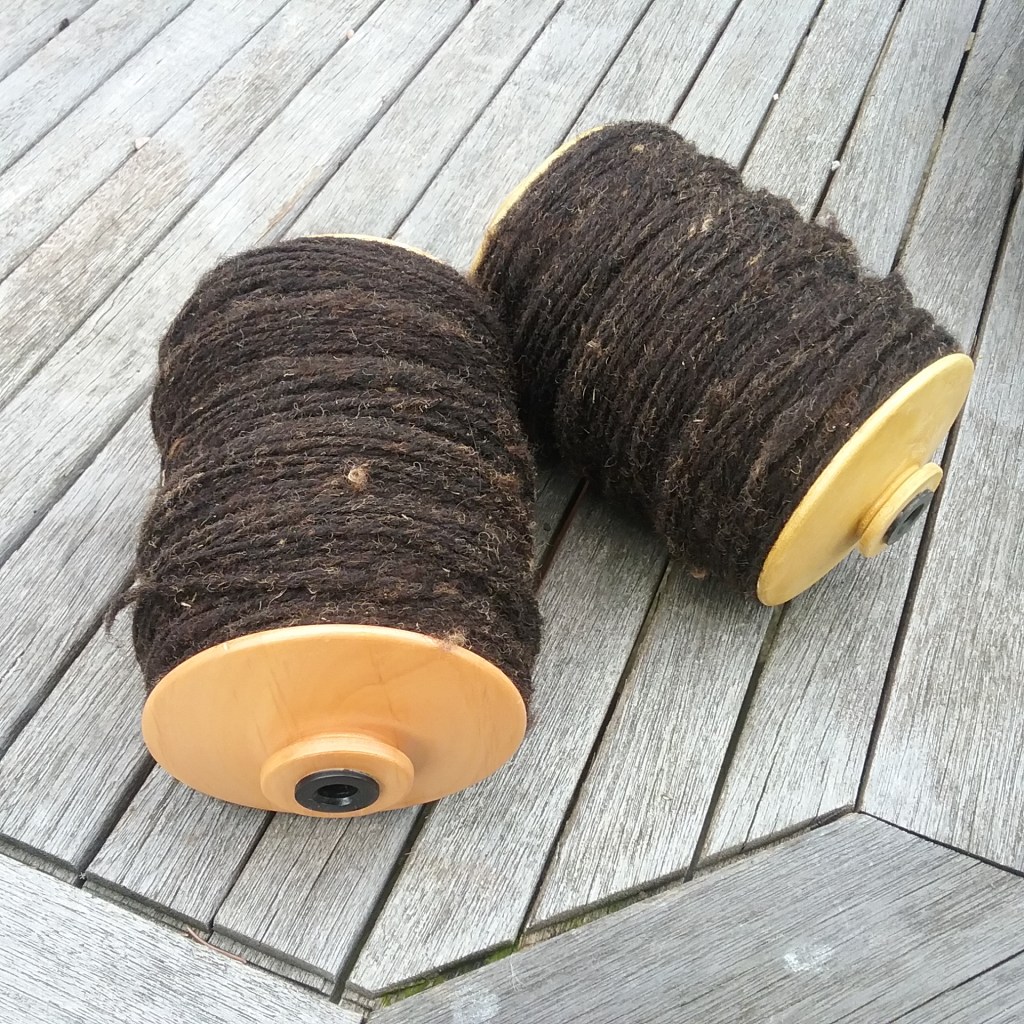
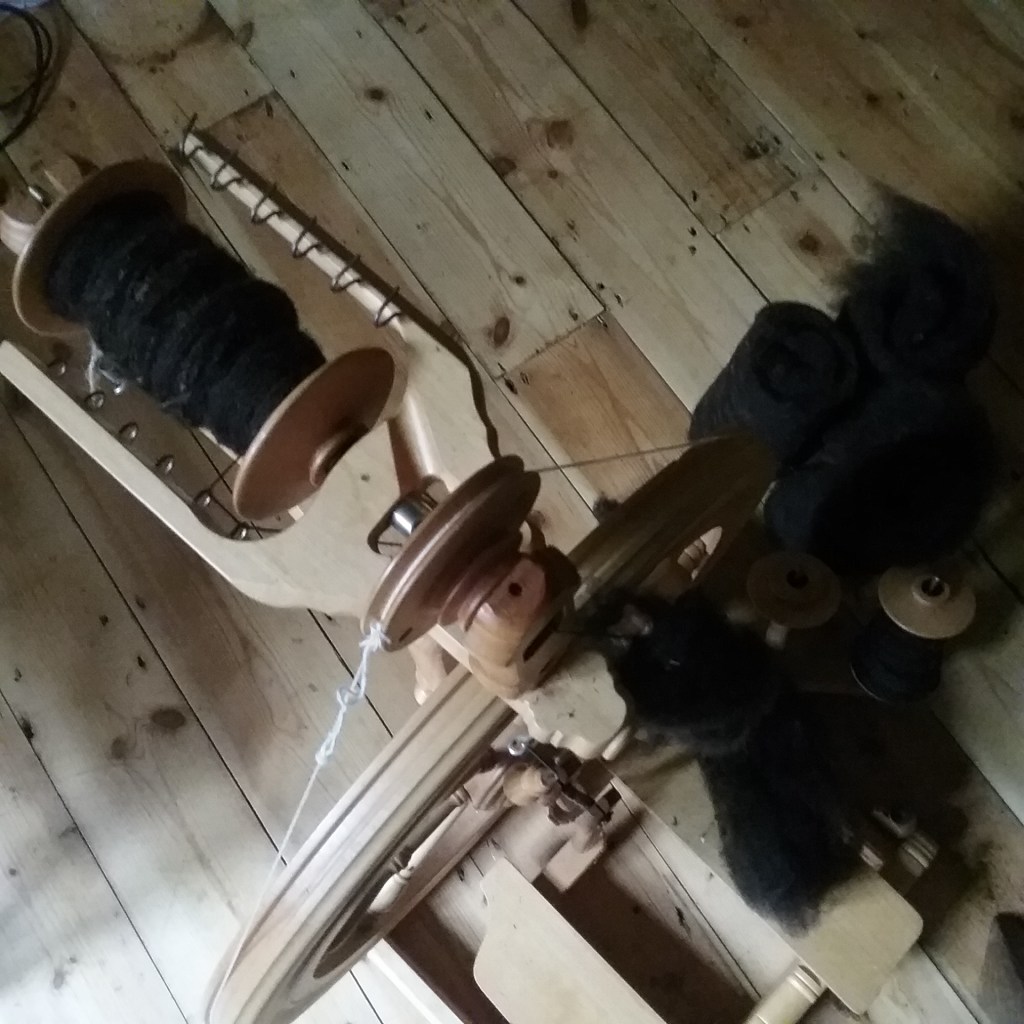
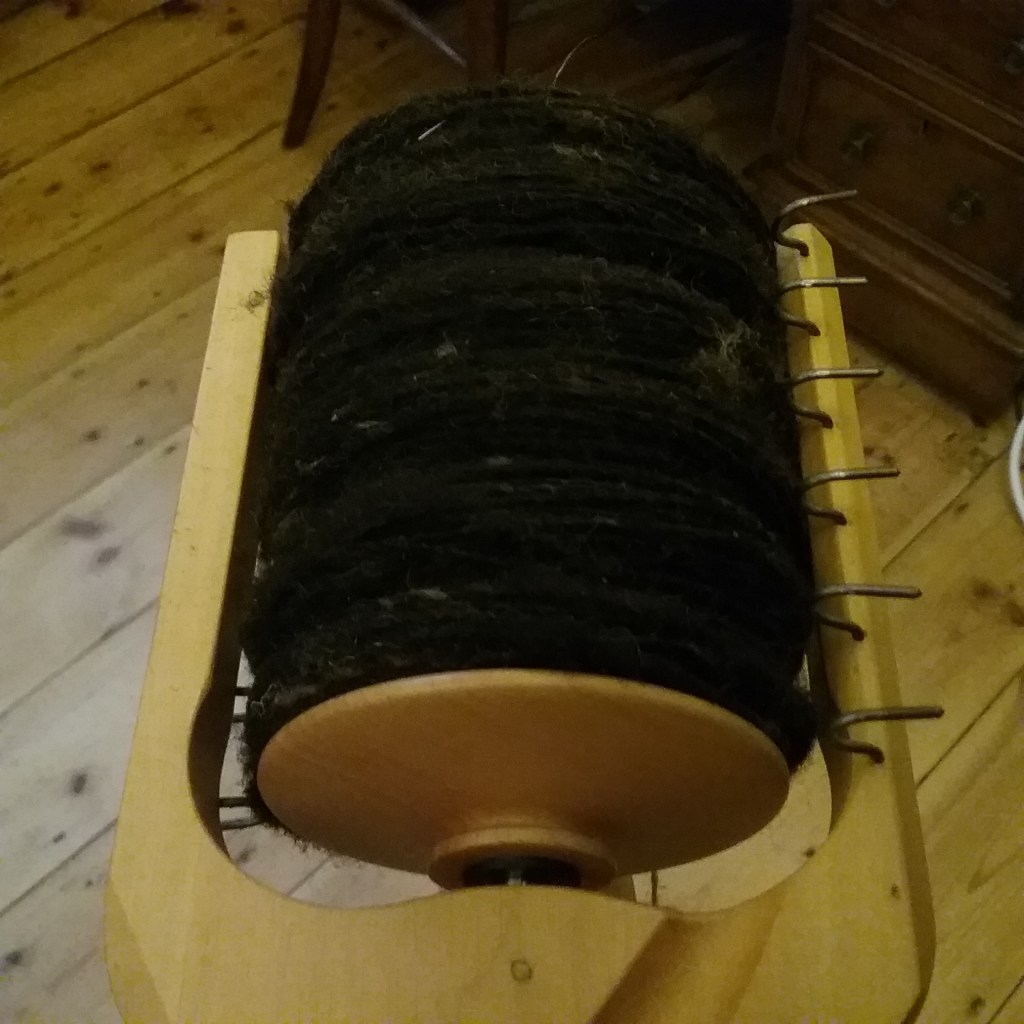
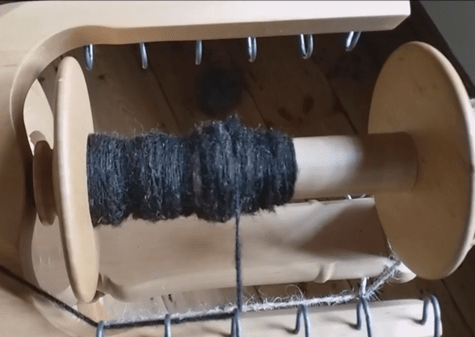
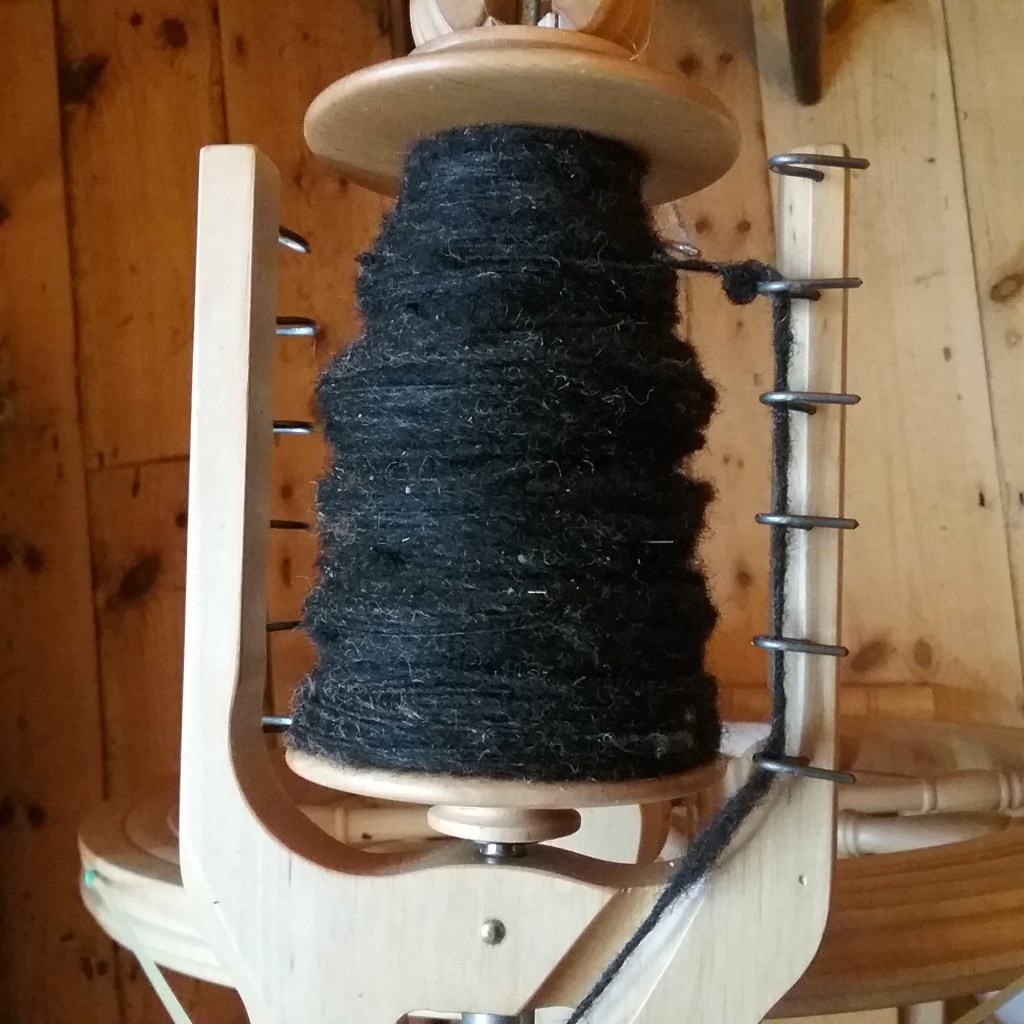
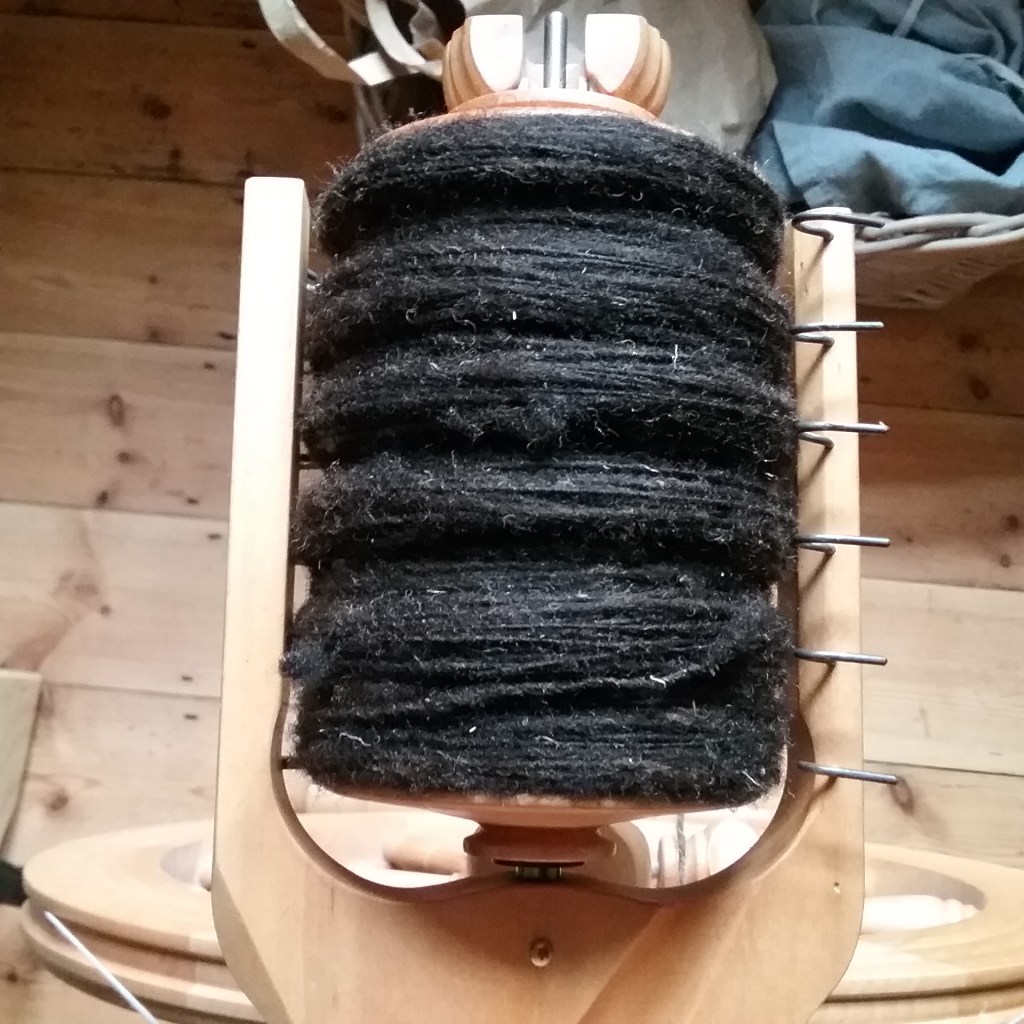
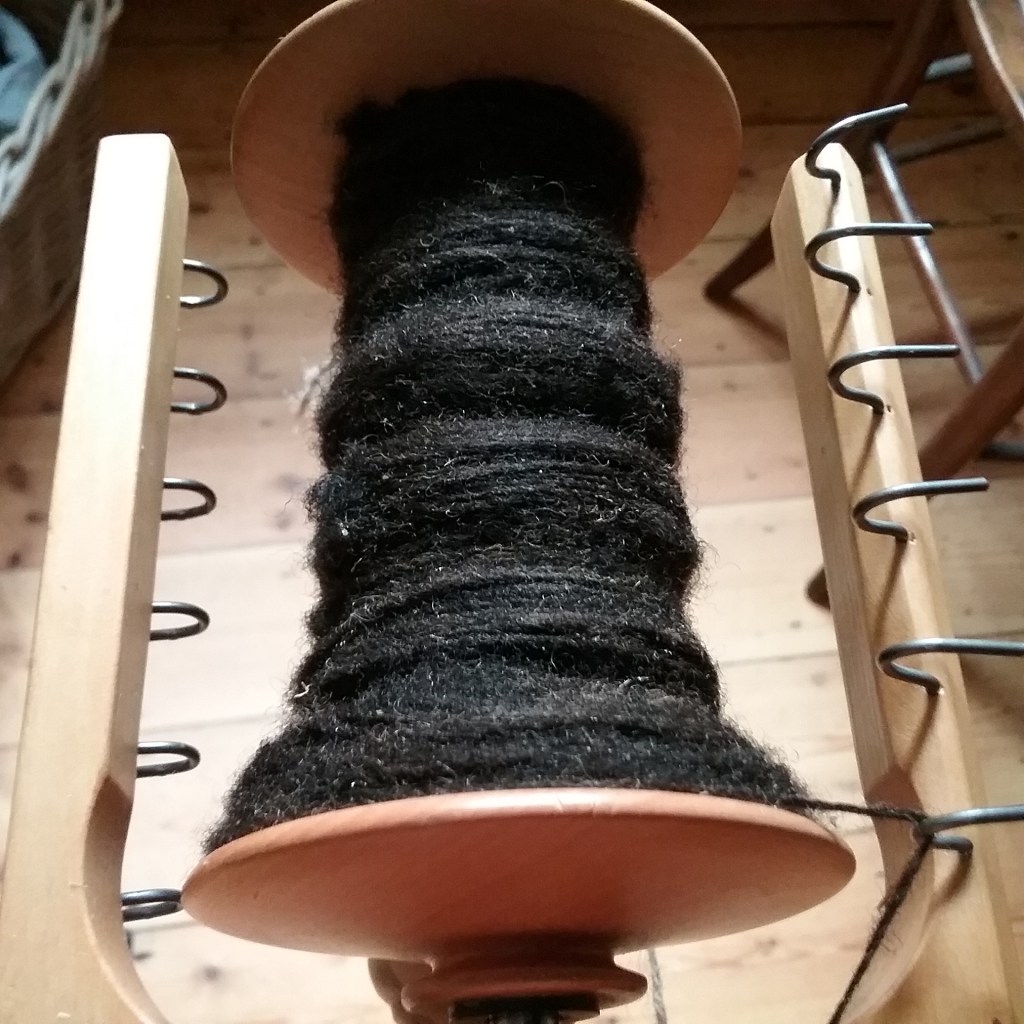
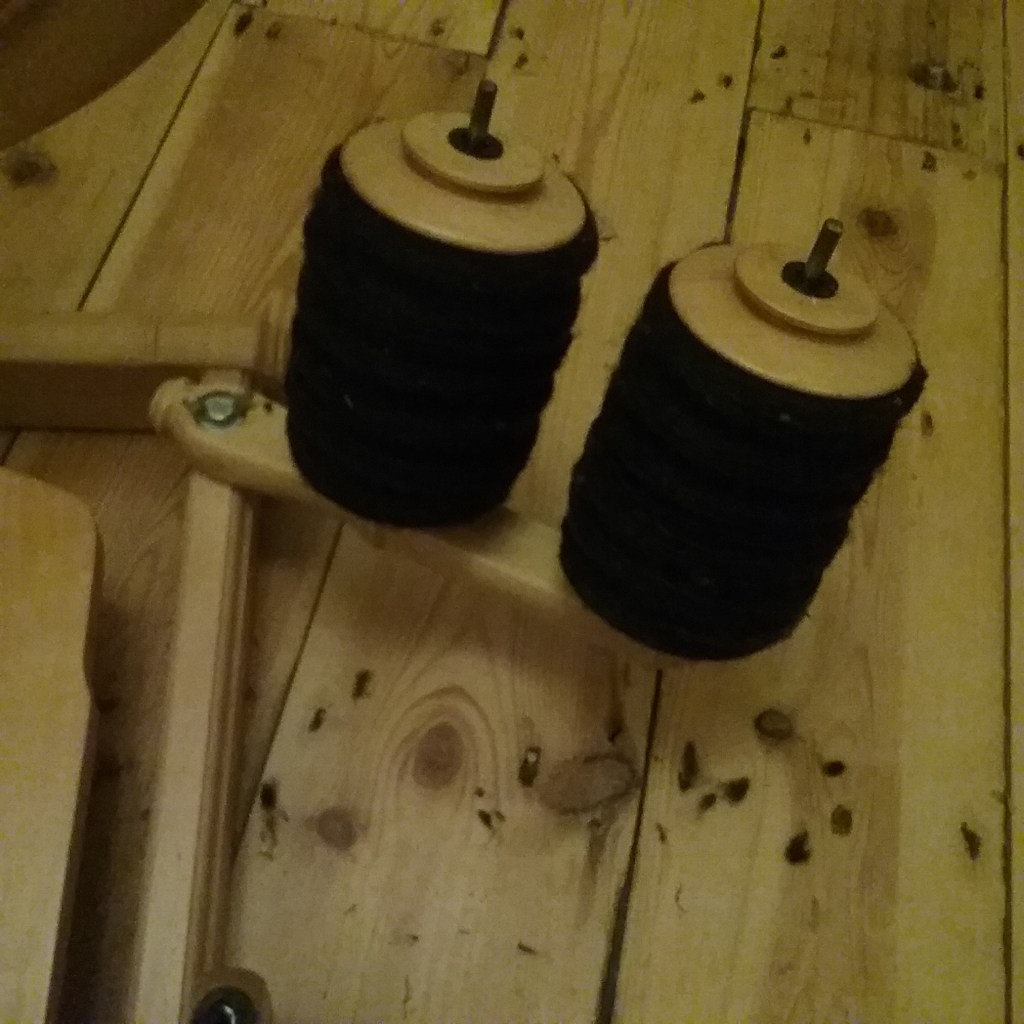
My aim for this project was to turn the Herdwick into a rug, utilising the softness of the fibre, while tapping into the hardwearing nature of the fibre that is utilised commercially. I used the jumbo flyer on my Ashford wheel, spinning torn strips of batt very loosely, letting the fibre draft how it wanted, slubs and all. After spinning fine yarn recently, this made a nice change, however I struggled at times to get the balance between tension and uptake on the wheel, particularly as the bobbin filled (the video below was filmed before I noticed that I’d left the orifice reducer in – I did take it out as soon as I noticed and it did make the uptake of slubby sections a little easier!)
Below is a video of some of the Herdwick spinning on the jumbo flyer:
Setting the Twist
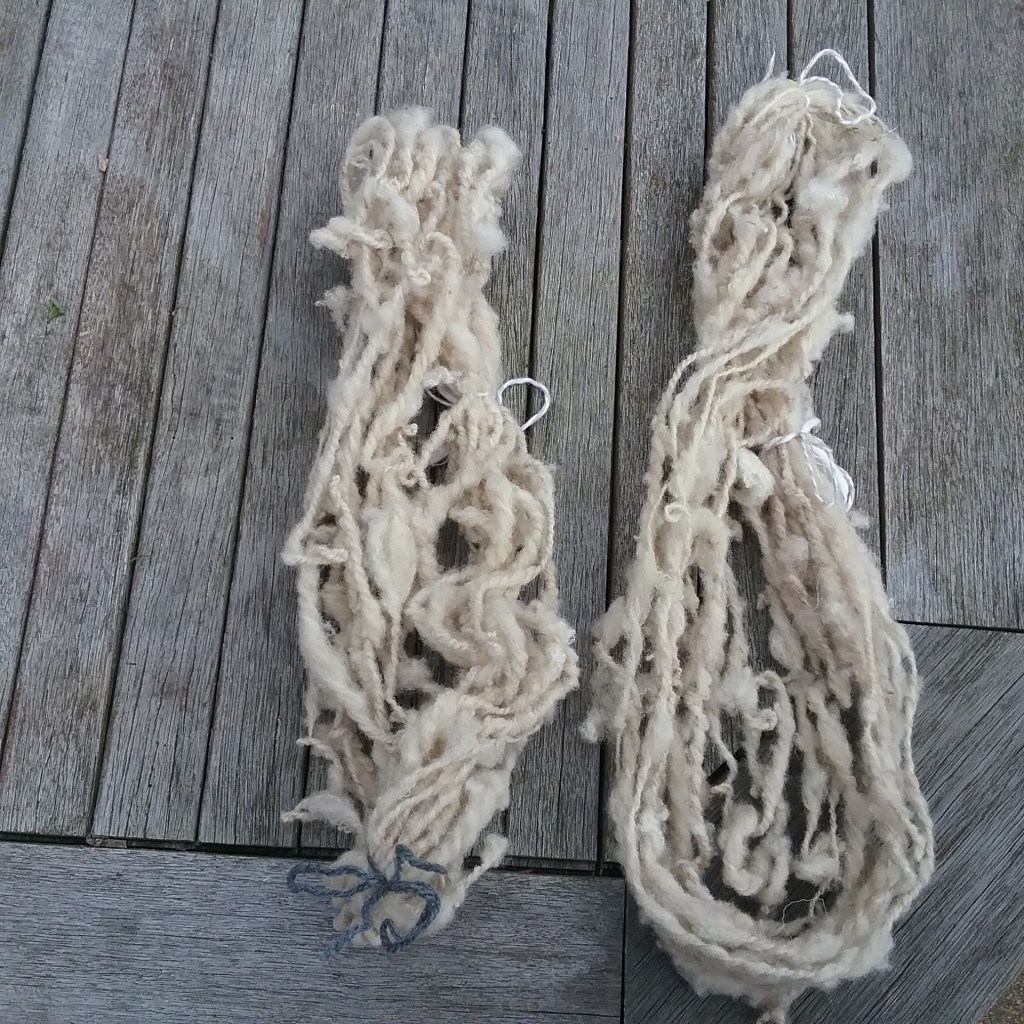
Since I didn’t want to ply these skeins, I washed them in quite hot soapy water and gave them a little agitation in the hope that they would slightly felt together and become more hardy. The internet seems to suggest that Herdwick felts quite readily, however, I found that although several fibres were a little stuck together, it didn’t seem to be particularly felted. Since it was spun loose, the overcoat had a tendency to shed everywhere (I’m still finding bits of Herdwick around the house!), but the undercoat held together well and I imagine that spinning the fibres tighter would have anchored the shorter, coarser fibres in better.
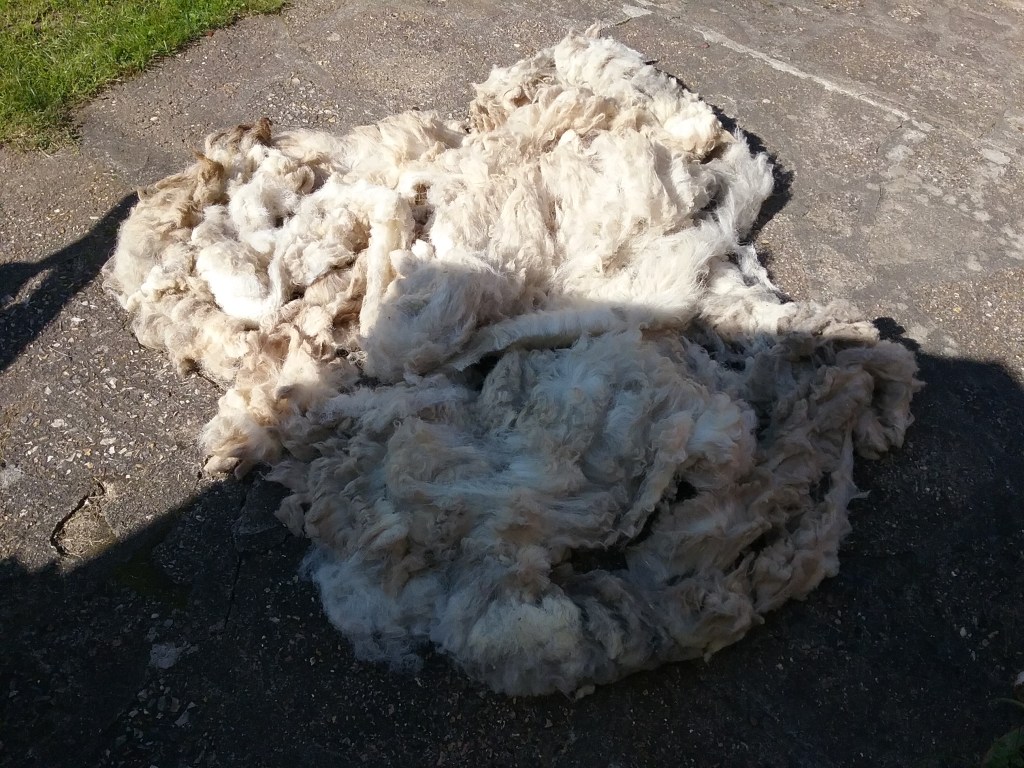
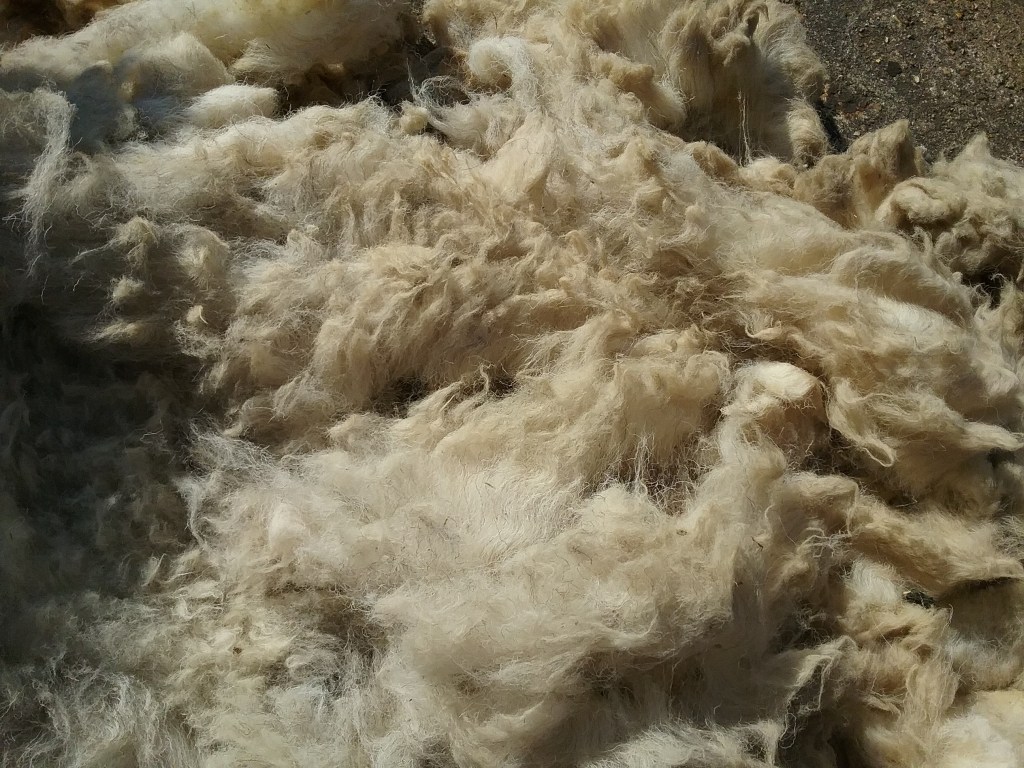
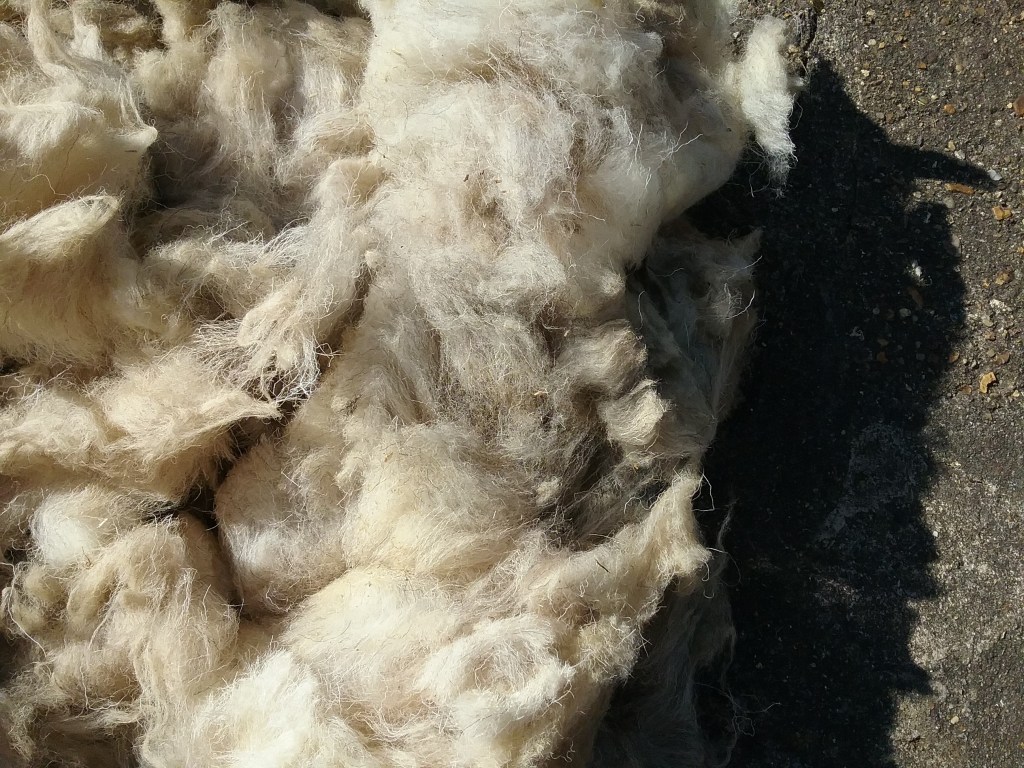
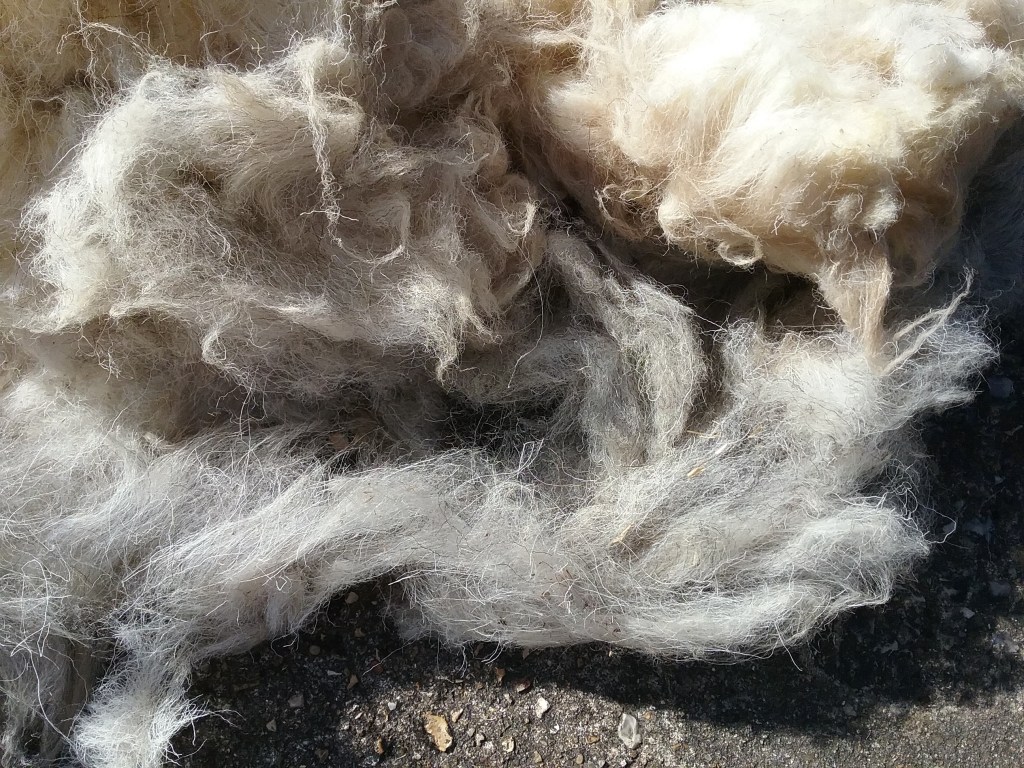
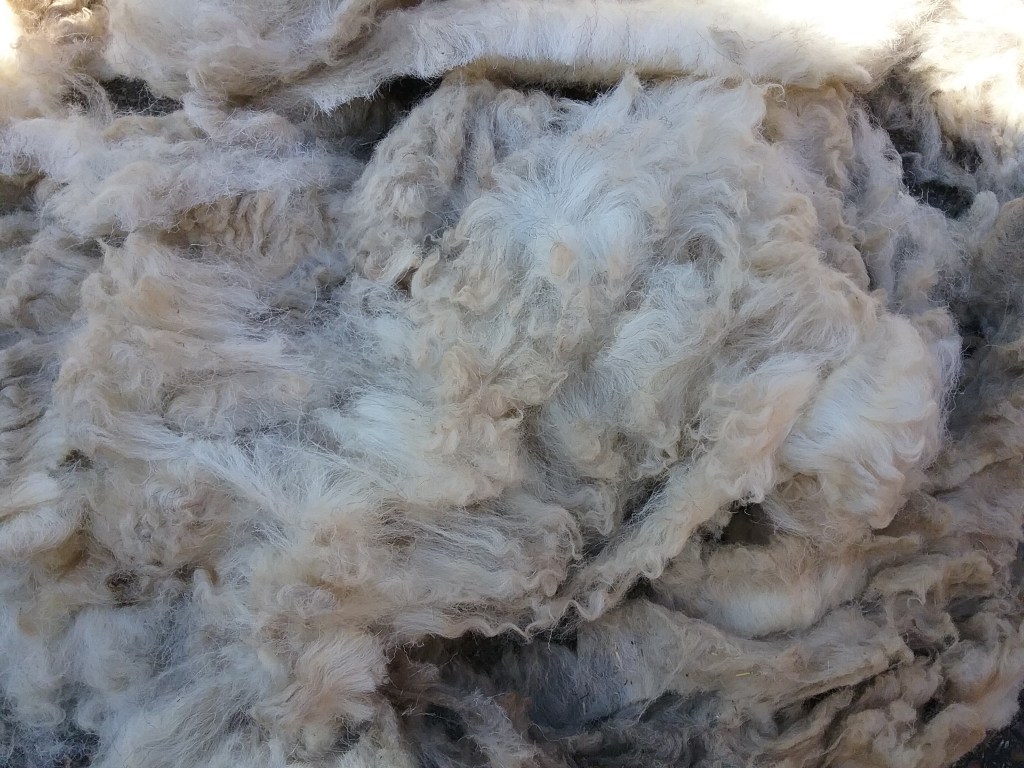
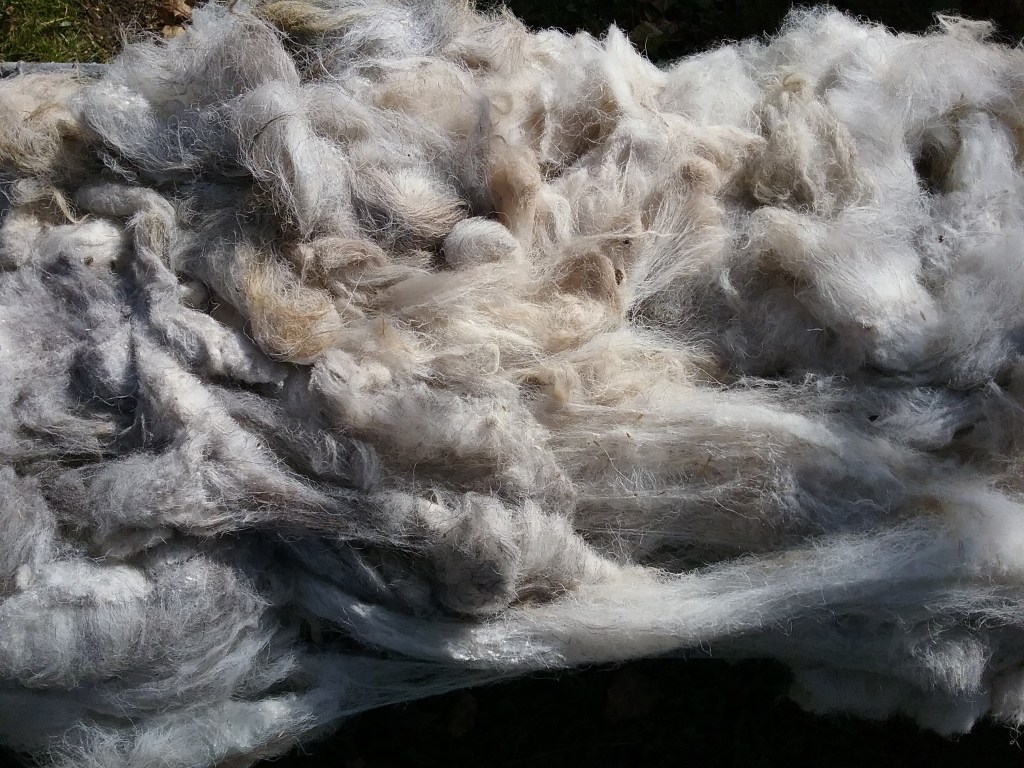
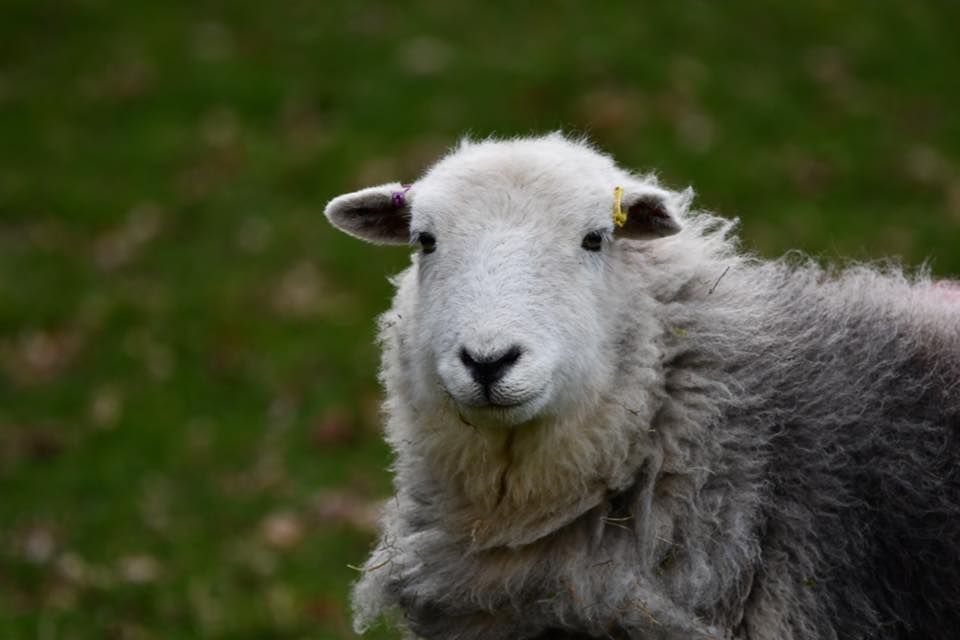
This fleece was an unexpected acquisition to my stash. I sent a fellow crafter a scanned copy of a vintage sewing machine manual, we got chatting about crafts and it turned out they kept Herwick sheep and wanted to send me some wool as a thank you, so a while later I received a fleece sized package in the post! It’s taken me a while to get round to working with it, so Herdy Lodge if you’re reading this, I hope I’m doing your fleece justice! Herdwick sheep come in varied shades and this one was a beautiful oatmeal with a grey and white overcoat. It wasn’t overly greasy and was fairly free of large VM so didn’t need much skirting before washing.
Close up of the Herdwick fleece
Washing
I used the suint bath which brought it up well, however I washed this in late summer and the weather turned very wet, so I had to forgo a rinse in fresh rainwater in the interests of getting it dry for storage over winter. I was a little worried that the fleece might retain more of the suint smell when I began working with it; there was a smell slightly different to just sheep, but it wasn’t overpowering or particularly unpleasant and has gone completely after washing to set the twist.
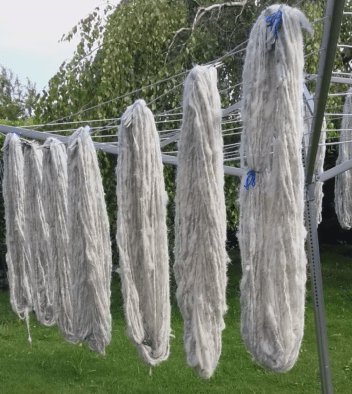
Herdwick Fleece drying after the suint bath
Picking & Carding
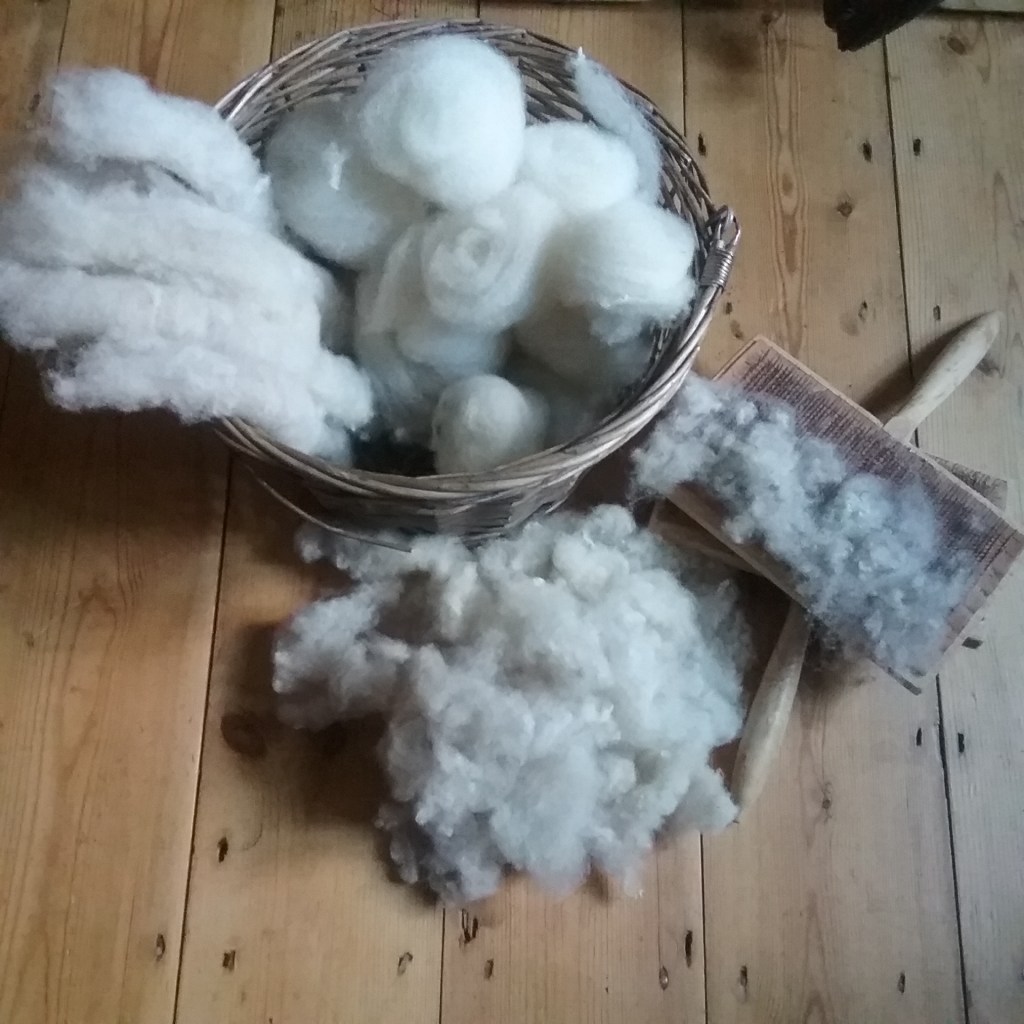
Even after washing there’s always a lot of dust, so in the interests of opening up the fibres I decided to put the fleece through the wool picker. I had also decided that I wanted to spin the fibre loosely from a batt and passing it through the wool picker would make it easier to put on the drum carder.
Disclaimer – In the video my wool picker is only clamped to the back of the chair it’s resting on, which is not the safest. If you are using a wool picker please ensure it’s secured safely.
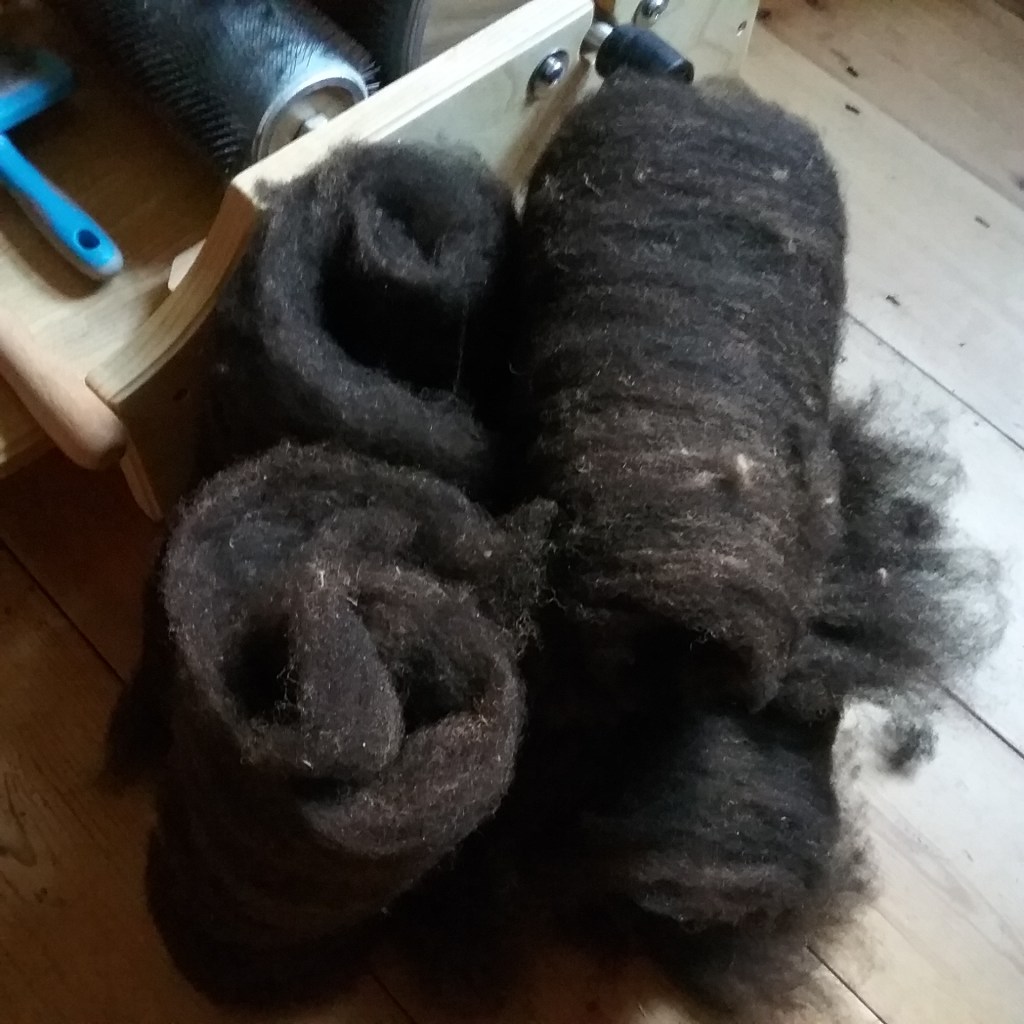
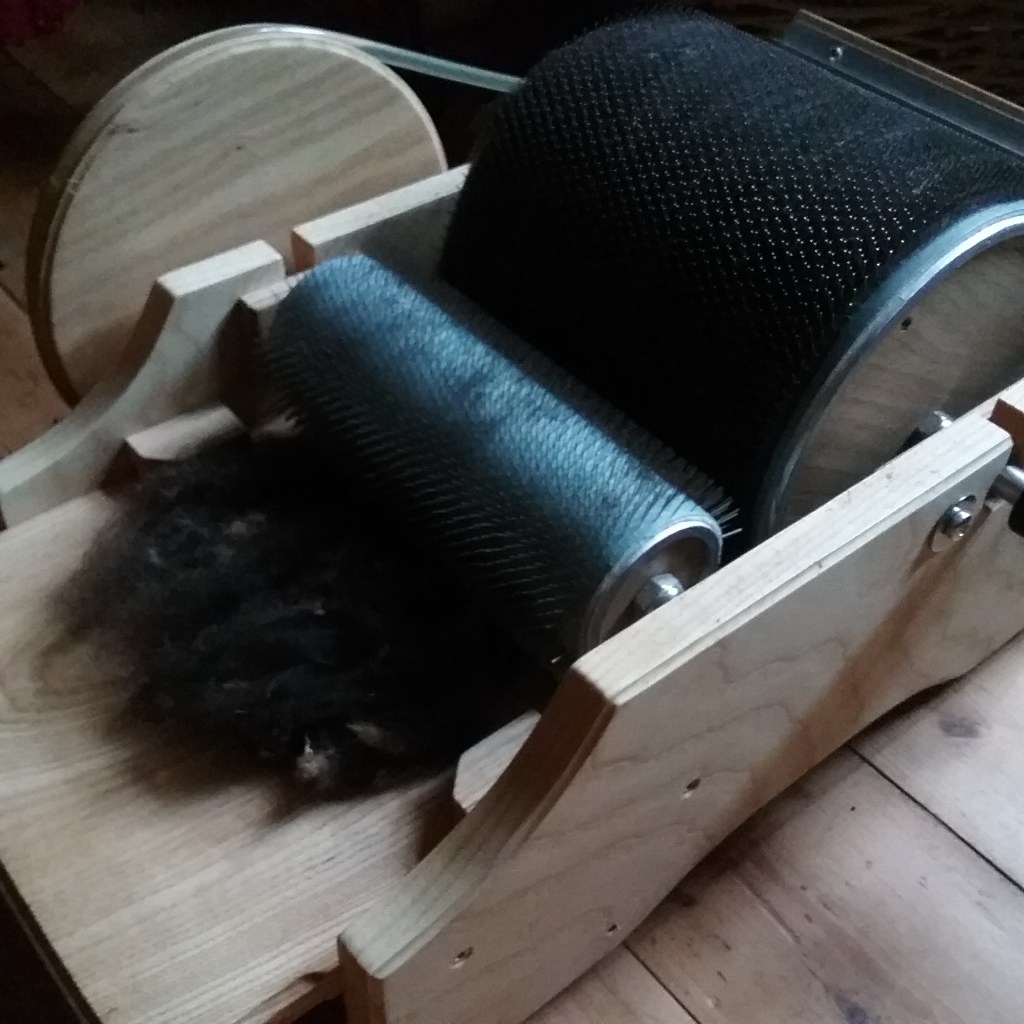
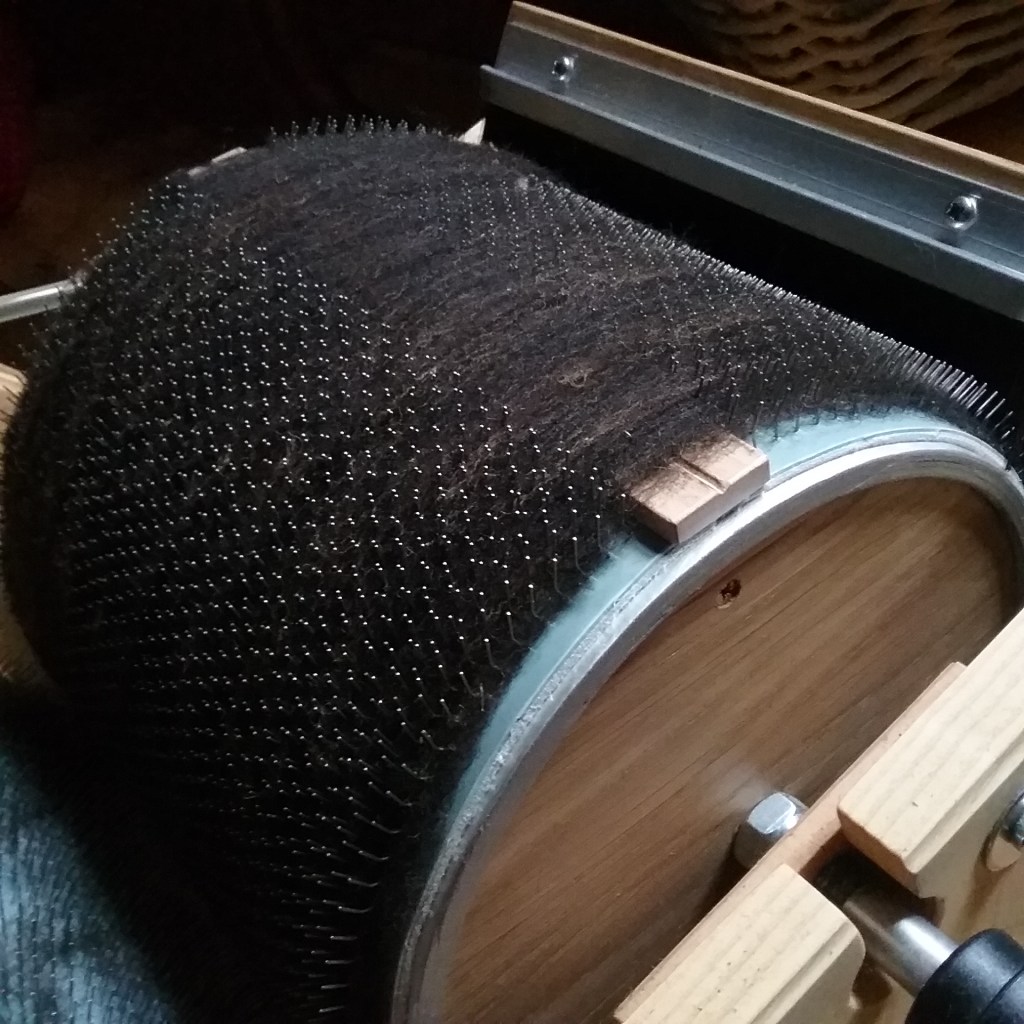
When I began drum carding I found the fibres were getting tangled around the licker brush. I wasn’t holding them back, so turned to the internet and discovered some people had this problem with fine fibres like alpaca and angora, but Herdwick is naturally coarser, so I examined my fleece again. When I looked closely at the undercoat I noticed that the fibres were actually finer than I had thought, an optical illusion caused by the overcoat. Since my drum carder is a standard 72tpi I followed the online advice the slow down my carding speed and this worked well, with the licker brush taking on only nepps and short cuts (which I cleaned off regularly). I began with doing two passes on the drum carder, but there didn’t seem to be much difference between one or two passes and since I was going to be spinning this very loose, I opted for only one pass through the drum carder. The resulting batts were light and fluffy and a significant amount of VM and dust was still dropping out at the bottom of the carder.
As always, let me know if you have any tips/advice in the comments below!
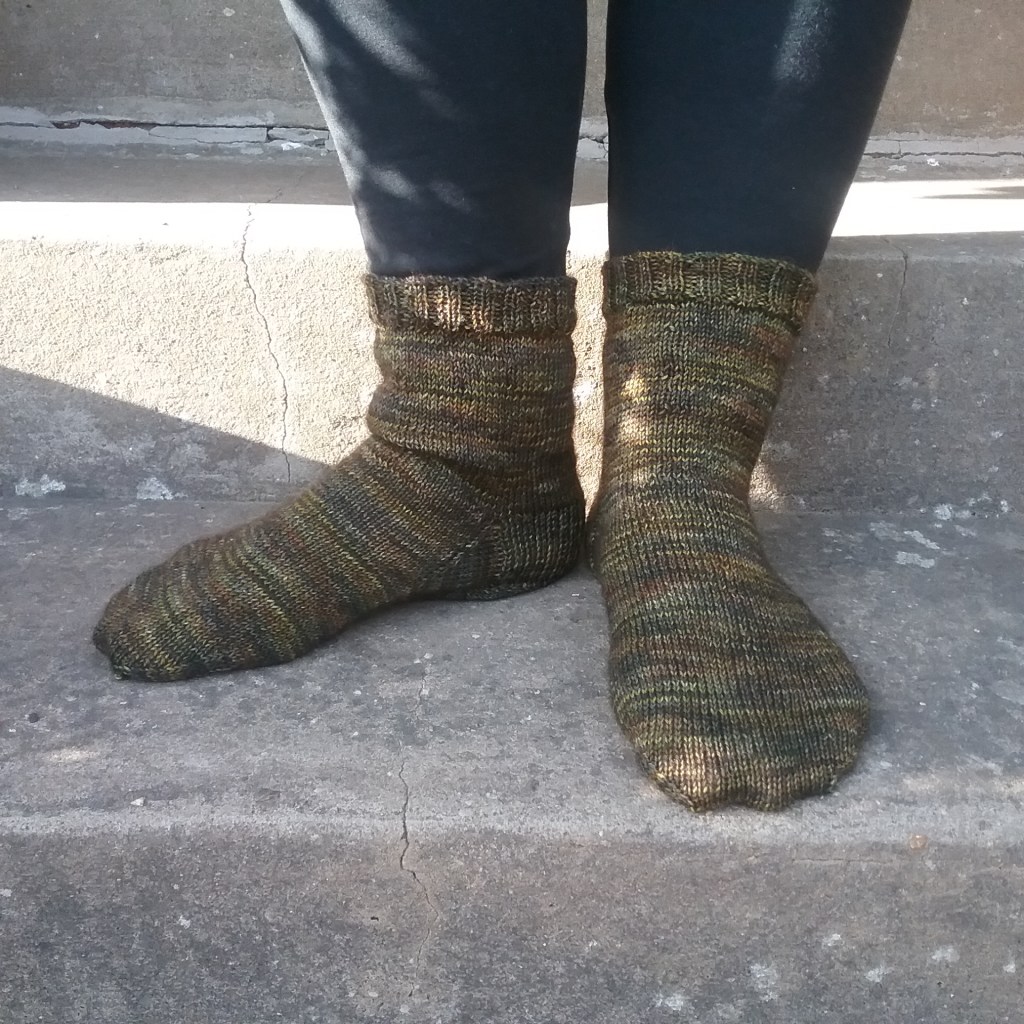
It’s been a while since I’ve had a finished project to share, but back at the end of March I decided to cast on my first pair of socks. Like a lot of crafters I thought socks were the holy grail of knitting and would be highly complicated, but since I prefer technical knitting to long straight rows of scarves, I wanted to give it a try. I purchased some indie dyed sock yarn from Mamie & Florrie at East Anglia Yarn Festival 2023 – I don’t tend to buy much yarn as I spin so much of my own, but I spotted this gorgeous skein on the stand and I loved that it was geolocated using what3words to the location that inspired the colourway (in my case the Rembrandt Self Portrait in the Rijks Museum).
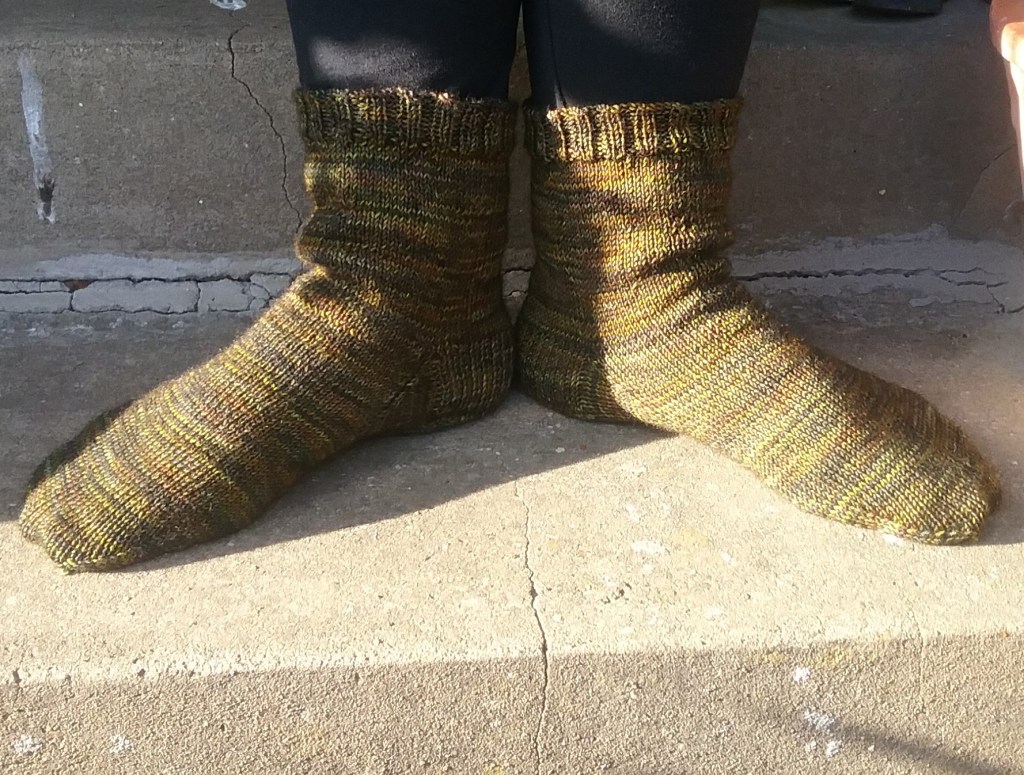
I wanted to start with a basic sock pattern and since I have wide feet I was also looking for one that was adjustable in some way. I had a Google and several people were giving Winwick Mum’s free pattern a good write up, so I thought I would try that since there were also diagrams on her ‘sockalong’ to help clarify some of the instructions if I got stuck. Knitting it up was a fairly straightforward process, though I realised I had got the width measurement slightly too big as I turned the heel, so I did a few more decreases around the gusset to get a better fit around the foot. This means the cuff isn’t as fitted as it could be (although I haven’t blocked them yet), but I’m not too worried as it gives off cosy autumnal vibes and I do want the cuffs to be able to go over the top of trousers to show off the beautiful colours of the yarn.
How the colours look when the light hits
Overall I can highly recommend both the yarn and the pattern. I think I’ve now finally joined the throng of knitters all telling everyone that socks aren’t as hard to knit as you think (and I’ll definitely be making some more in future)!
That’s all folks! The final week of TDF has flown by and I haven’t really had time to process what I’ve spun. Much of this week was spent working on the zwartbles and finishing one of my spindle projects. The hot weather hasn’t helped my productivity, but I did manage to get all my spins washed and dry to set the twist and the zwartbles is looking beautiful after washing. Below are the final weeks photos and links to the final two challenges on Youtube.
Day 16: Second Challenge Day – Spinning on two wheels at once – click the image to watch the video on YoutubeDay 17: More zwartbles plyingDay 18: Finished spinning and plying the Shetland sampleDay 19: More zwartbles cardingDay 20: Began spinning another zwartbles bobbinDay 21: Finished the zwartbles bobbinDay 22: More zwartbles cardingDay 23: Final Sunday challenge – Spinning while blindfolded. Click on image to watch on Youtube
Reflections
This is my fourth TDF and this year I’ve managed to spin for 3.5km (that’s the length x3 to account for spinning two singles and plying) which is not too far off last year’s 4.8km. In previous years, I’ve used TDF to finish off a previously started project, so this year is the first time that all my TDF projects have been started during the challenge. It’s also been the first year when I’ve simultaneously been working on important non-fibre related projects, so I haven’t had as much time to spin, although I have still made good progress overall. I set myself a to-do list at the start of the challenge, so let’s see how I got on:
Zwartbles – Although I had hoped to process a whole fleece from scratch, I think it was slightly wishful thinking! The fleece was still drying on day 1 but had retained quite a lot of it’s lanolin, so I did get to experiment a little with spinning in the grease (I was quite pleased with how it turned out, my hands are now very soft, but it does mean all my spinning equipment is now sticky with lanolin!). The zwartbles has been a real pleasure to spin – it’s so fluffy and has fulled nicely after washing. I have a commission project to work on with this yarn before it turns cold again here in the UK, so although I haven’t yet spun the whole fleece, I have enough yarn to get started on that (and I’m already thinking of all the other things I can make with it!)
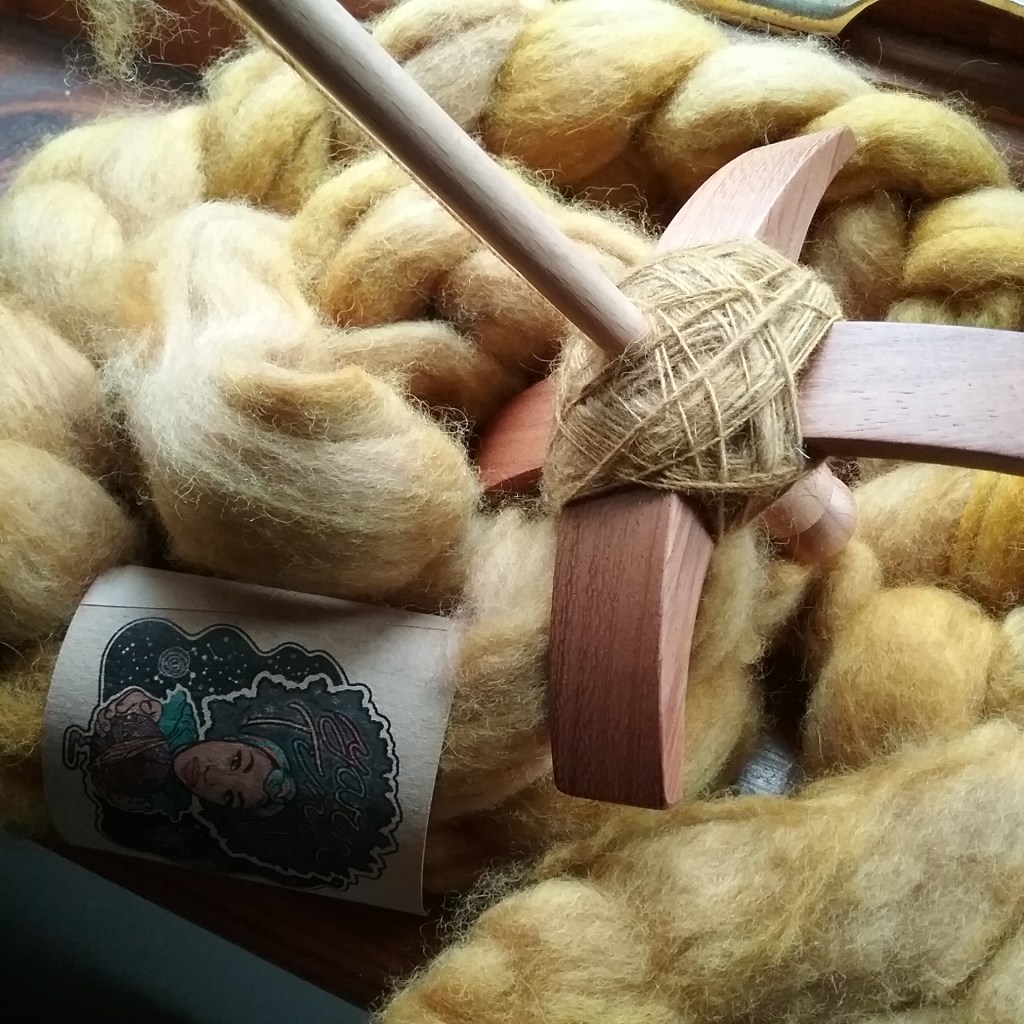
BFL/Camel Roving from Yarntings – I got halfway through this roving on days when I was away from my wheel and it spins beautifully, the different tones of mustard yellow where the dye hasn’t taken all the way through are really pretty. I’m going to save the rest to take whenever I need a portable project over the rest of the summer.
Shetland Sample – This was the one project I completed. I combed and spindle spun the sample, while the combing waste was carded and used in my third spinning challenge.
Spinning Challenge Sunday’s – A new element of my challenge for this year and something I had a lot of fun with – I hope they were enjoyable to watch (all videos will remain available on YouTube via their links). All were very silly but made good technical challenges, although editing the videos did take up quite a bit of my spinning time on Sunday’s. I really enjoyed doing these though, so will definitely consider bringing them back next year (perhaps with some follower set challenges next time? – if you have any ideas let me know and I’ll make a note of them).
Overall I’m happy with the progress I made over TDF this year and it shows how much spinning can be done even with limited time. Before TDF I completed several projects and am in the process of writing up and editing the videos for these, so although my non-fibre projects will keep me very occupied over the next couple of months, there will be more fibre adventures forthcoming!
If you’ve been joining in with TDF I’d love to hear how you got on – feel free to let me know in the comments below. Happy Spinning!
For more information about this years tour de fleece challenge my introductory blog post is here and you can find Weeks 1 & 2 by clicking the links.
Well that’s a wrap on the second week of TDF! It’s been hectic and I’ve not been at home much this week, so have taken spindle projects with me but have not always managed my 1 hour target. I’m feeling a little behind where I would normally be at this point in the challenge compared to other years (in the past I’ve been plying from week 1), but with lots of other commitments this month, spinning time has been in short supply. However, I’ve continued to make some progress with the zwartbles, my spindle projects and had a lot of fun with my second Sunday challenge (like last week, you can view the video by clicking on the image).
Day 9: Second Challenge Day – Spinning while Tap Dancing – click the image to watch the video on YoutubeDay 10: Plied 2 bobbins of zwartblesDay 11: Took a spindle and some shetland wool on a field tripDay 12: Plied the first half of the Merino/Camel blend in between journeysDay 13: Plying, carding and spinning some more zwartbles.Day 14: Finished day 13’s bobbinDay 15: Carded some more zwartbles and began another bobbin
If you are also joining in with Tour de Fleece (whether part of a group or going it alone like me!) I’d love to hear how you’re getting on, let me know in the comments below!
Although I usually like to post on a Sunday, next week’s wrap up (the final wrap up for TDF 2024!) may be posted on Monday 22nd to allow time for me to edit and upload the final challenge video that will coincide with the final day of TDF.
Happy Spinning!
For more information about my tour de fleece challenge my introductory blog post is here. I’m also posting my progress photos daily on my instagram.
The first week of TDF has flown by and I haven’t got as much spinning done as I’d hoped. I had quite a few unexpected commitments, but did manage to spin for at least 1 hour per day, often continuing spinning after posting my daily update. Looking at my pictures for the week, I think I’ve still made good progress considering, and I’ve been enjoying doing the Sunday challenges (if you click the image of Day 2 it should take you to the video of my first challenge).
Day 1: Began spindle spinning this Merino/Camel Braid from YarntingsDay 2: Challenge Day Balancing Books on my Head while spinning – click image to watch the video on YoutubeDay 3: Started properly spinning the zwartblesDay 4: Finished the first bobbin of zwartblesDay 5: Began Spinning the second zwartbles bobbinDay 6: Continued my Turkish spindle project.Day 7: Finished the second zwartbles bobbinDay 8: Combed and carded a Shetland sample ready for the Sunday challenge
If you are also joining in with Tour de Fleece (whether part of a group or going it alone like me!) I’d love to hear how you’re getting on, let me know in the comments below! Until next week…
Happy Spinning!
For more information about my tour de fleece challenge my introductory blog post is here. I’m also posting my progress photos daily on my instagram.
Hello everyone, It’s that time of year again! This year Tour de Fleece is happening from the 29th June – 21st July.
Last year I made myself a to-do list for TDF and found it really helped to keep me organised and more productive, so I’m making one again this year. I was going to pick a couple of fleeces from my stash to work my way through, but I was fortunate enough last month to obtain some gorgeous Zwartbles fleeces from a local farmer whom I promised some knitted hats as part payment. Since I want to make sure he has them before it turns cold again, I will be focusing on processing Zwartbles this TDF so I can knit some hats over the summer. For a bit of fun, this year I’ll also be completing 4 challenges set by friends and family, so look out for those every Sunday.
As per usual, I’m going to aim to spend at least 1 hour per day on my challenge, but won’t be too strict about it, some days I may spend more time, some days less. I’m also including fibre prep (carding/combing) within my challenge, but I have done some prep beforehand, so I’m hoping to remain spinning focused. This years’ to-do list is:
Zwartbles – carding/combing, spinning & plying 1 whole fleece (I also want to experiment with spinning in the grease using this fleece too).
BFL/Camel Roving from Yarntings – I bought this at EAYF with the intention of spinning it on my Turkish spindle. This should make a good travel project from when I’m away from my wheel.
Shetland Sample – Spin and ply on my other spindle – this will form another portable project.
Spinning Challenge Sunday’s – Each week I will attempt a new challenge using yarn and wool already on my wheel/spindle.
Hopefully these projects should give some variety to TDF this year, even though my focus will be on one breed and should also give me some flexibility should I be away from my wheel. As usual, I’ll be posting daily updates on my instagram and weekly updates here (the first update will be on Sunday 7th July).
If you are also joining in with Tour de Fleece (whether part of a group or going it alone like me) I’d love to hear how you get on – feel free to share your progress/goals in the comments section and if you want to find out what I got up to last year I’ve included links to my wrap-up’s below.
Herdwicks have been around in the UK since the 12th century and there is significant debate over how they arrived; some stories say they came from a shipwreck from the Spanish Armada, while others suggest they originated in Scandinavia and came to England with the Vikings (the name is believed to have come from the Norse herdvyck or herdwyck, meaning “sheep pasture”). Either way, today’s Herdwicks are one of Britain’s hardiest sheep, adapted to living in the rugged landscapes of the Cumbrian Lake District.
Fleece Research
Herwick’s handle is considered ‘harsh’ by the British Wool Board, with a staple length of 10-20cm. As a hardy fibre, it is used commercially for durable items such as carpets and insulation, though if the soft undercoat can be separated, it can be used for making outer garments. The fleece has multiple components a soft undercoat, kemp fibre and heterotypic hair which changes consistency with the seasons, giving the fleece a textured look. The multiple components of the fleece make it quite unique and Robson & Ekarius say this presents a challenge for fibre preparation, but happily their recommendation in Fleece & Fibre Sourcebook is to experiment and just ‘go for it’!
Since I want to showcase all the textures, I won’t be separating out the different fibre types or dyeing the wool (due to the kemp hair it will not take dyes evenly anyway). I also want to link my project with the more commercial use for this fibre, so I have plans to turn the fleece into a rug, but to spin the fibres loosely so the different fibres show through to put my own handmade spin on it.
Further Reading
The following sources have been used for reference
A long time ago I decided I was going to catalogue the sheep breeds I work and the projects they were used for in a blanket/wall hanging project made up of individual squares. I made the first square from my Ryeland fleece two years ago and have been occupied with finishing other big projects since, but before TDF begins and I get carried away with other big projects, I wanted to tick off some of the smaller tasks that have been on my to-do list for a long time.
I made a Romney cowl back in 2022 inspired by the Owler’s of Romney Marsh and decided that I would scale down the pattern to make a knitted breed square. The pattern is adapted from the Cable Button Collar from the Wensleydale Sheep shop and I reduced the stitch count to 32 stitches and only knitted one repeat of the cable pattern. Because my handspun yarn isn’t always an even diameter (the Romney certainly wasn’t!), this square turned out oblong, but after blocking it was slightly more square – I’m not too worried about this since I would much prefer the finished project to be whimsically irregular anyway. I do still have quite a bit of Romney yarn left over for further projects, and will probably try to get this cable pattern into them as I think it’s a prefect homage to the story of the breed.
This project will be ever evolving, but I’m going to make more of an effort to try and make a relevant breed square after each major project, so I don’t have a lingering to-do list!

 Loose Ends