Repairing a Felted Necklace

One of the lesser discussed parts of having items made from natural fibre is the pests. There are a number bugs and beetles that enjoy munching on keratin fibres (they’re made of protein after all), and unfortunately they don’t care about what or where they eat (and acrylic fibres are at no less at risk of being munched). But this post isn’t about how to repel pests – it’s about dealing with the damage they’ve left behind.

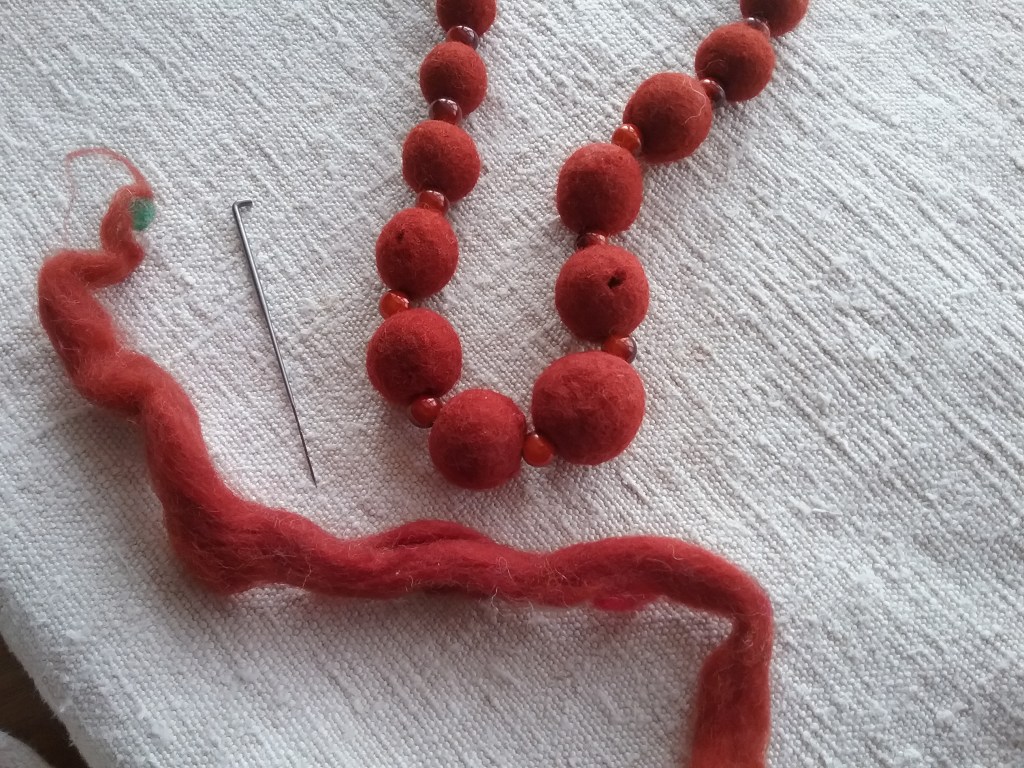
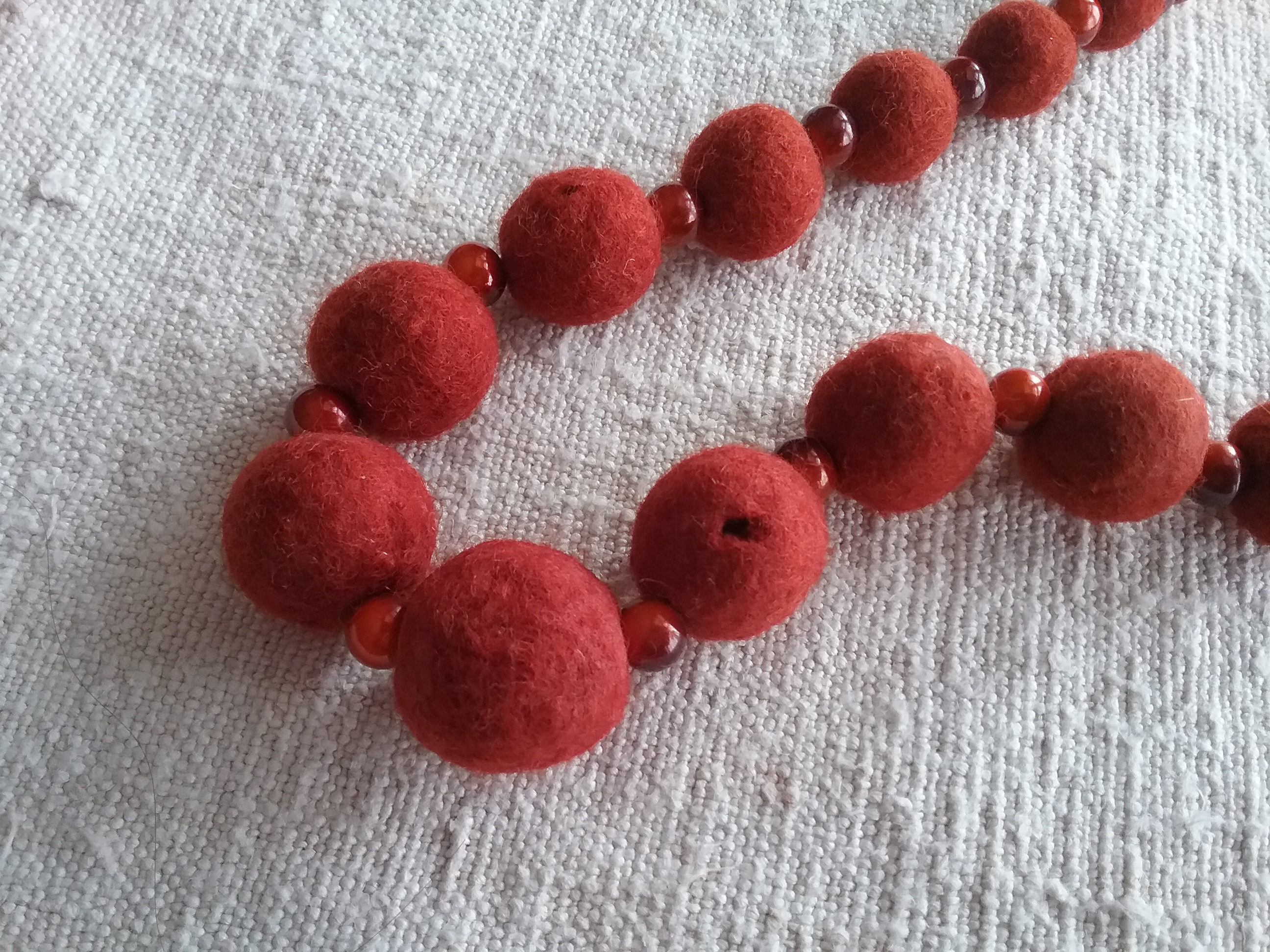
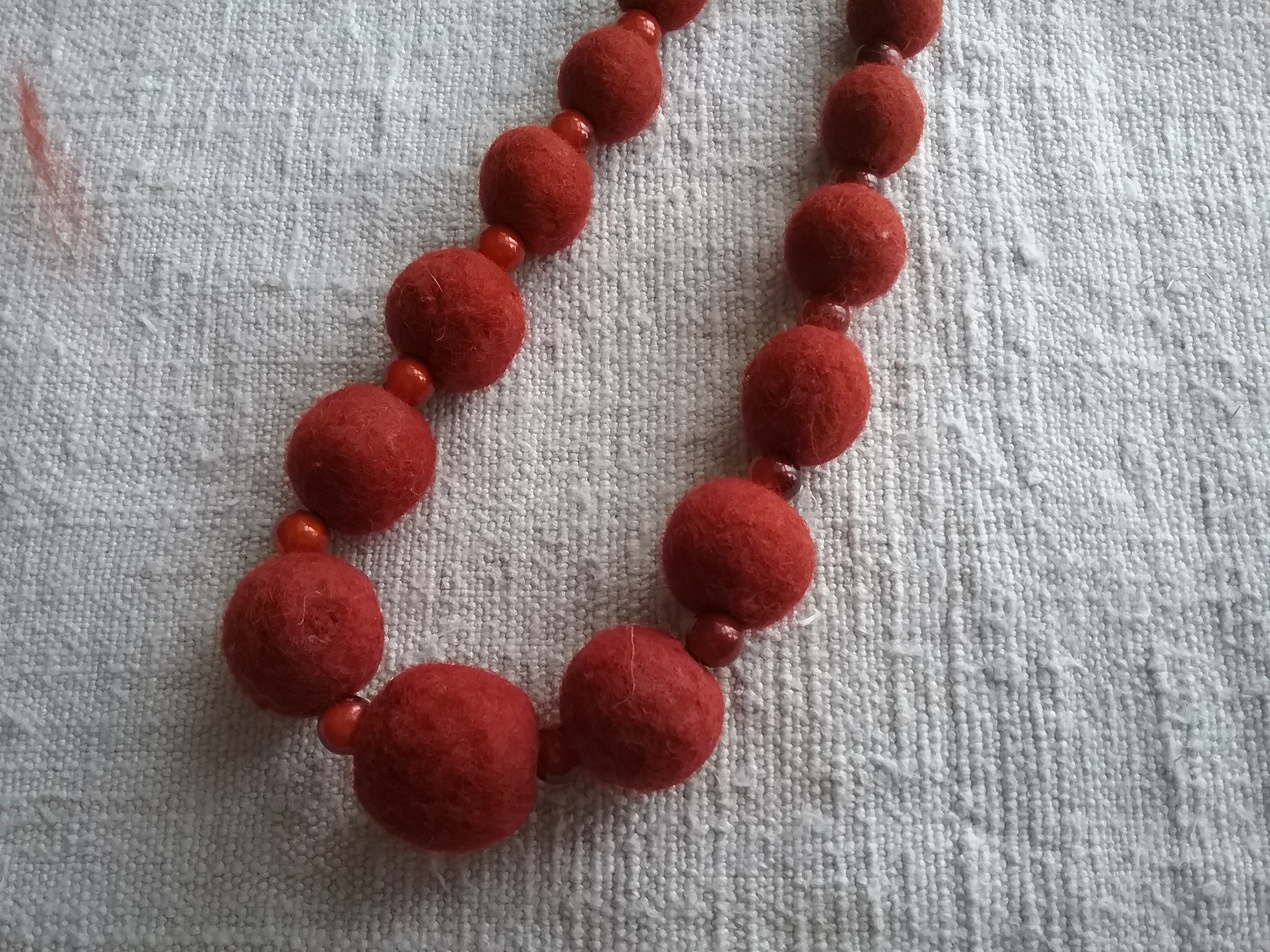
This felted necklace belongs to my mum, and had been munched on. I’ve read that some people throw away items damaged by beasties, but this seems a shame when the damage could be repaired. To make sure there was no chance of further infestation, the necklace was washed in hot soapy water (since the beads are felt and glass it didn’t take any harm), and once dry, it was sealed in a bag for a while before moving onto the repair.

The two holes were quite small and as luck would have it I found some fibre of a matching colour in my stash. I decided I would try needle felting the fibre into the holes; this was a fairly straightforward process and worked a treat, however I learnt that unlike needle felting a whole object, wet felted beads are surprisingly hard to felt into, which meant I needed to work slowly and gradually coax the fibre into the hole (a fiddly process that meant didn’t leave me enough hands to take a photo). I also managed to break two felting needles as they are not designed to bend and it was difficult not to move the bead or needle when working (I’m also very new to needle felting so it is also possible I was using too delicate a needle!).

Slide for a before and after

The finished repair isn’t too visible – there are a few small needle marks where I can tell I’ve repaired it, but happily it doesn’t really show.

Happy Repairing!

East Anglia Yarn Festival 2025

Hello everyone, a very belated happy new year. I’ve had a very hectic few months and then promptly caught covid which is taking longer than I would have hoped to recover from, so blog posts are a bit slow at the moment. I did manage to make it to East Anglia Yarn Festival yesterday, so after a very un-fibre-y start to the year, it was nice to be surrounded by all things yarn.

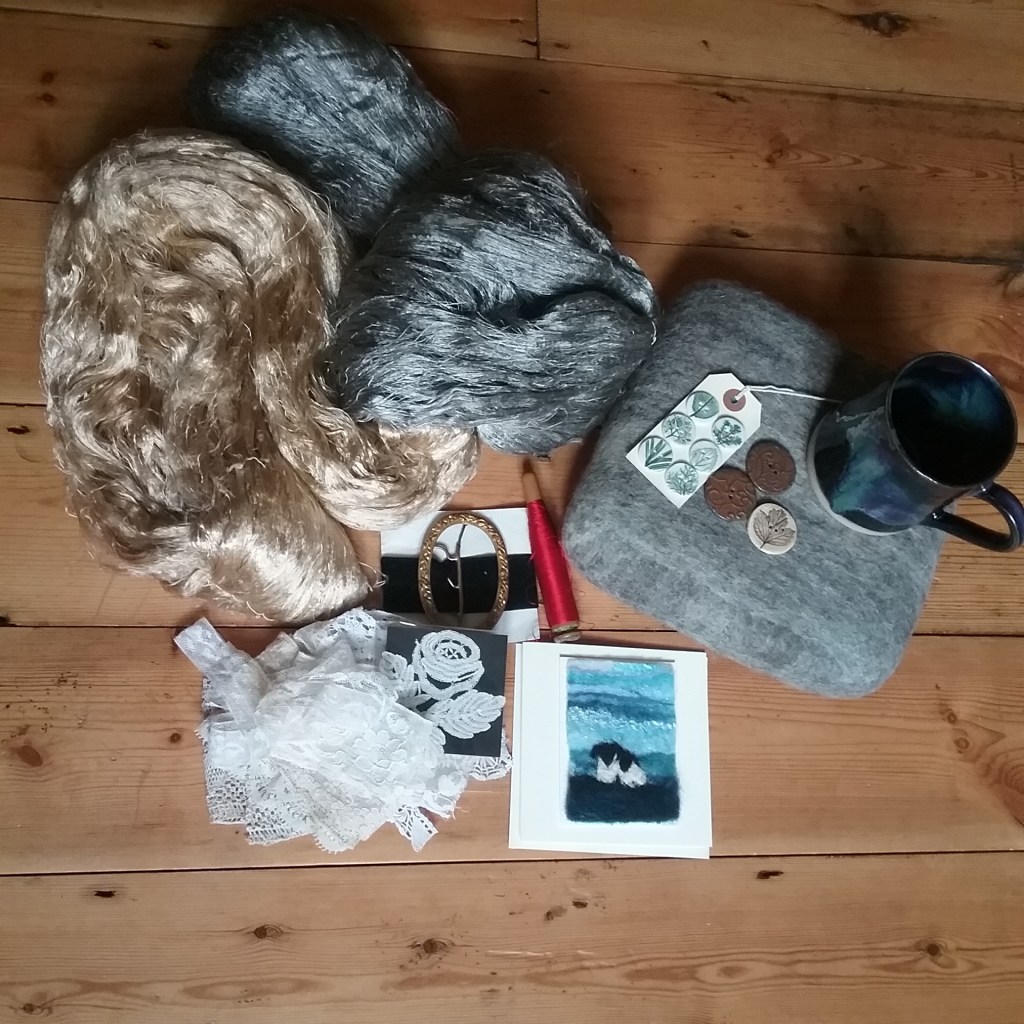
I was much more restrained this year; I didn’t buy any fibre or yarn and instead purchased things which I feel fulfil William Morris’ quote of being either useful or beautiful (or both). I purchased a selection of vintage goodies from Simply Vintage Designs which I will use in more historical projects (and in my opinion one can never have too much vintage lace!), a needle-felting mat from Felt Wildly which should come in useful for future projects, and chose some beautiful porcelain buttons from Buttoned Up. I also purchased a card from LittleGemFelts whose sheepy art pieces always bring me joy and a suitably witchy mug from Emily Cross Ceramics who also makes incredibly intricate yarn bowls.

While I didn’t come back with any wool, I do have plenty in my stash that needs processing and lots of projects planned for when I get time. I have finished one smaller project off that I knitted at the end of last year and needed sewing together, so will be back with a finished object blog post soon.

Happy Crafting!

Wovember 2024 – Week 4

Wovember Wind-Downs

Happy Wovember! While I’m busy working on my university dissertation, I’m using this Wovember to celebrate slow making and the calm that comes from crafting by releasing some ‘unedited’ video content. While the end of the year can be a stressful time, join me to unwind with some quiet crafting, gentle creaks of spinning wheels and the passing of weft through warp in real time. 

The final video this month is the full length footage from when I was weaving a Herdwick Rug.

Thank you for joining me this Wovember, it’s been a little different this year but I hope you’ve enjoyed it. I’ll be using the next couple of months to finish assignments and begin new fibre projects, but will return in the new year with some more woolly adventures! My Wovember’s Past page is available all year round should you want to look back at any previous years’ posts or visit the Wovember website.

Happy Wovember!

Wovember 2024 – Week 3

Wovember Wind-Downs

Happy Wovember! While I’m busy working on my university dissertation, I’m using this Wovember to celebrate slow making and the calm that comes from crafting by releasing some ‘unedited’ video content. While the end of the year can be a stressful time, join me to unwind with some quiet crafting, gentle creaks of spinning wheels and the passing of weft through warp in real time.

This week’s video is some Clun Forest chain plying.

Feel free to use the comments section to share some woolly facts or let me know what you love about working with wool! Wovember posts from previous years can be found on the new Wovember’s Past page.

Happy Wovember!

Wovember 2024 – Week 2

Wovember Wind-Downs

Happy Wovember! While I’m busy working on my university dissertation, I’m using this Wovember to celebrate slow making and the calm that comes from crafting by releasing some ‘unedited’ video content. While the end of the year can be a stressful time, join me to unwind with some quiet crafting, gentle creaks of spinning wheels and the passing of weft through warp in real time.

This week’s video is some autumnal spindle spinning in the woods.

Feel free to use the comments section to share some woolly facts or let me know what you love about working with wool! Wovember posts from previous years can be found on the new Wovember’s Past page.

Happy Wovember!

Wovember 2024 – Week 1

Wovember Wind-Downs

Happy Wovember fibre enthusiasts! This month is a time for celebrating all things wool. Wovember ran as blog campaign from 2011-2017 and was picked up again by Team Wovember last year who ran a weekly chat with wool enthusiasts on Instagram, where there is also a daily word prompt challenge going on (that I will be taking part in). Last year on the blog, I explored some wool based myths and legends after falling down a research rabbit hole over the summer, however this year I am working on my university dissertation which has left me with very little time to venture into wool based research.

I’ve been filming some of my wool ventures this year and have been told by several friends and family that they find watching me spin and weave relaxing. With my own deadlines fast approaching, I find slowly working with wool all the more comforting, so felt it appropriate this year to celebrate the slowness of making and the positive impact it can have on our wellbeing. When I edit my videos, I condense months of work into 15-30 minutes worth of footage, so every Sunday this Wovember I’ll be bringing you an ‘unedited’ video, showing some spinning and weaving in real time. It’s a little different to my usual research-based Wovember content, but I hope it brings you some calm ahead of the busy festive season and keeps you company while working on your own projects.

I’m going to keep these videos in a rough order of the process, so first up is some carding of Clun Forest fleece filmed way back last year when I was working on my Victorian Cycling Jumper.

Feel free to use the comments section to share some woolly facts or let me know what you love about working with wool! Wovember posts from previous years can be found on the new Wovember’s Past page.

Happy Wovember!

Zwartbles Hats

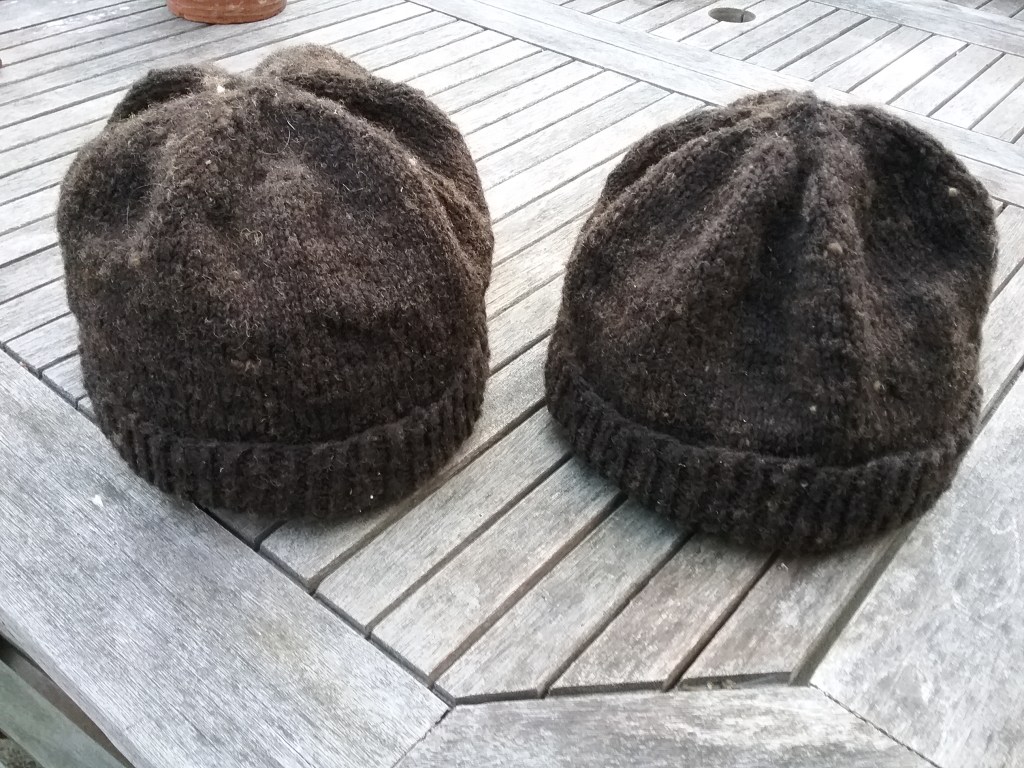
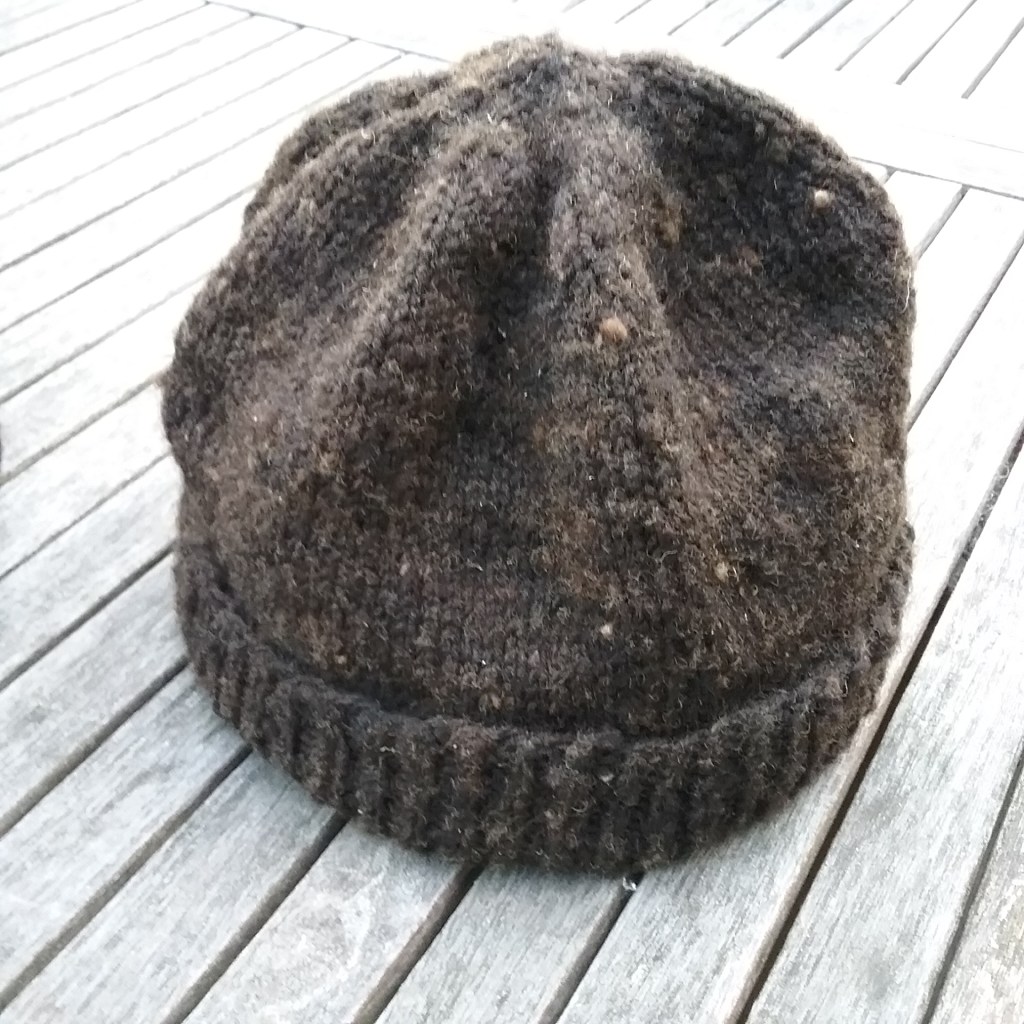
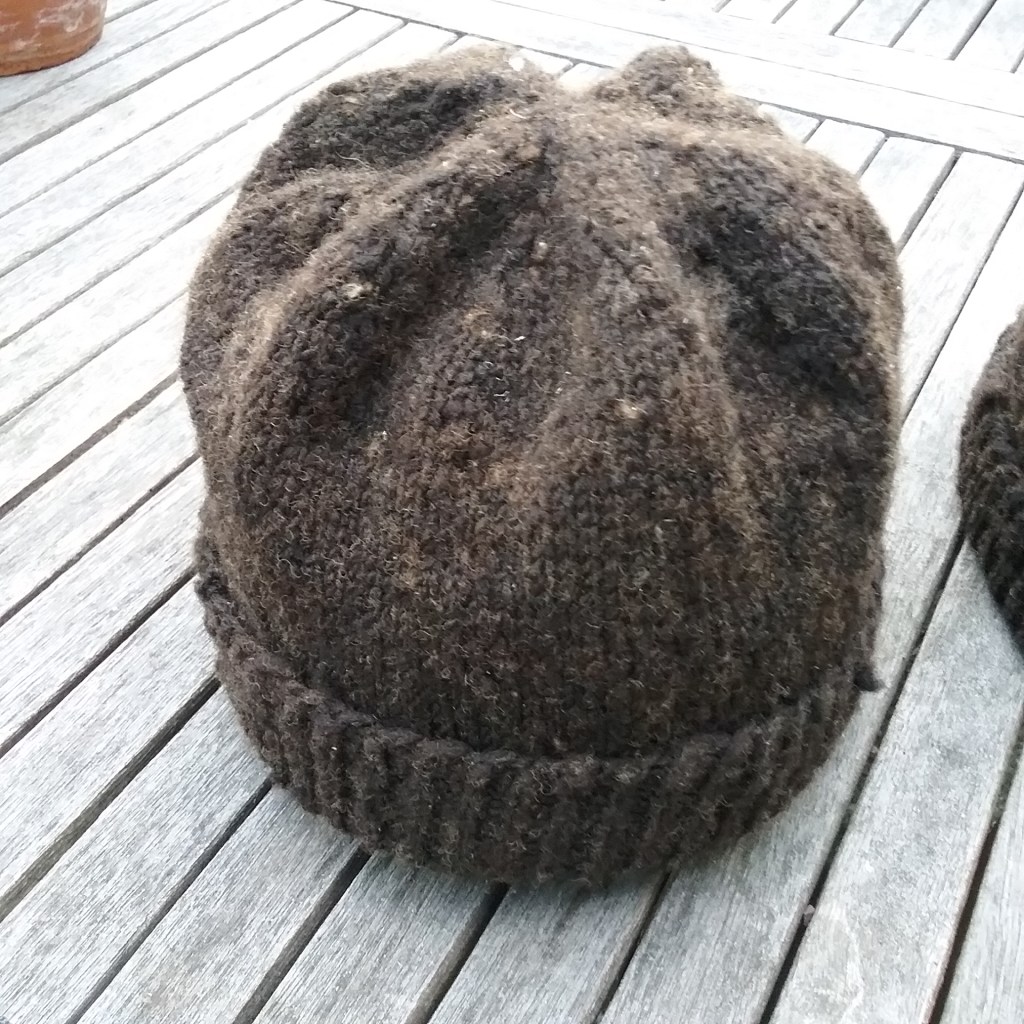
During Tour de Fleece I was spinning some gorgeous Zwartbles wool from a local farmer who was reluctant to accept payment for it as he saw it more as waste, so we eventually agreed that I would contribute some money towards the fleeces, but make him some hats from his wool as part payment too. He requested plain knit beanie hats, so I found a vintage pattern in my stash (the same one that I used to knit my Ryeland Gloves a few years back) and followed that, adjusting it so it could be knitted in the round to avoid a bulky seam.

The Zwartbles was a joy to knit with and the colours are really gorgeous – I have plans for a project I think would look really beautiful using some more of it, which I’ll hopefully be able to begin in the near future. I’ve never knitted hats before, but I think they came out rather well and it was really wonderful to see the farmer’s reaction to something created using fleece from his flock.

I’ll be doing a proper write up of the history and processing of the breed in the new year when I’ve had time to film. As always let me know if you have any tips or advice in the comments below!

Happy Crafting!

Herdwick: Lots of Woven Rugs

Weaving

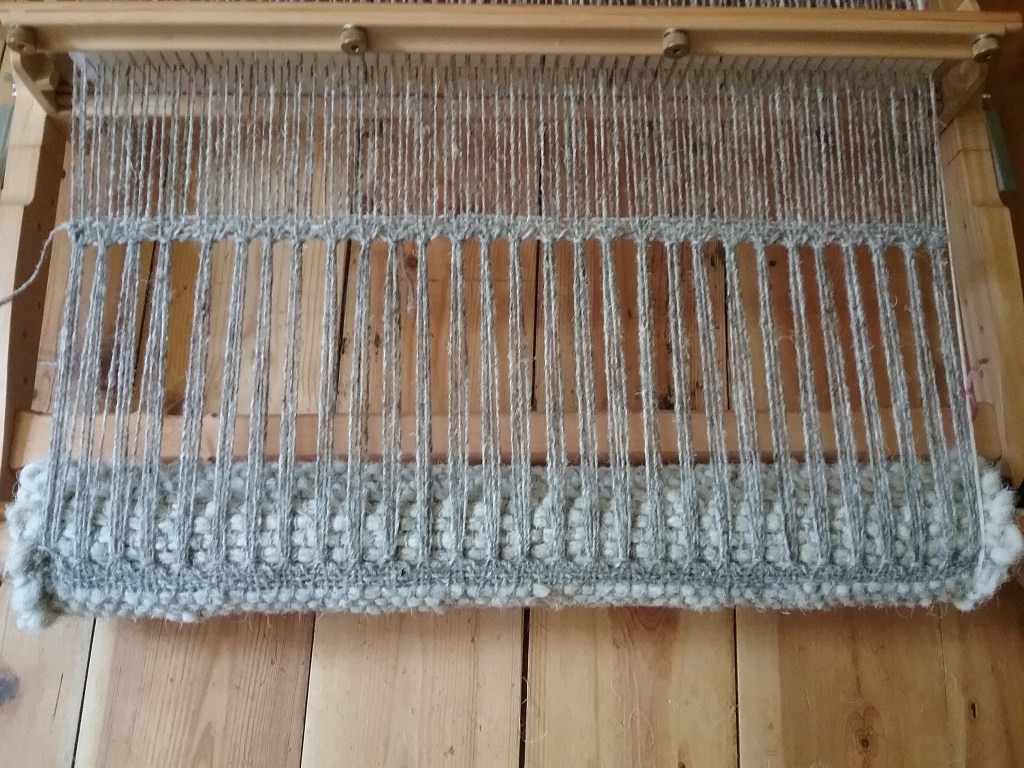
After making my sample square I warped up my Kromski Harp Forte with the commercial Herdwick yarn, initially starting with just enough length for one rug to see how it went. I found I had plenty of yarn, so ended up making several rugs and have some yarn left over to experiment with in the future. To make hemstitching easier, I wove a few rows at each end using the commercial yarn, which also secured the handspun a little better and should prevent it from coming loose. I began by plain weaving the Herdwick with a single strand of yarn, however after my first rug decided that I wanted to have a slightly thicker weft as some sections were much thinner than others, so I held the yarn double for subsequent rugs – you can see the slight difference below.

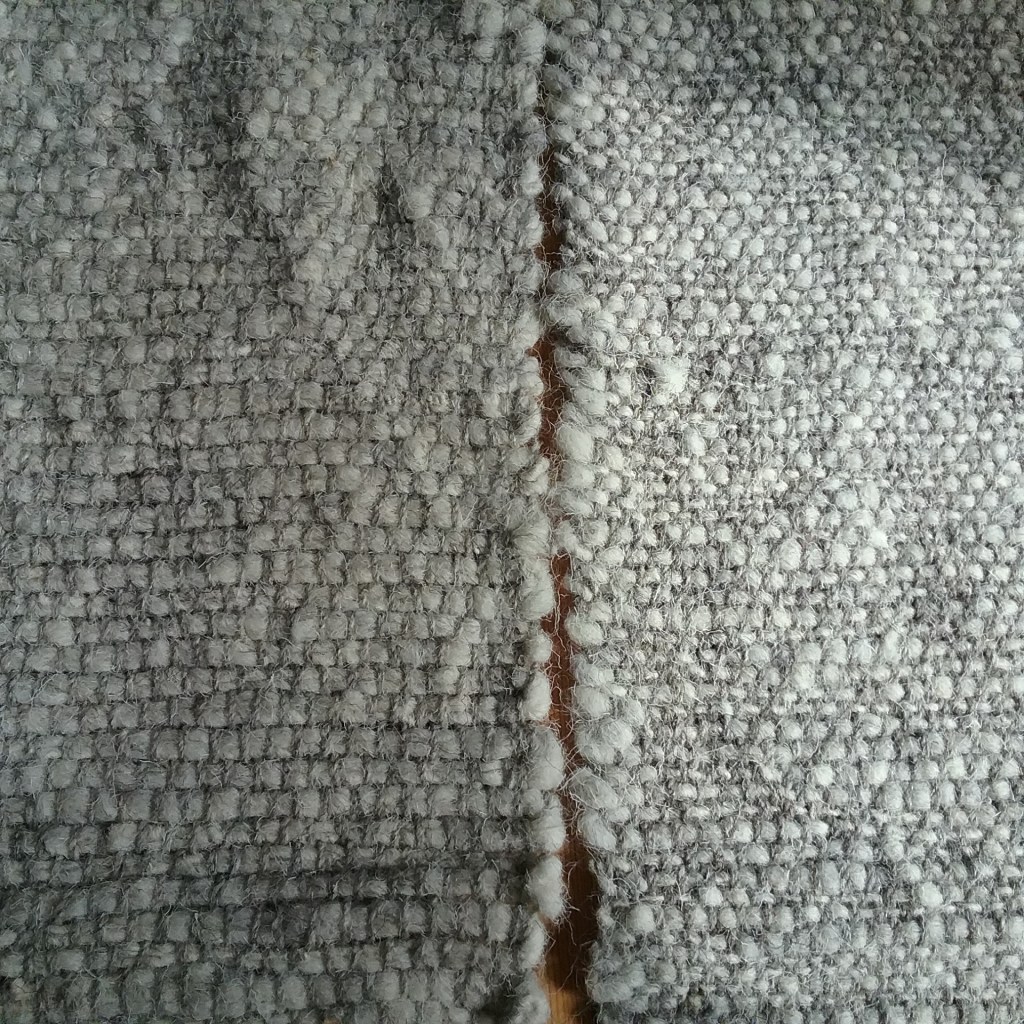
Left rug has yarn held double, right rug has yarn held single

I experimented with making a warp long enough for two rugs to reduce the amount of threading needed, which worked well, however I did need to remove the first rug after I’d finished it, as the cloth around the front beam was a little too thick and making the shed tighter (but I was able to hemstitch first to keep the tension, which sped things up a bit).

One finished rug with the Hemstitch for the second complete

I’ve made a video showing the whole process below (the first two sections are the same as have been shown in my fibre prep and spinning posts for this project, so feel free to skip ahead if you wish).

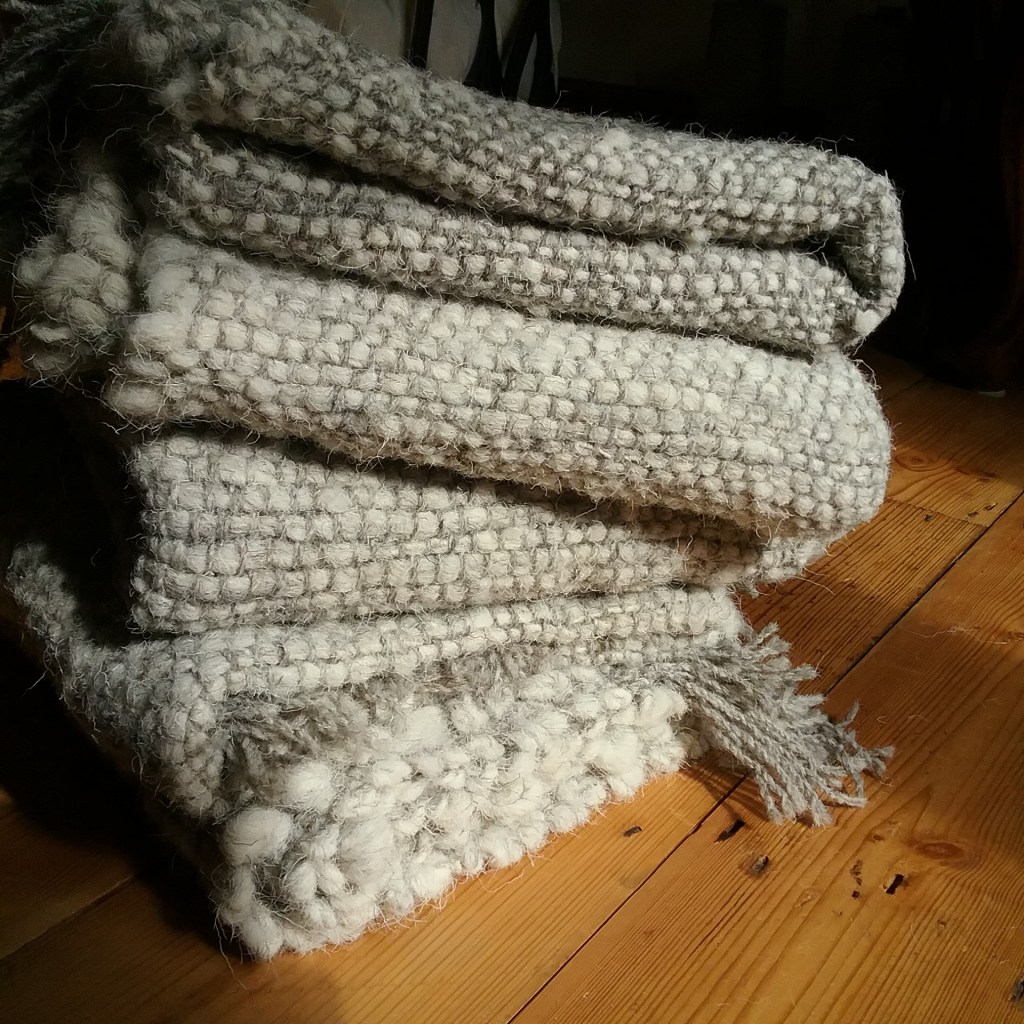
Overall I’m very happy with how these turned out, they are very soft and have the added bonus of resembling a dry stone wall, which is very apt considering the Herdwick’s origin in the Lake District.

Happy Crafting!

Previous Herdwick posts and the Breed Society website can be found below:

Herdwick: Breed Study Square 3

Since I planned to weave with my loose spun Herdwick which wouldn’t be strong enough as a warp (not to mention being too thick to fit through any of my reeds), I decided I would use a commercial yarn as the warp and would make a breed study square before my project as a sample to test how the yarns behaved. I picked up some grey commercially spun yarn cones from EAYF 2023, which judging on their coarseness and colour are probably Herdwick or a Herdwick blend, so thought they would make a perfect warp, particularly since my handspun Herdwick was a lighter cream colour.

I made a simple warp on my pin loom, passing my warp yarn around 2 pegs each time and missing one either end so the warp would be wider and the handspun more dominant in the weave (you can just about see in the photo below). I then repeated the process with the weft yarn threaded through a large weaving needle, which was pleasant enough to begin with, but became challenging as I neared the other end of the pin loom where my needle was too thick to pass through, so I had to do my best with a tapestry needle that had a very small eye!

Completed Herdwick Breed Square on the Pin Loom

Although I loved the look of the sample (it reminds me of drystone walls, which is quite appropriate considering Herdwicks originate from the Lake District), I was worried that it wouldn’t hold it’s structure after coming off the loom, however after washing, the weave tightened up (as shown in the top photo) and I was happy to move onto my rigid heddle loom for the final project…

Happy Weaving!

Spinning: Herdwick

Spinning Singles

My aim for this project was to turn the Herdwick into a rug, utilising the softness of the fibre, while tapping into the hardwearing nature of the fibre that is utilised commercially. I used the jumbo flyer on my Ashford wheel, spinning torn strips of batt very loosely, letting the fibre draft how it wanted, slubs and all. After spinning fine yarn recently, this made a nice change, however I struggled at times to get the balance between tension and uptake on the wheel, particularly as the bobbin filled (the video below was filmed before I noticed that I’d left the orifice reducer in – I did take it out as soon as I noticed and it did make the uptake of slubby sections a little easier!)

Below is a video of some of the Herdwick spinning on the jumbo flyer:

Setting the Twist

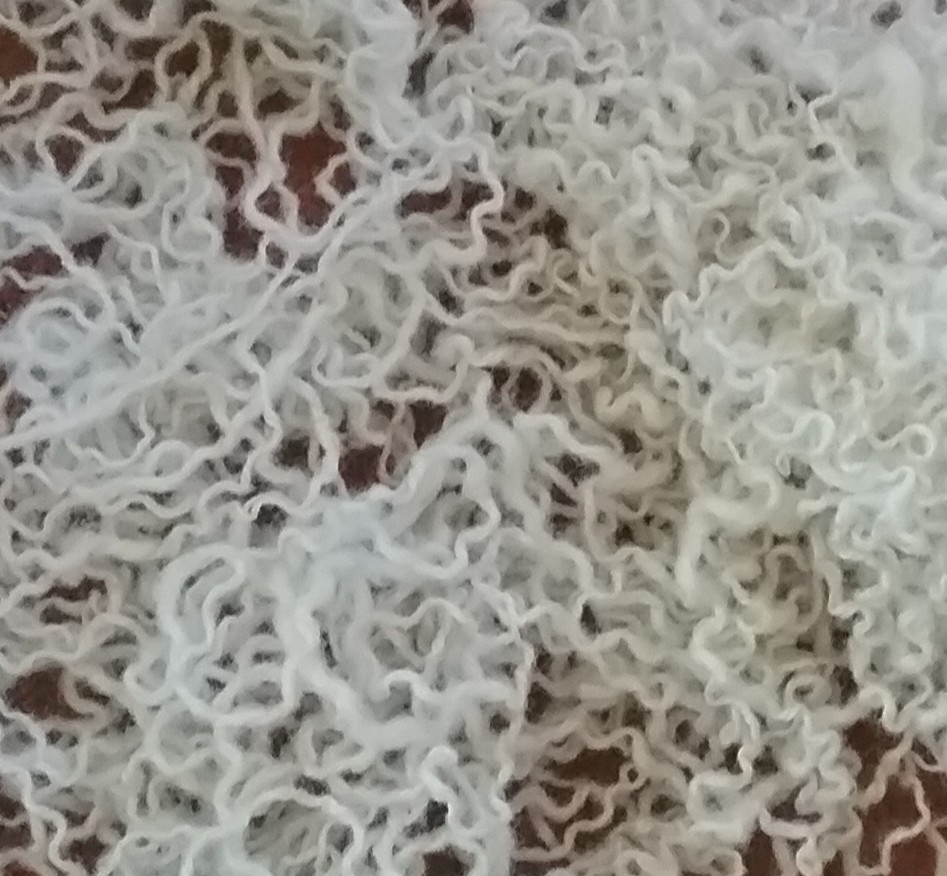
Since I didn’t want to ply these skeins, I washed them in quite hot soapy water and gave them a little agitation in the hope that they would slightly felt together and become more hardy. The internet seems to suggest that Herdwick felts quite readily, however, I found that although several fibres were a little stuck together, it didn’t seem to be particularly felted. Since it was spun loose, the overcoat had a tendency to shed everywhere (I’m still finding bits of Herdwick around the house!), but the undercoat held together well and I imagine that spinning the fibres tighter would have anchored the shorter, coarser fibres in better.

Happy Spinning!