Fibre Prep: Ryeland

The Fleece

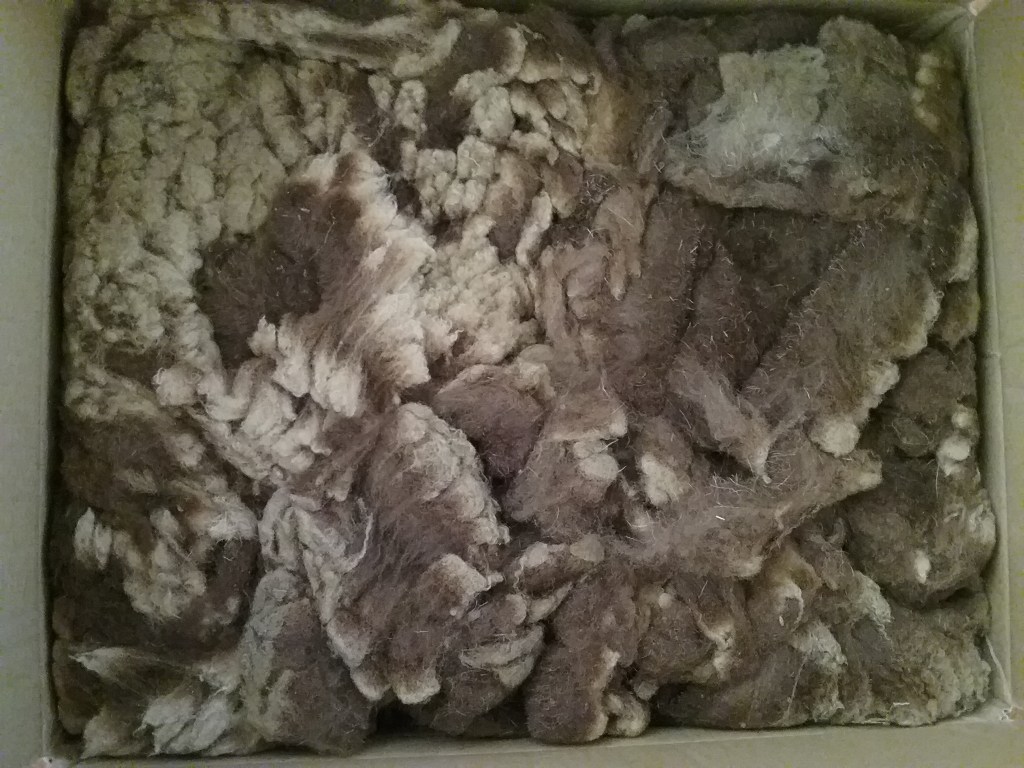
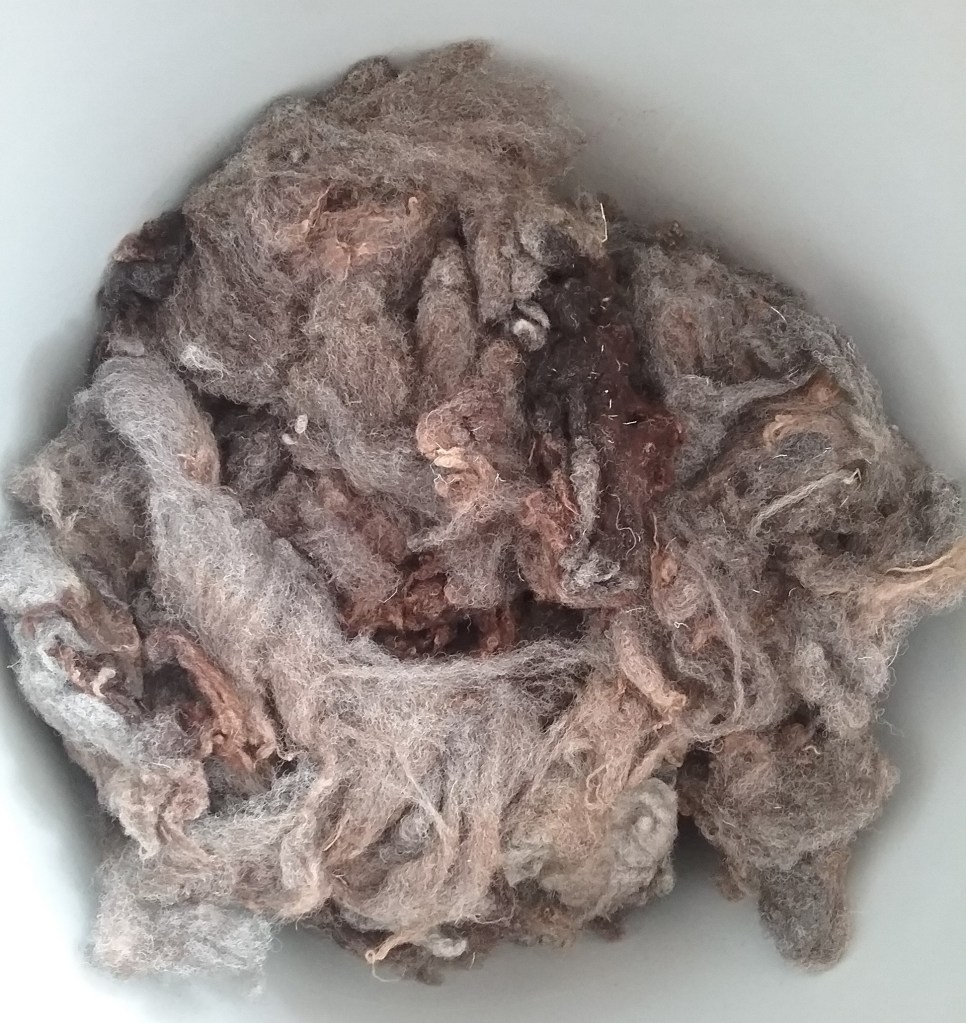
Fleeces with fine short staple lengths tend to be greasier than those with a longer staple. Ryeland is one of these fleeces, so with my experience from washing the Dorset Horn, I needed to do some experimenting to find which method of washing would be most effective. At first glance the Ryeland didn’t seem to have much kemp, however since the fleece has shades of grey, brown and black it was harder to distinguish it. The fleece contained quite a lot of small VM and was surprisingly dusty, which made skirting more time consuming and I finally decided that most of the small bits would probably fall out during washing. There were several dirty areas around the rear area which went straight into the compost as I considered them unsalvageable, but otherwise the fleece was reasonably clean.

Washing

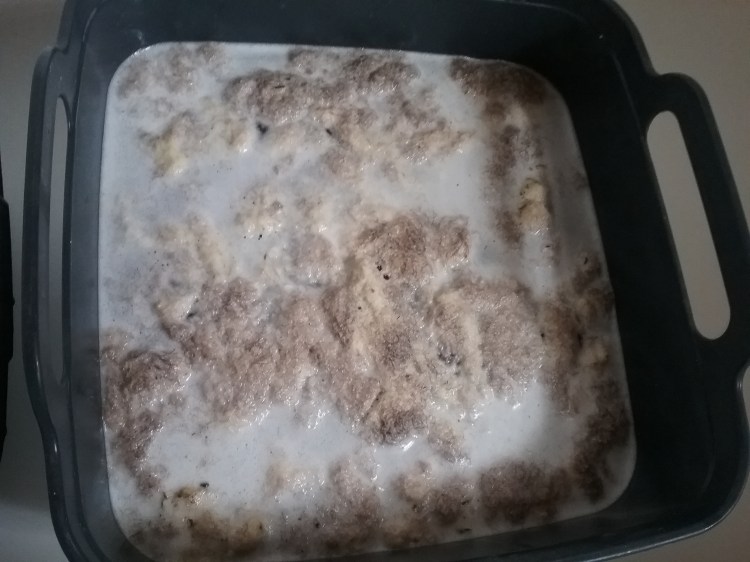
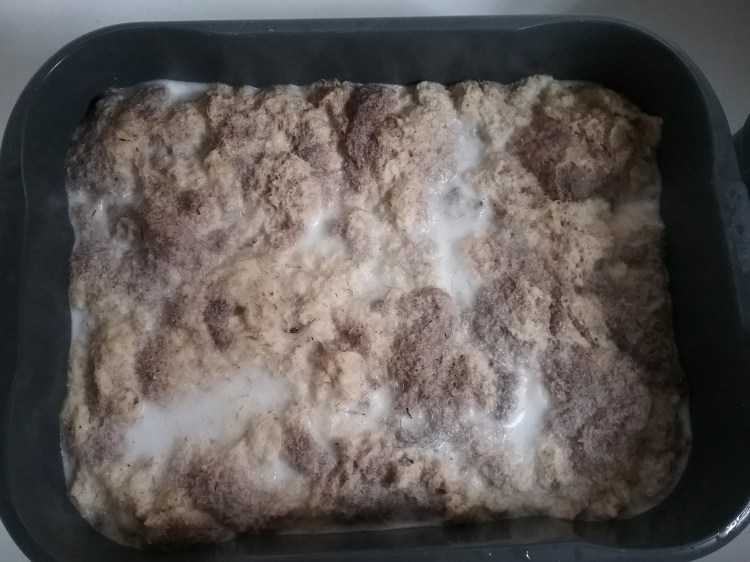
Since the Ryeland was greasier than the Dorset Horn and had similar reluctance to felt I decided to use the washing powder rather than a delicate soap. Before committing to wash the whole fleece, I tried washing a small sample twice through with washing powder and then giving one rinse until the water ran clear (I recommend testing a sample for any fleece). After drying, it still had a some grease in it, but the sample ran smoothly through my carders and since I would wash it after spinning, I chose to leave this grease in, in the interests of using less water and washing powder and the rest of the fleece was washed in this way.

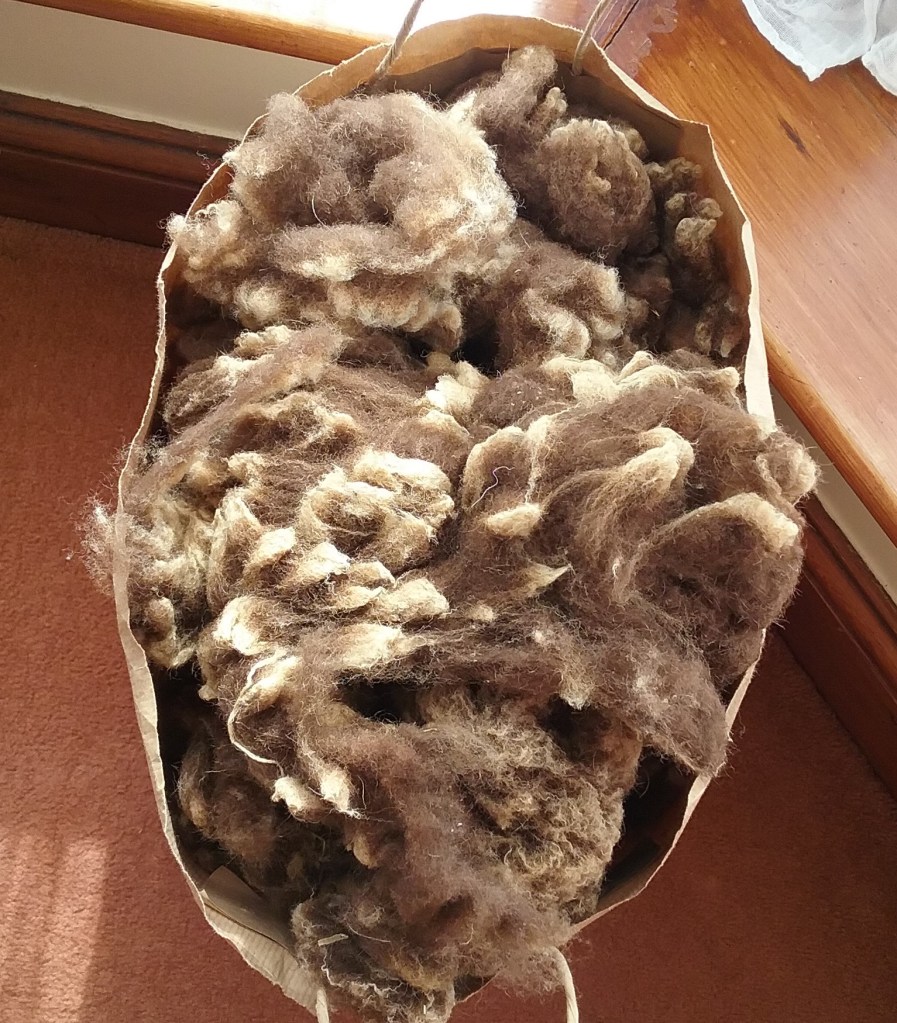
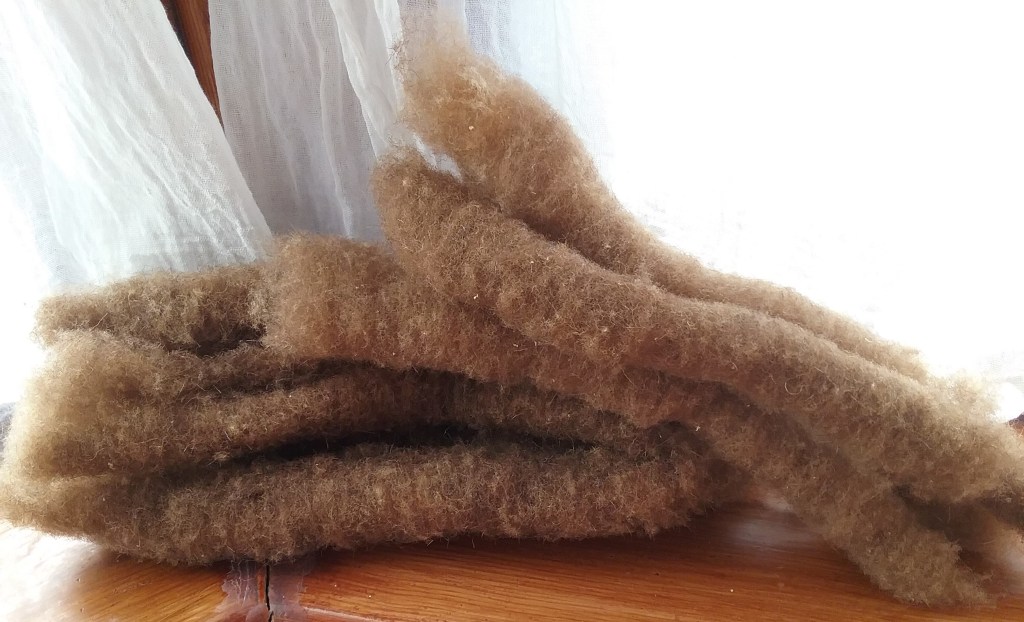
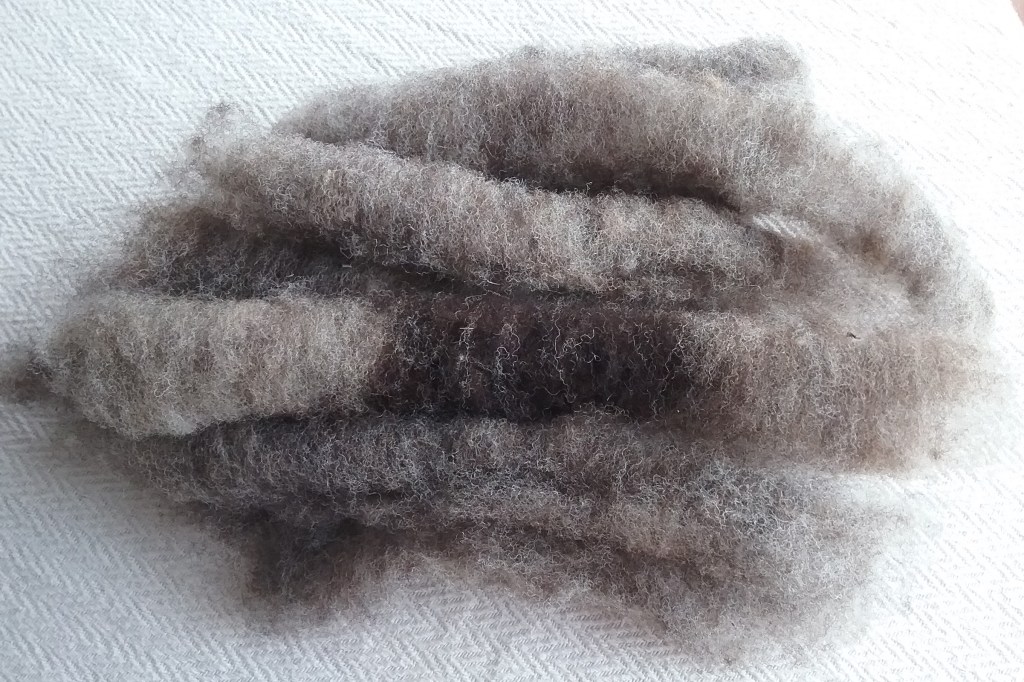
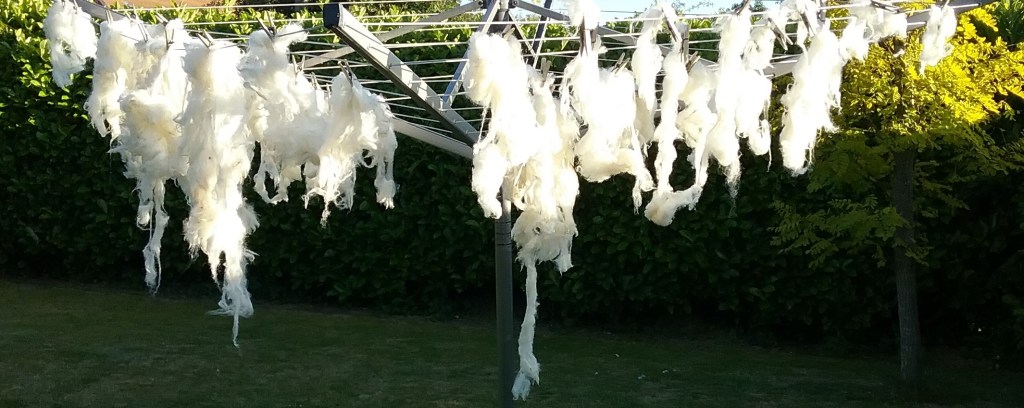
Ryeland Fleece After Washing

Like the Dorset Horn, I found I was able to handle the fleece quite roughly without high risk of felting (although I would be cautious of applying this to all fine, short fibres). I did find however, that this fleece did not dry quickly, which presented a problem since it was late Autumn at the time, so I had to eventually move it indoors. After letting the worst of it drip dry outside, I spread it over a clothes airer, put a tray underneath to catch any drips and with a dehumidifier in the room overnight it began to dry.

Carding

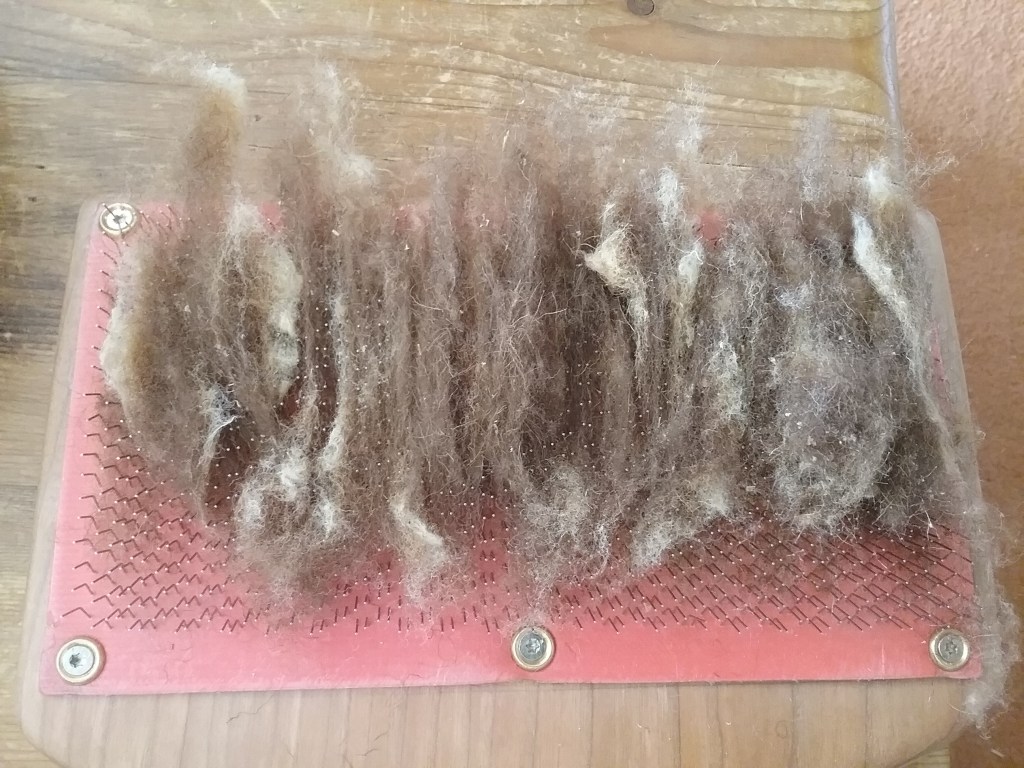
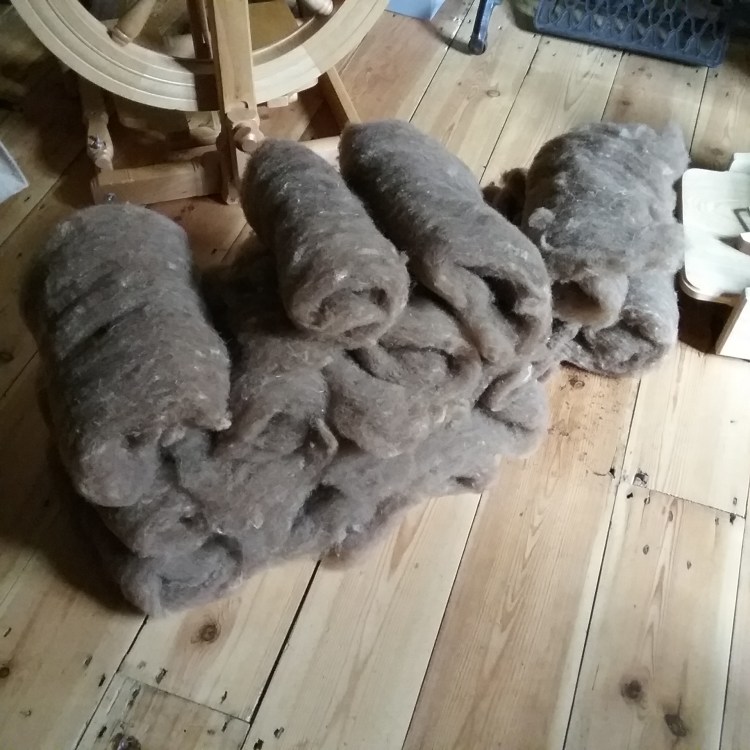
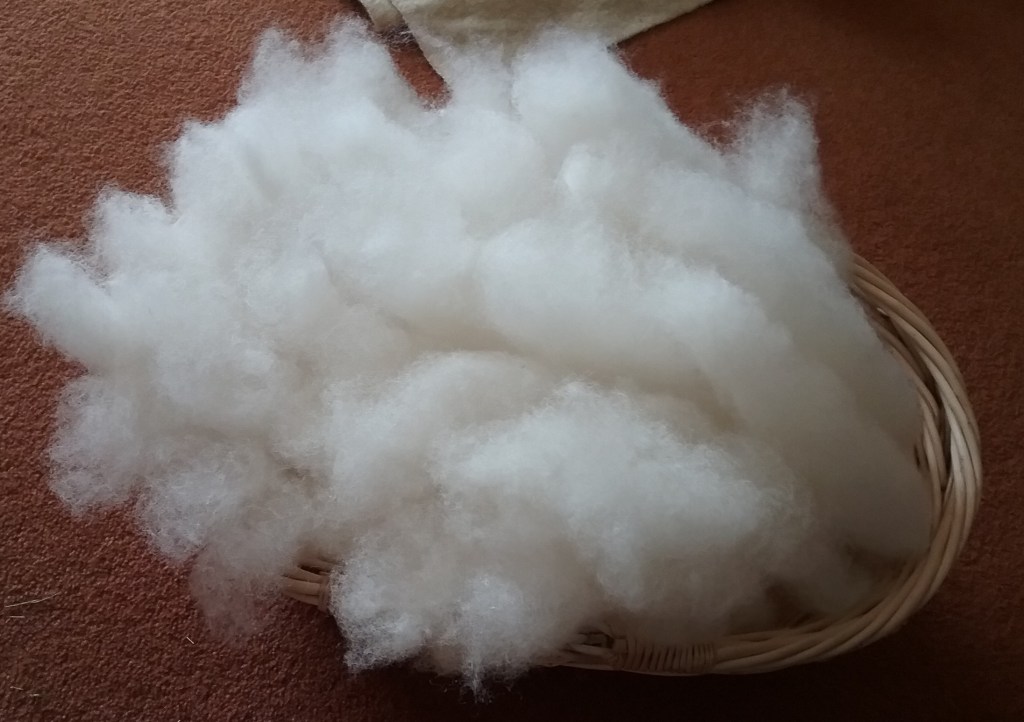
I had assumed that washing would have removed the dust from the fleece, however I was surprised by how much dust and tiny bits of VM were still there. This meant that I had to tease open each lock individually and pick out as many bits as possible before applying it to the carders. This proved very time consuming and due to the amount of dust, I had to card outside when possible to avoid making a mess. The rolags produced from the Ryeland, are however very soft and light, so are definitely worth the hard work, however tedious!


It’s difficult to quantify how long the fibre prep for this fleece has taken me as drying took much longer due to the weather and I haven’t had as much time to devote to it. I have also been carding a bag full of rolags and then spinning them before repeating the process to make it less tedious and repetative, but the results are definitely worth it!

Let me know if you have any tips/advice in the comments below.

Happy Crafting!

Further Reading about Ryeland:

A Little About: Ryeland

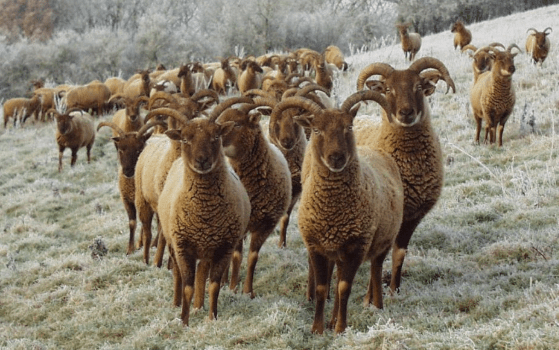
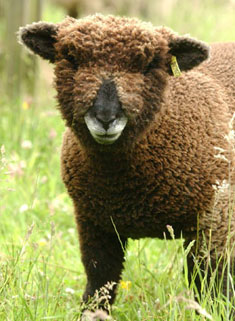
A Coloured Ryeland Sheep
Photo Via http://www.ryelandfbs.com

History

Ryelands are some of Britain’s oldest sheep dating back to the Middle Ages. They are believed to have been developed by Monks in Leominster from the Spanish Merino, a breed with which their fleece once rivaled. Ryeland wool was of such high quality it became the standard for wool to be assessed against and in the 14th century was shipped to Europe for a high price. It’s popularity increased in Elizabethan times when it is rumored that Queen Elizabeth I was given a pair of Ryeland stockings and would henceforth wear no other wool. It is also believed that the Wool Sack in the House of Lords was originally stuffed with Ryeland fleece.

Although once a highly popular breed, by the 1970’s with the decline of the wool industry, it was listed by the RBST as being rare. Since then there has been an increase in popularity of the Ryeland as a hobby sheep, and today they are no longer on the RBST’s danger list.

Fleece Research

Keen to use my spun wool to make something for me to wear, the soft fleece of these teddy bear like sheep sounded like the perfect option. Ryelands can be either white or coloured, with the coloured fleece varying from light browns to greys and blacks. The fibre is a good length to card and with it’s crimp would lend itself to woolen spinning, perfect for making something warm and cosy. Finally, unlike other very fine fibres, my research stated it was reluctant to felt – going as far to say some fleeces could be lightly machine washed, so there was less chance of accidentally felting my fleece during the washing process.

Further Reading

The following sources have been used for reference

  • Breed Society Website – http://www.ryelandfbs.com/
  • British Sheep & Wool by the British Wool Marketing Board – ISBN 9780904969108
  • The Field Guide to Fleece by Deborah Robson & Carol Ekarius – ISBN 9781612121789

Spinning: Dorset Horn

Spinning Singles

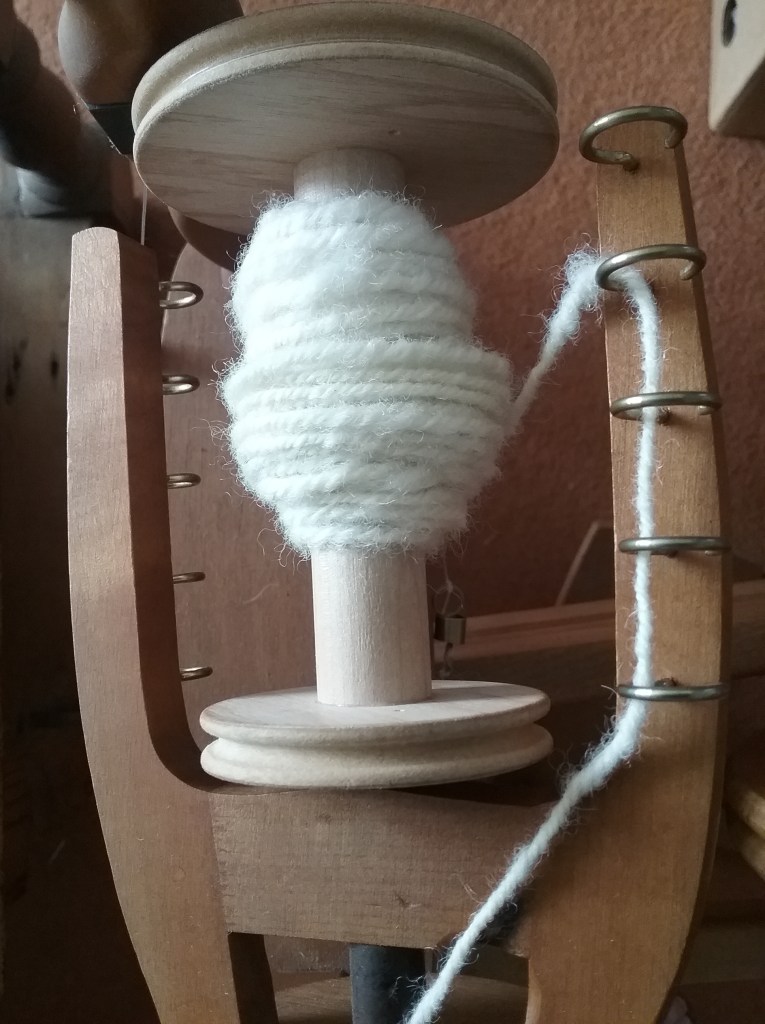
After I had produced my rolags I began the process of spinning. When I started the Dorset Horn spin, I had not spent much time with my wheel and had only spun fibres that were commercially carded, so I wasn’t sure how my rolags would behave. With my limited experience on the wheel, I started off by spinning the rolags using a short draw, anticipating that this would give the finished yarn more of a worsted drape than a woolen spring. I found this fibre held together well, and as I gradually got a feel for it, I began to use a long draw which felt very natural with the Dorset horn, so I continued spinning in this way. Periodically I would come across a stray kemp hair, but since they were dark it was very easy to remove them (and many fell out when I used long draw).

I saved a few rolags to try spinning with my drop spindle and was found it very easy to spin. My go to drop spindle method for new fibre is the ‘park and draft’, but I found that the Dorset Horn had a way of almost spinning itself and it was so easy to draught out that I actually began to spin continuously on the spindle without ‘parking’ it.

Navajo Plying/Chain Plying on the Wheel

Plying

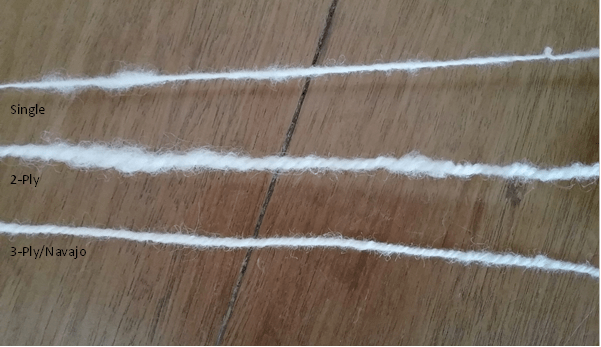
Creating a 2-ply on my wheel was quick and easy, although I had to make sure any kinks were out of the singles as I plied them, since the fibre was so elastic and quite energised (however this could be related to my tensioning of the wheel). Even before washing this created a bouncy woolen 2-ply.

I then experimented with creating a 3-ply by chain plying (or navajo plying) on the wheel using the single spun on my drop spindle. The resulting yarn was soft, but less airy than the 2-ply, which gave it more of a worstead drape with less spring.

Setting the Twist

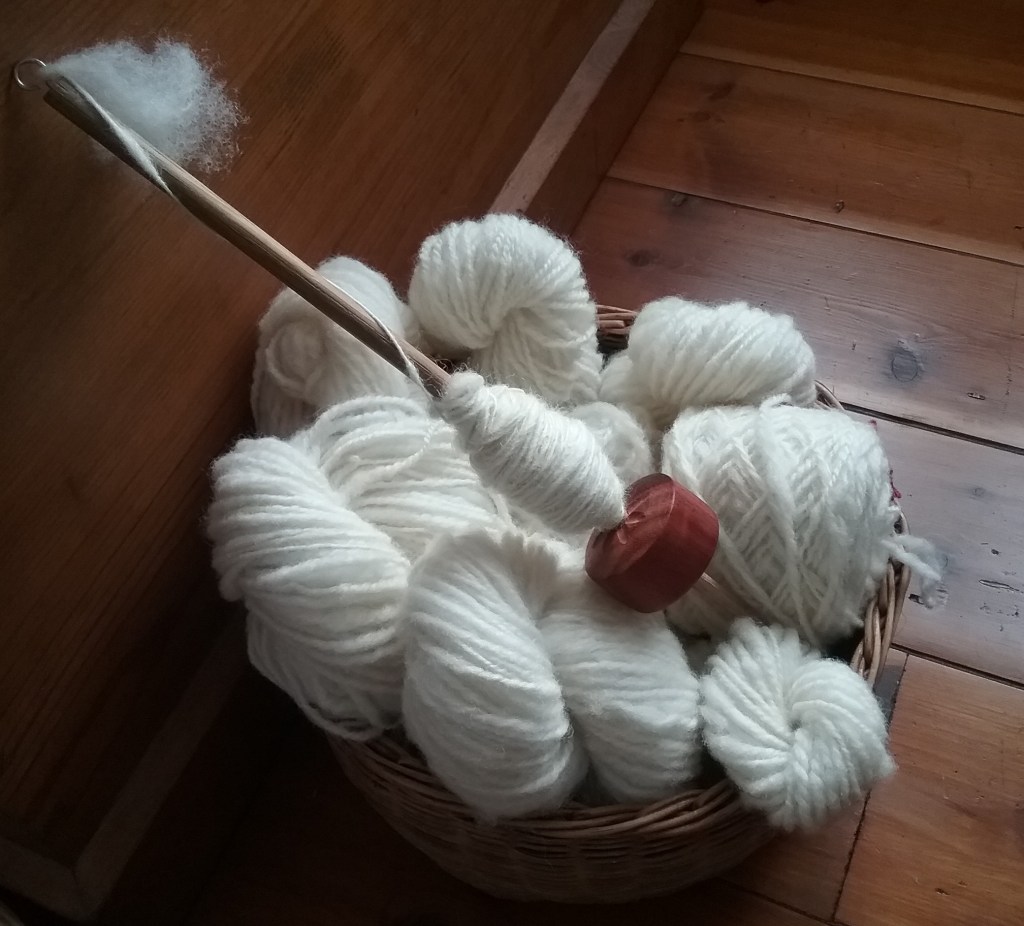
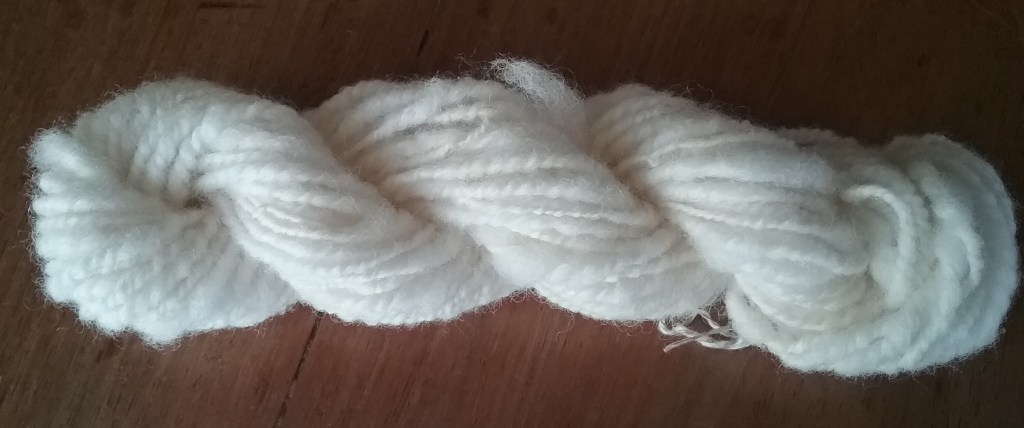
I had assumed that the earlier skeins I had spun short draw would not come out quite as woollen after washing, but to my surprise there was no difference in the finished product. All skeins were soft, squishy and have a surprising crispness about them that you can hear when you squish it. The wool has a subtle lustre and is very bouncy even after plying. On average my one fleece of dorset horn produced around 950m of 2ply (20 skeins) – however I have not yet measured the length of each skein, so this figure may vary considerably to my estimate.

I found this fleece very easy to work with and very adaptable, so would definitely reccommend Dorset Horn for a beginner (it’s definitely made my go to list!). It’s soft and woolen enough to be turned into clothing, however as it’s not prepped commercially, there are areas in the yarn where shorter fibres etc. could cause itchyness to those with sensitive skin. I’m unsure at the moment what to turn it into – though it’s tempting me to make it into a squishy jumper or a blanket!

Happy Crafting!

Making a DIY Blending Board: Part 1

Despite loving the natural tones of wool, I also enjoy playing around with colour. There are lots of options to blend colours for spinning, felting or weaving:

  • Spinning different rolags end to end or drafting two colours together
  • Blending on hand carders
  • Using a blending board
  • Using a drum carder

All these methods have their pros and cons depending on what effect you want to create. Hand carders are cheaper, but only produce one rolag at a time. Drum carders can produce textured batts that are lovely to spin from, but are very expensive. Blending boards can create both rolags, roving and mini batts, but are also quite pricey. Being on a tight budget I decided I would have a go at DIYing a blending board for less than half the price of a new one with some added extras.

The basics you will need:

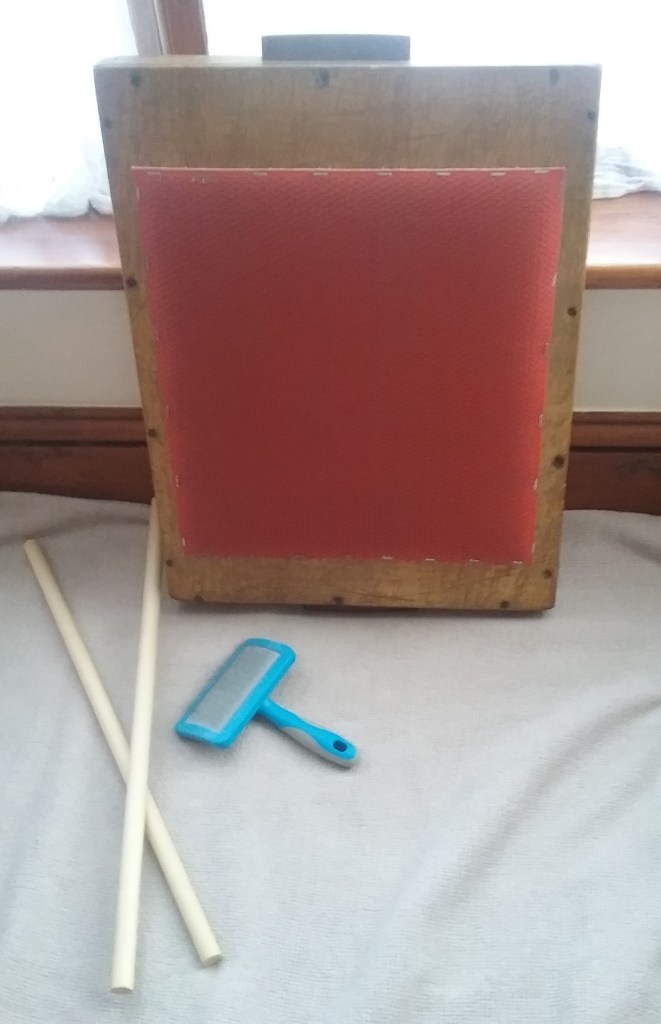
  • 30x30cm Carding cloth (I purchased mine here)
  • A wire slicker dog brush
  • A wooden tray or chopping board larger than 30x30cm
  • A staple gun or screws
  • A round dowel or a pair of long chunky knitting needles

Disclaimer-Please consider your safety and use common sense when working with the above equipment.

Basic Building:

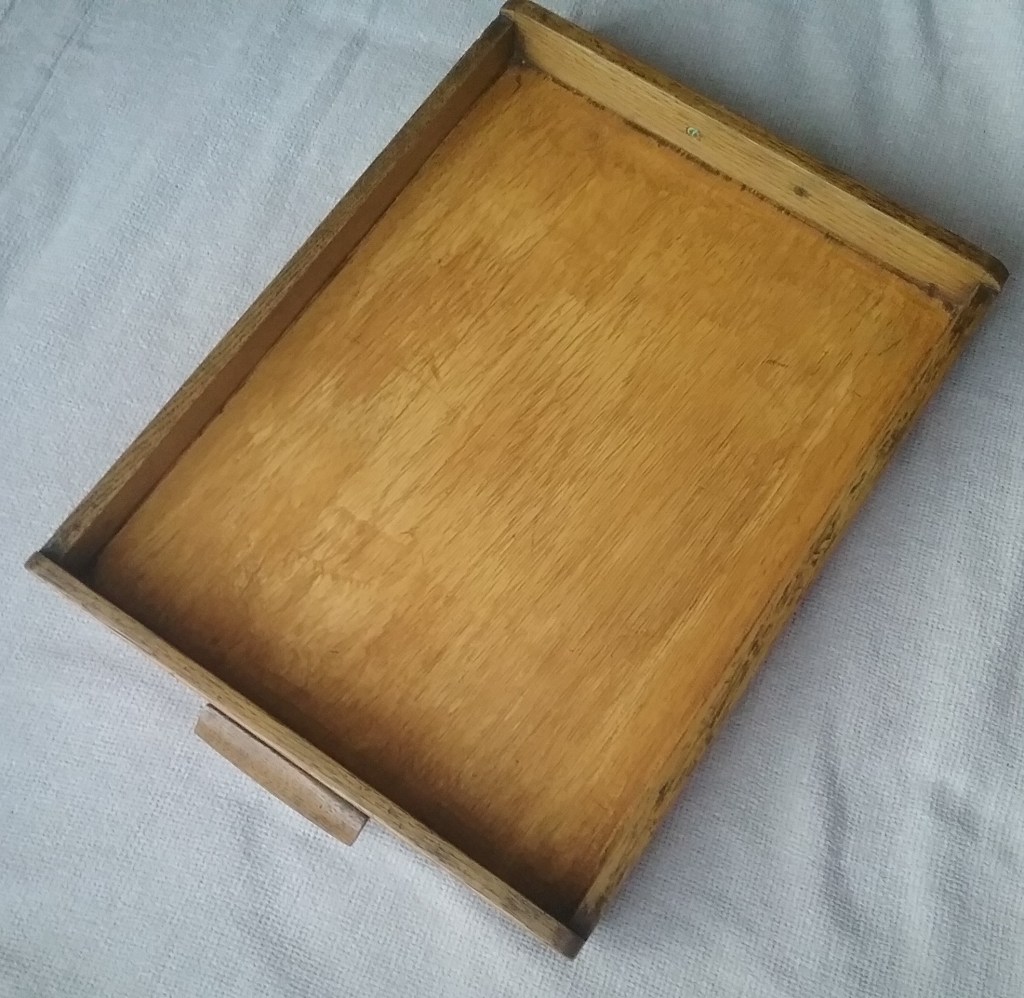
For my board, I salvaged an old wooden tray that belonged to my great grandmother and was sitting on the firewood pile. It was quite scratched and in need of some TLC, so I sanded it down and finished it with some oil. You could also use an old wooden chopping board.

When my carding cloth arrived, I laid it out on the back of the tray and centered it. Using the staple gun, I then put a staple in the top two corners and worked my way along the top edge. Making sure to stretch the cloth out flat I then stapled the bottom corners, before continuing to staple the other edges. It’s advisable not to use glue to adhere the carding cloth as it hinders the flexibility of the backing cloth and makes the teeth go rigid. If you don’t have a staple gun then you could perhaps use screws instead.

I purchased my dowel in one length, so I cut it in half so it was just wider than my tray as you need to be able to get a firm hold of the dowels when creating your rolags. If you have a pair of long chunky knitting needles lying around then you can use these instead of dowel.

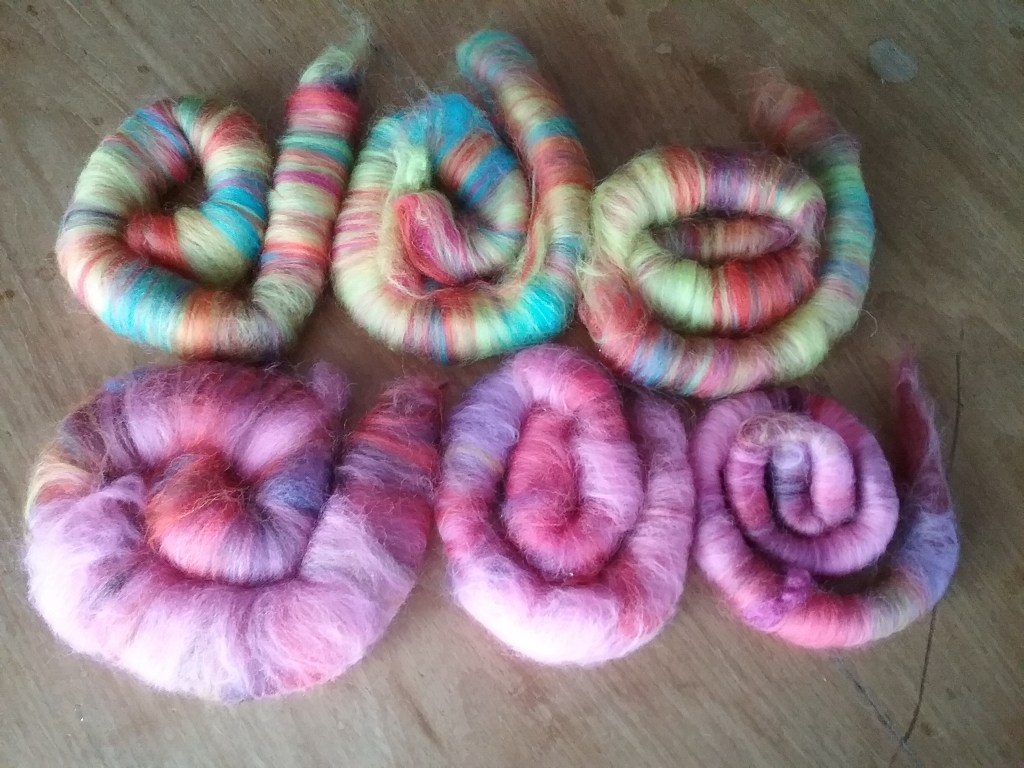
At this point the blending board was perfectly useable and I (and my friends!) became impatient to play around with some acid dyed fleece I’d bought from a small business owner at a local craft fair (I’m not keen on acid dyes, however I haven’t had time to try natural dyeing and do believe in supporting small businesses). I do have some other customisations I want to make to it which I will post in a part 2 at a later date.

If you’ve never used a blending board before then I recommend Ashford’s ‘how to‘ video, however I use my DIY board a little differently, so will make a post about how I use it soon.

Happy Crafting!

Fibre Prep: Dorset Horn

The Fleece

The Dorset Horn was the first raw fleece I had ever worked with, so I needed to do some experimenting with preparation methods that would work best for me and were within my budget (whilst also being as eco-friendly as possible). My first job was to spread the fleece out on a tarpaulin and skirt it (see my policies section for my skirting ethos). The fleece was very clean with minimal kemp/VM and didn’t feel particularly greasy to the touch. The entirety of the fleece felt soft so in the absence of any particularly coarse areas, the whole fleece was washed.

Washing

Although my research described Dorset Horn as reluctant to felt, I was very cautious – I didn’t want to spoil it. I divided the fleece in two and gently placed half into the bath with hot water from the tap and some liquid soap designed for wool & delicate’s and I left it to soak for about an hour. After this I drained the bath and repeated the process again on the same half of fleece, after which I rinsed it until the water ran clear and it didn’t feel soapy on my hands, doing my best not to agitate it. I then pegged it out on the washing line to dry.

Once dry however, it still felt greasy and after running a small sample through my hand carders it was going to be hard work for them (and my arms!). I tried a different tactic for the other half of the fleece. Like before, I ran the bath with hot water but instead of using liquid soap I dissolved some washing powder into the water before placing the fleece in and instantly the water went brown, so it seemed the washing powder was a better emulsifier for the lanolin than the liquid soap. I repeated this process once more for the second half of the fleece, rinsed it and put it out to dry. When this wool dried I couldn’t feel much lanolin at all, so I re-washed the first half of the fleece once using the washing powder, which removed a substantial amount of the grease.

This process took me about 3 days and as with washing any raw fleece, produced a very organic smell (I found that the liquid soap produced a stronger smell than the washing powder, despite it removing less grease). By the second half of the fleece I was squeezing the water out during rinsing, so discovered that I could be much rougher handling raw fleece than I originally anticipated.

Carding

My fibre prep equipment consists of a pair of handmade 72ppi hand carders kindly given to me as a gift. Dorset Horn is quite an elastic fibre with moderate crimp and with a staple from this fleece measured at 3.5″ was easy to separate out and apply to the carders. There was minimal VM/kemp left in the fleece after skirting and washing, but most of what was left fell out during carding. With the fleece now grease free, carding was light work and produced very light, fluffy and bouncy rolags ready to spin.


Overall this process was easier than I expected, but it was more time consuming. Let me know if you have any tips/advice in the comments below.

Happy Crafting!

Further Reading about Dorset Horn:

A Little About: Dorset Horn

A Dorset Horn Sheep
Photo via http://www.dorsetsheep.org.uk

History

Dorset Horn sheep have been around in the UK since the 17th century, making them one of the oldest breeds in the UK (although they were officially established in the 19th century at the time the first flock book was published). They have the unusual characteristic of being able to breed all year round and are quite hardy, so over time the breed was exported around the world. In the 20th Century the Poll Dorset, a hornless version of the Dorset Horn was developed in Australia. Without horns, the Polled Dorset sheep were easier to handle and so, when imported into the UK became more popular with farmers than the Dorset Horn, leading to the Dorset Horn becoming a conservation breed.

Fleece Research

After researching different fleeces, the Dorset Horn seemed an ideal starter fleece for me as I had never worked with a raw fleece before. It was white, so I had the option of experimenting with dye if I wanted to, it has a medium staple length (between 8-10cm*) so should not require as much skill/experience to spin, it could be prepped using most methods and is most commonly used for garments or homeware, so there were lots of options when it came to using the finished wool. Most importantly for me though – it is reluctant to felt* so I wouldn’t have to worry as much about spoiling a whole fleece by giving it too much agitation or heat.

Further Reading

Sources with a * in front I have used to research specific details above