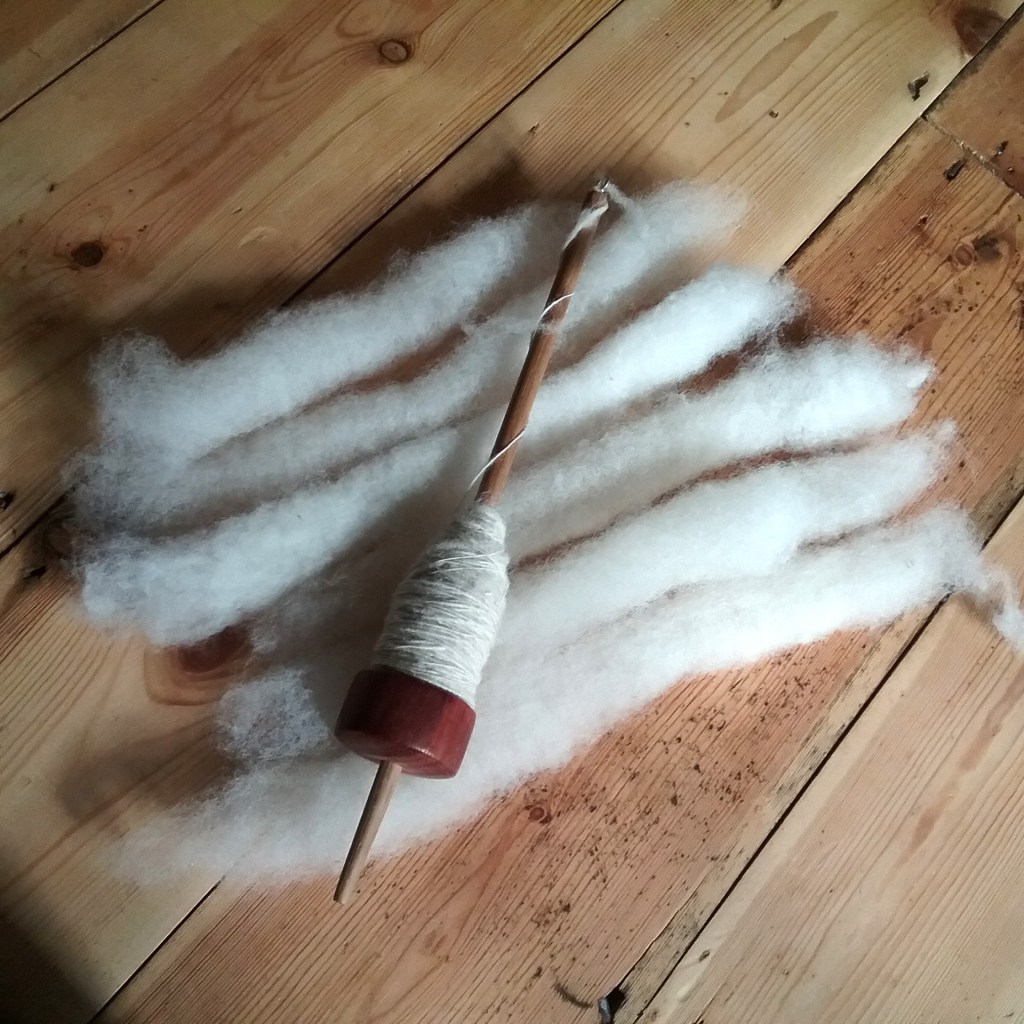
When I began spinning this Clun Forest my intention was to turn it into a woven cloak, which dictated how I went about spinning. As mentioned at the end of my fibre prep post, I ended up impulsively casting on a Victorian jumper using the Clun Forest yarn, so although the method I used produces a sturdy yarn that knits up well, if I had been spinning with the intention of knitting I would probably have made it a 2-ply.
Spinning Singles
I originally planned to use the yarn for both warp and weft so knew I would need a thin, but strong yarn for the warp. I decided the best way to achieve this was to spin thin singles and then chain ply them into a 3 ply yarn. I began the process of spinning from rolags on my Ashford traditional and the resulting singles were fluffy with significant halo around them (I decided to leave in some small nepps for added texture).
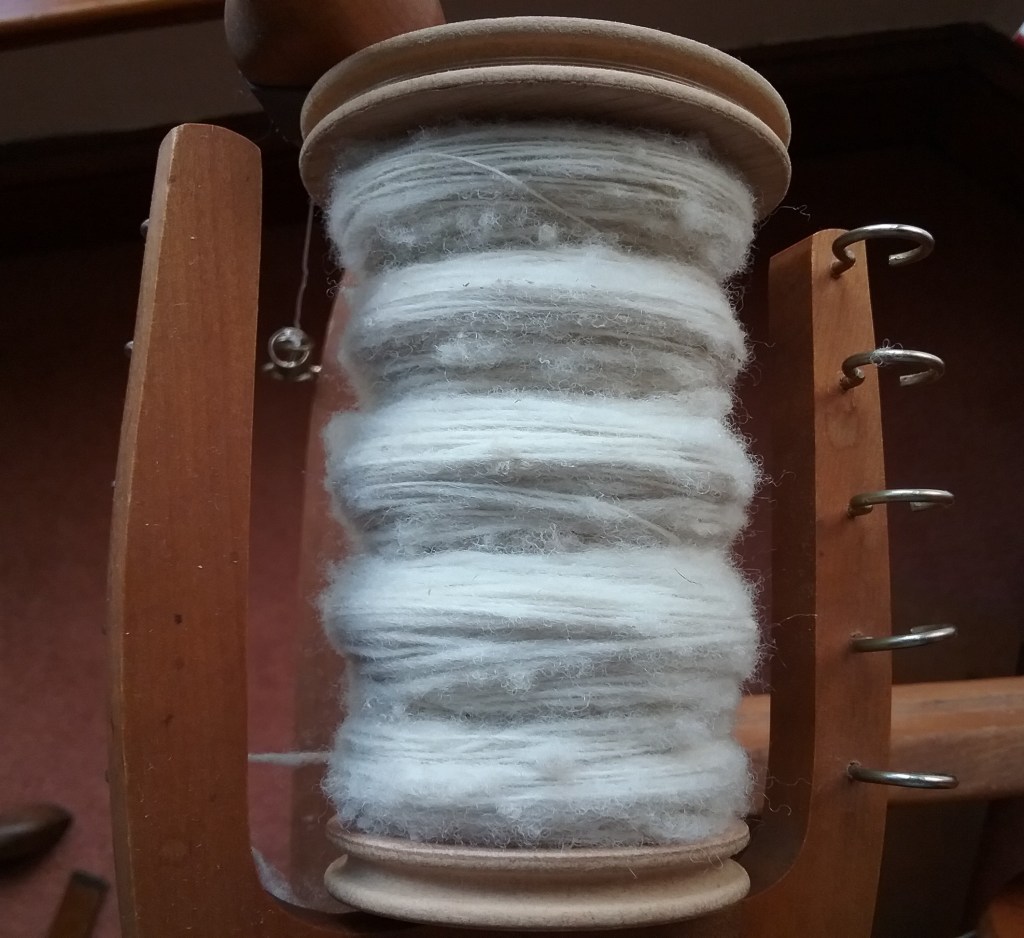
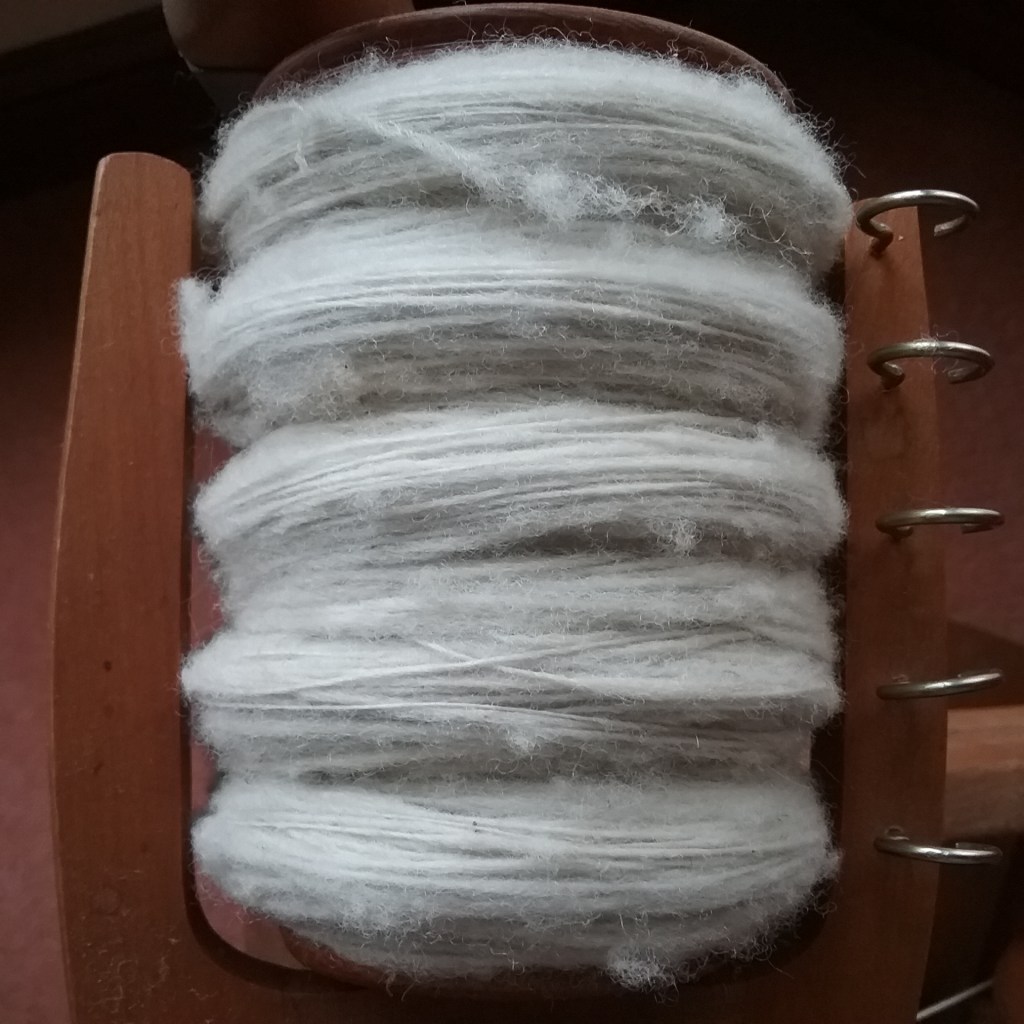
A while later I saw a second-hand Kromski Sonata spinning wheel advertised for sale locally (these wheels fold into a rucksack so you can travel with them). I had been considering getting a portable wheel for a while and knowing this would make it easier to upgrade my Ashford trad with its Jumbo Flyer, I purchased it and transferred Clun forest spinning to the Sonata while I experimented with Lincoln Longwool on the Trad.
This was an interesting experiment in how much a wheel influences the spinner. At a natural dye workshop several years ago, someone said that no matter how hard they tried they couldn’t spin a lace weight yarn on their wheel and another member of the group explained that different wheels were more suited to spinning certain yarns than others (I believe they recommended a Louet wheel for spinning lace). Most of my spinning so far has been medium/thick, but I never had a problem spinning finer yarn on my Ashford (though it is more difficult with the jumbo flyer). I was pleasantly surprised to discover that the Sonata seemed very suited to spinning fine yarns. I’m unsure if the castle style alters the tension or the double treadle gives me more control, but I found the fine Clun forest singles I spun on the Sonata were more even than those spun on the Trad, despite the wheels both being single drive scotch tension.
Spindle Spinning
Early into spinning this fleece I decided to see how the rolags would spin on the spindle. Much the same as on the wheel, the yarn had a halo around it and the fibres weren’t too slippery. It seems to make a good beginner fibre too; if I’m out with my drop spindle then I’ll let friends or curious passers by have a go and so far people have tended to get the hang of spinning very quickly with this fibre.
Plying
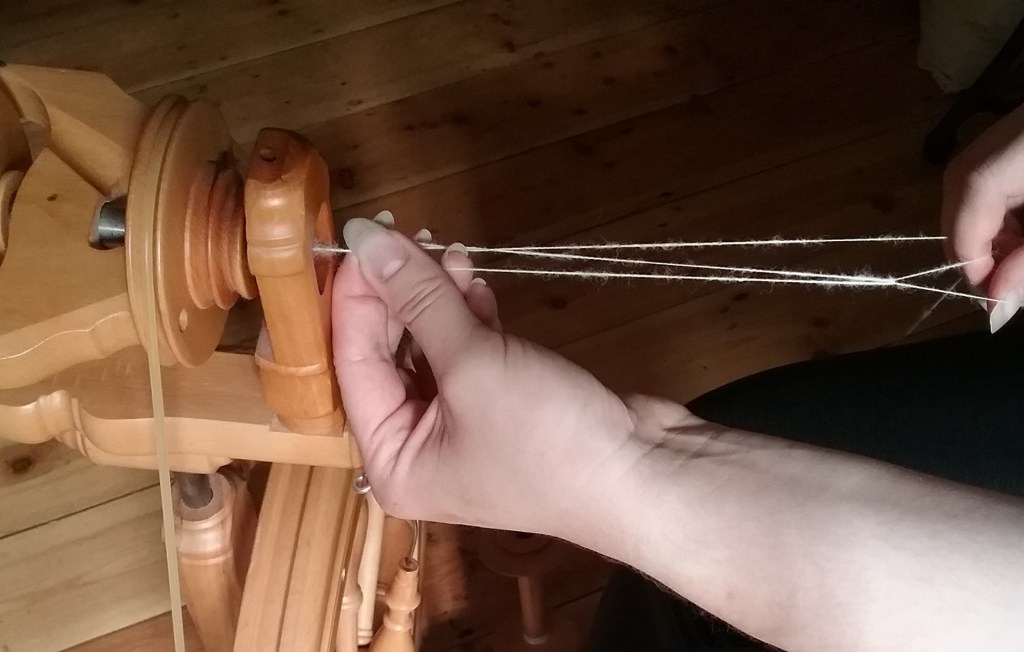
Chain plying creates a 3 ply yarn from a single thread in a similar way to a crochet chain stitch. I find chain plying quite fun as I don’t have to worry about getting my yarn lengths even on multiple bobbins and can also work from one bobbin at a time which means I don’t run out. I’ve read several recommendations that chain plying should be used for strength when spinning sock yarn, so although I think a 2-ply would have been adequate for knitting, it may be that the jumper is harder wearing and holds it’s shape better since it’s been chain plied.
I’m currently carding and spinning one or two balls at a time as I knit, so although the jumper is using quite a bit of yarn I anticipate there will still be plenty left over to use in other projects and I’m curious to see how it behaves when weaving (although I may not make a cloak as it seems a shame for a soft fibre to be used on outer ware).
Happy Spinning!
 Loose Ends
This is so interesting.
LikeLiked by 1 person