Will it spin? Since falling down the fibre rabbit hole it’s a question I find myself asking a lot, particularly of ‘fibres’ that aren’t usually spun but look spin-able. So, instead of just wondering, I decided it would be fun to find out.
Preparing the fibre
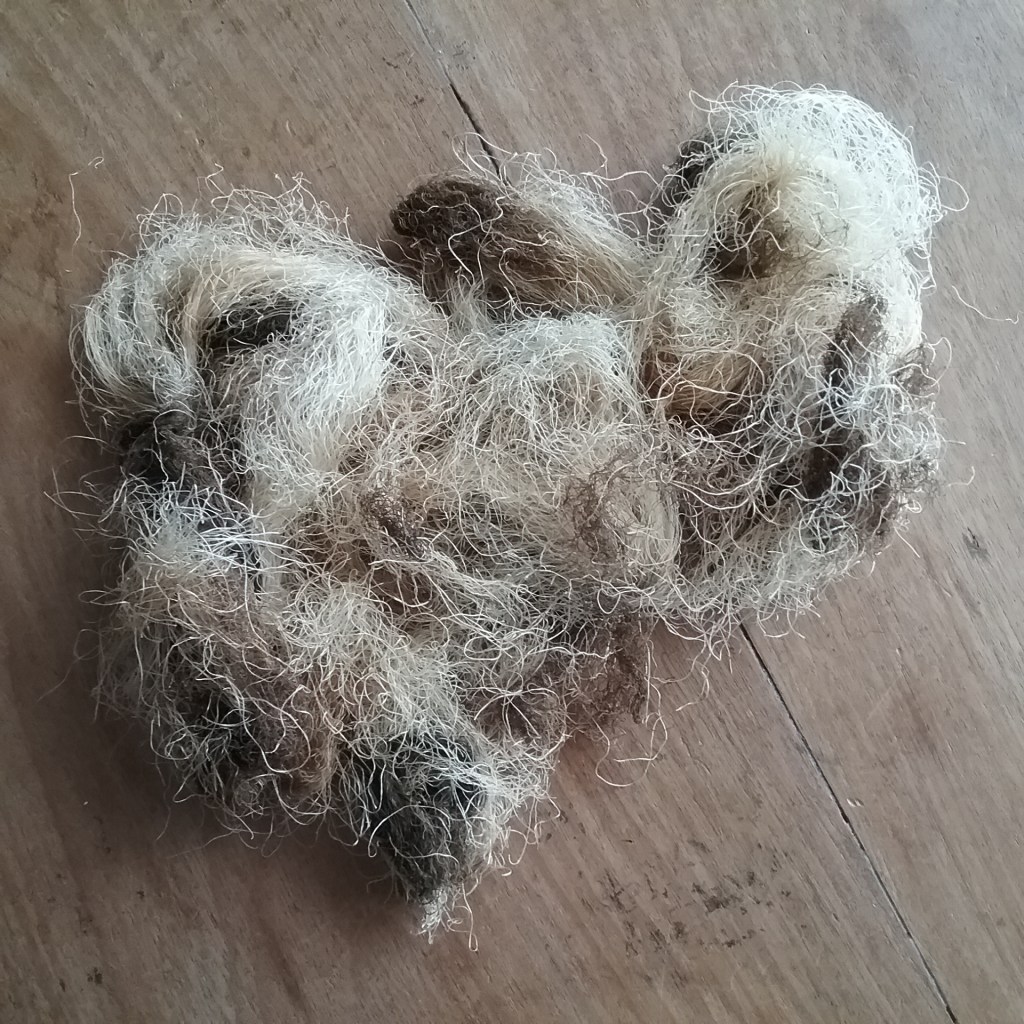
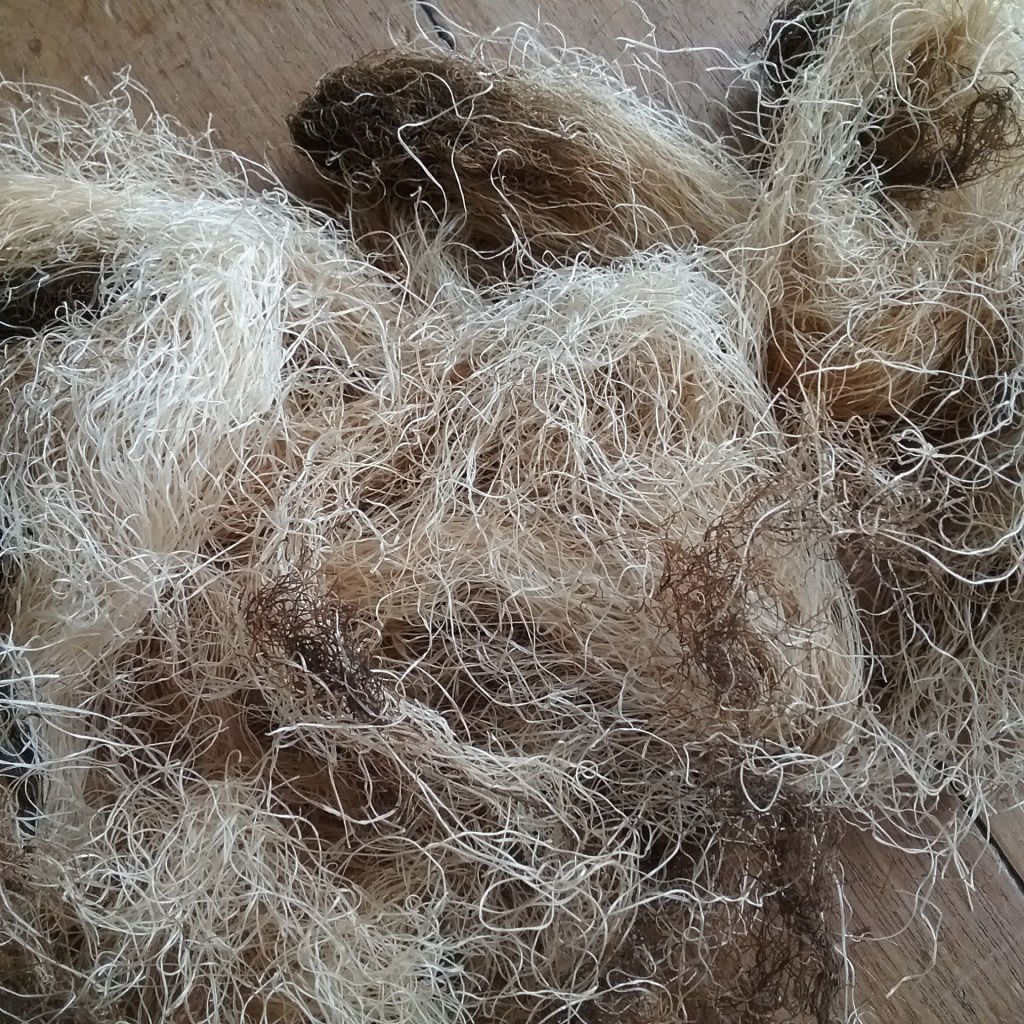
Sweet corn silk is the stringy layer between the husks and the kernels; the plant uses it in pollination. The silk is quite fragile when fresh off the plant and I was concerned that spinning it ‘raw’ would cause the yarn to shrink when it dried or inhibit full drying altogether. After separating the silk from the corn plants I laid it out to dry in the sun for several days and then brought it indoors to dry further. I then gently removed the darker black tips as they had a tendency to snap off which, much like broken fleece staples, would have affected the yarn. I then separated the fibre into more manageable sections to spin with.
Spinning the Corn Silk
I began by having my wheel on a low uptake and slow speed to get used to the feel of the fibre and help to prevent it breaking. For sweet corn silk there is a very fine line between enough twist to make it hold and too much twist causing it to snap, but starting out slowly and making gradual adjustments made it easier. I held the fibre normally with the usual drafting zone and used a short draw to control the twist. At times the fibres did still break, but I found this didn’t affect my control and, as the staple length was long, most broken fibres were held in place by others.

I didn’t feel the fibre would be very strong as a single so decided to try plying it. Andean plying is a method of creating a 2 ply from one single when you have a small length of single (sampling etc.). Fibre is wrapped around the hand (or a plying tool) to create a ‘bracelet’ that can be worn on the wrist with both ends free to be plied together (a bit like a centre pull ball). The bracelet is then unwound as you ply. I’d never Andean plied before, but found it very easy (so much so that I used it on many other projects during TDF). Again, when plying, I started slowly with low uptake to make sure I didn’t break my singles, but they were surprisingly strong and plying was much easier than I expected.
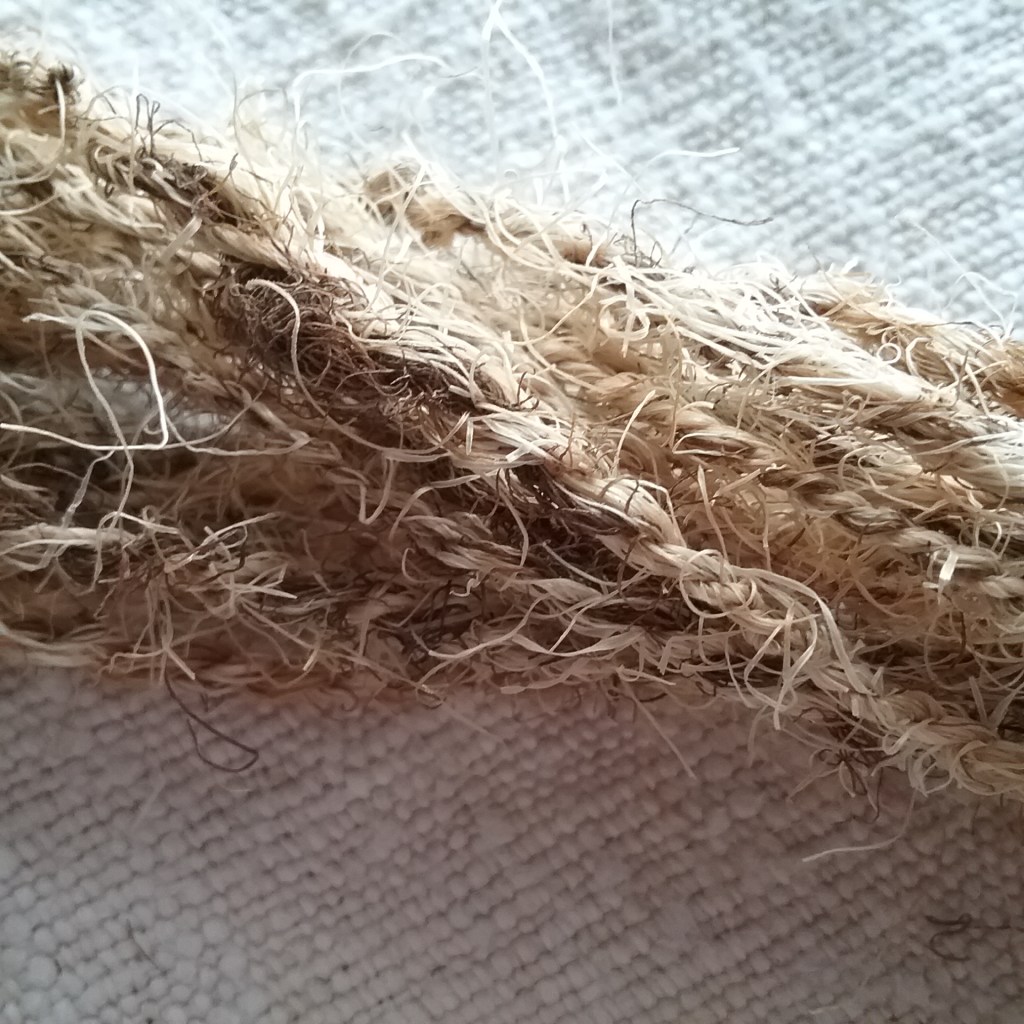
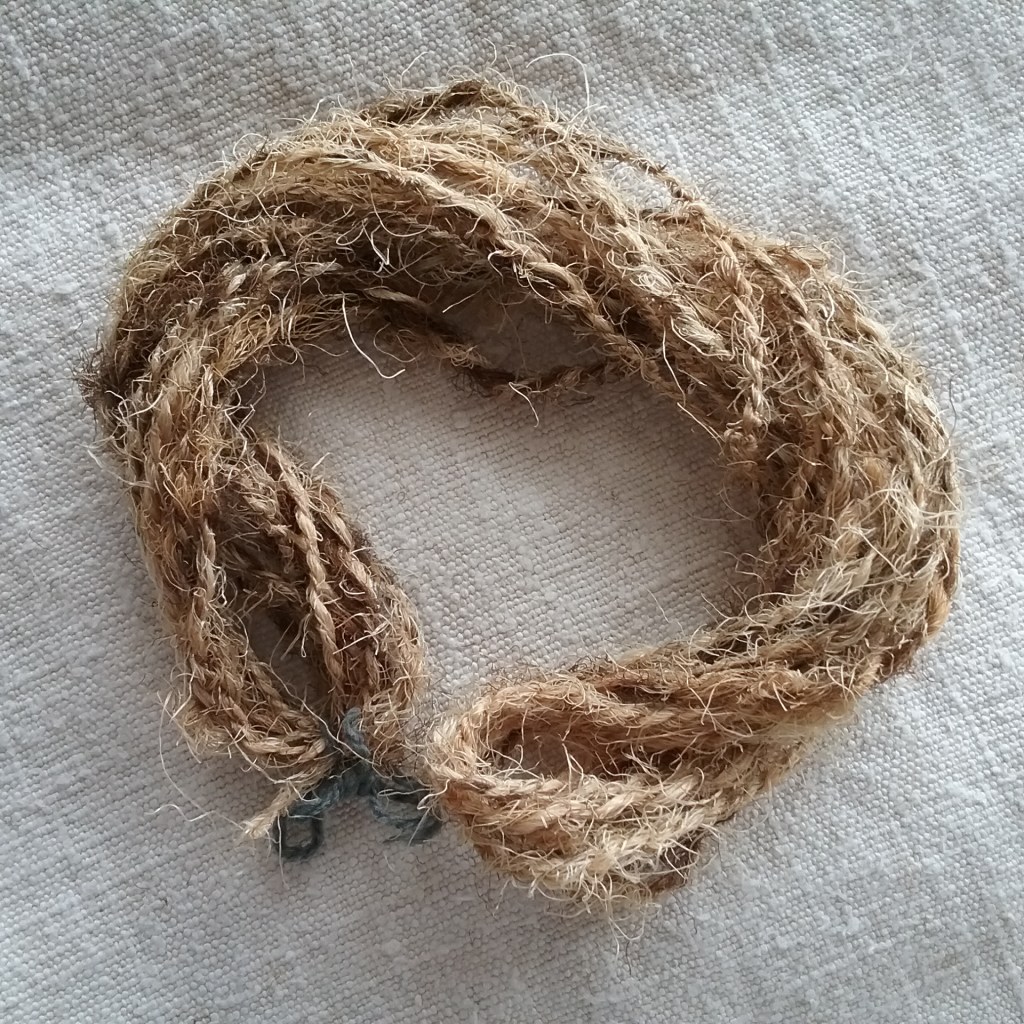
So will it spin? Yes, the resulting yarn was surprisingly sturdy and had a very similar feel to a lightweight rope. Perhaps not the ideal fibre to use in clothing, but it could certainly be used in homeware, gift wrapping or just to tie things up (though I wouldn’t like to trust it to hold anything too heavy).
If you have any suggestions of strange fibres I could try to spin, or if you’ve tried spinning with anything unusual please let me know in the comments below.
Happy Spinning!
Other unusual ‘fibres’ I have spun:
 Loose Ends
Interesting! I once bought some fiber made out of corn at a fiber fair. It was not the silk from the corn. It turned out to be hard to work with and I ended up giving most of it away. I googled it and here is a description I found:
Ingeo® is made by fermenting the simple sugar from the corn plant. This fermentation process transforms the sugar into a polymer called polyactide -tho’ I also ran into some sources that called it polylactic acid, but in either case it is shortened to PLA– which is then extruded at high force like other polymers into a fiber that is spun into yarn.
Corn’s properties include low odor retention and good moisture management. It has a fluid drape and is easy to care for. Quick drying like soy, it also has demonstrated increased soil release properties in the industry’s washing tests, so stains don’t so easily set as with cotton
LikeLiked by 1 person
That’s very interesting – I’d heard about corn and similar fibres being turned into PLA’s for single use packaging as it was compostable (in the right conditions), but not as a textile fibre. I imagine the PLA fibres would be quite slippery to work with by hand? The corn silk fibre was somewhat similar to spinning flax, but a bit more delicate and it would have been tricky to spin a fine yarn. The corn silk was much lighter than flax though, yet has a very good drape, so will be interesting to work with when I decide what to use it for!
LikeLiked by 1 person