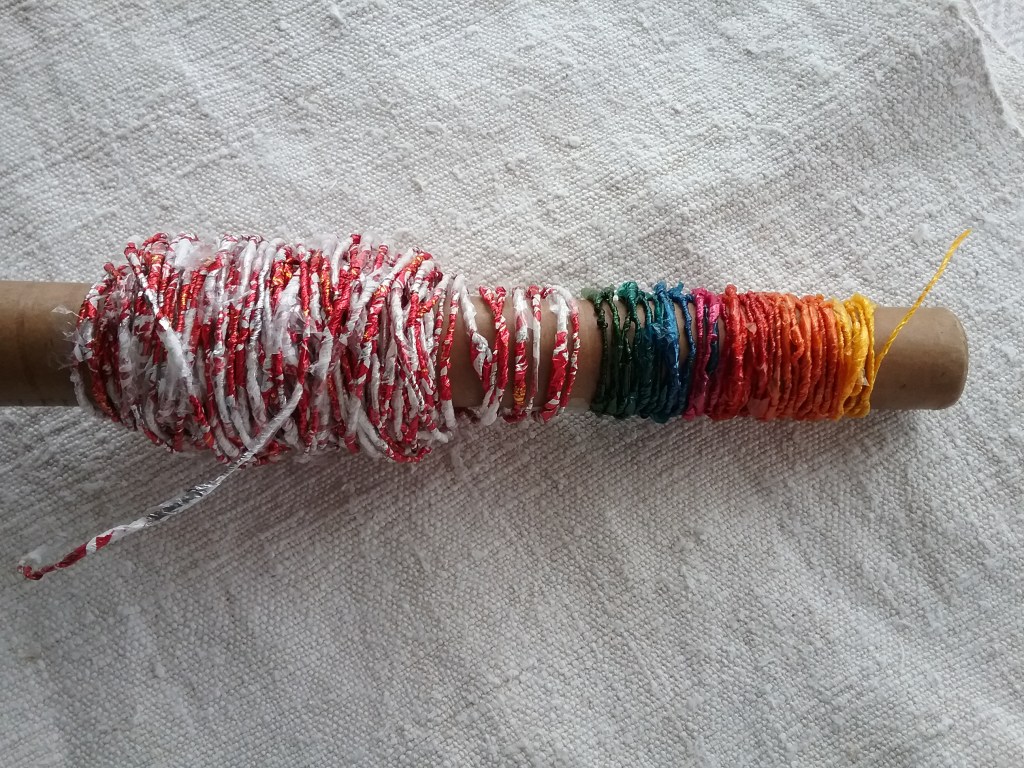
It is difficult in today’s society to avoid plastic entirely; particularly when it comes to packaging made from single use plastic which consumers often have little choice over. Whilst some companies are beginning to use recyclable/biodegradable packaging, I often find, particularly with large companies at least part of the packaging is not recyclable or compostable (I recently ordered some recycled cardboard folders from a large stationary company that arrived well protected in a cardboard box with paper packaging, so why did the company decide to wrap them in individual plastic sleeves first?!).
Further examples of this can be found in food packaging. About 3 years ago I had eaten some chocolate truffles – a gift at Christmas, when I looked into how the packaging could be recycled. Whilst the cardboard box could be recycled, the individual chocolate wrappers made from a non-recyclable plastic bonded to aluminium foil could not. I realised that this was the case for many individually wrapped sweets, so wondered what I could use them for instead of putting them into landfill. I considered how each wrapper is twisted around the sweet at either end and wondered if I could spin them into yarn…
Quick disclaimer – although I am aware that certain brands can probably be identified from my photographs, this post is not an attack on any brand or company (nor am I affiliated with them). Photographs are used to illustrate one method of re-use I have found for non-recyclable sweet wrappers, should you also wish to reduce your plastic waste.
Prepping the Wrappers
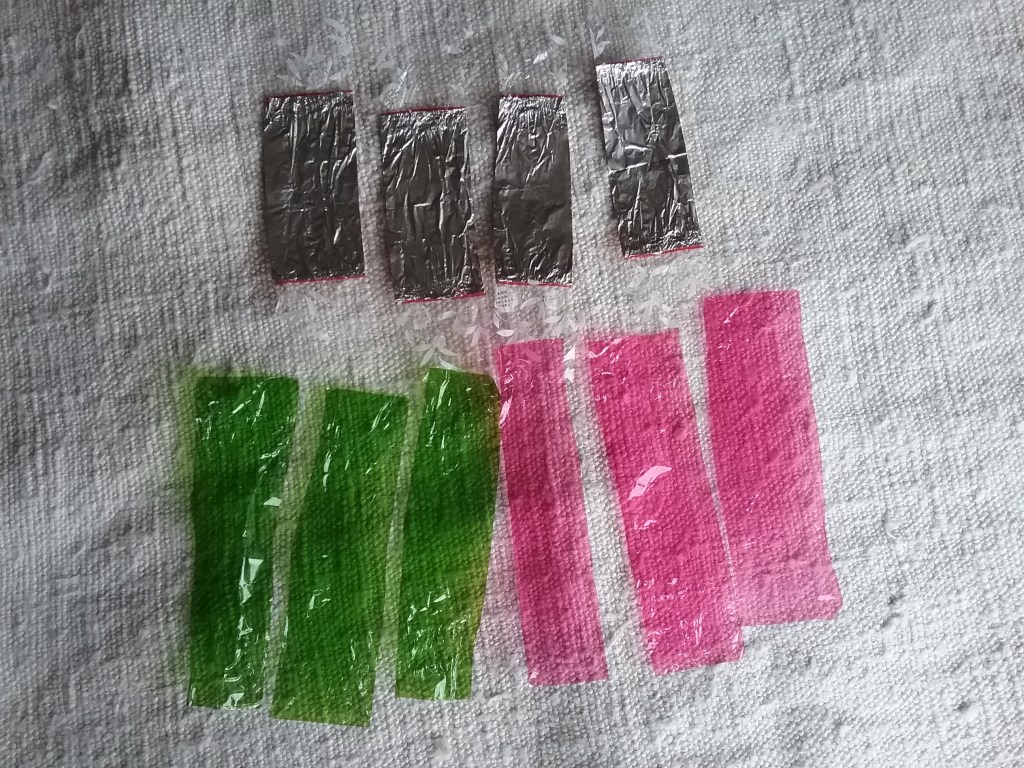
I attempted to spin the wrappers individually, but found that the twist did not travel through well enough, so I decided to cut each wrapper into strips about 1.5-2cm wide as shown below. Please also note that to produce the amount of yarn above, I asked my family to straighten and save their wrappers for the following two Christmases – it drove them mad, but stopped the wrappers going to landfill!
Spinning the Wrappers
Spinning a solid material is very different to spinning fibre. The wrappers twist, but cannot be drafted and the yarn did not get taken up onto the bobbin – I had to stop every 3-4 strips and wind it on manually. Treadling needs to be very slow and you don’t need much twist to spin with. Also as a quick safety note, please be aware that both the plastic and the foil edges on the wrappers can be sharp when handled in this way.
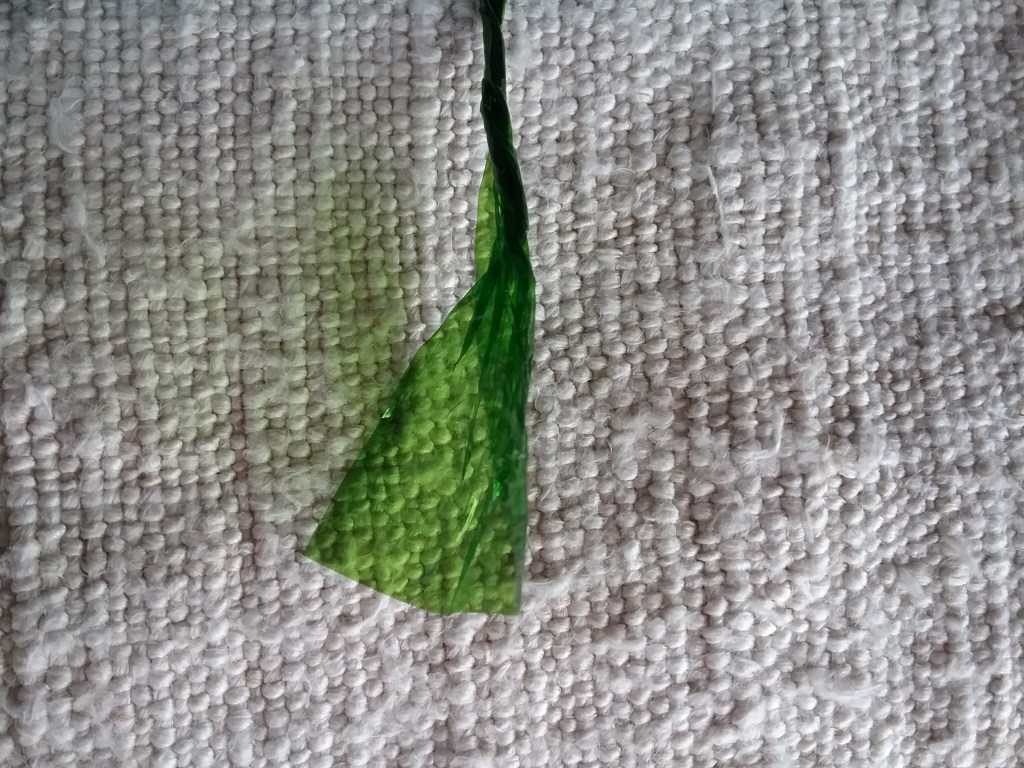
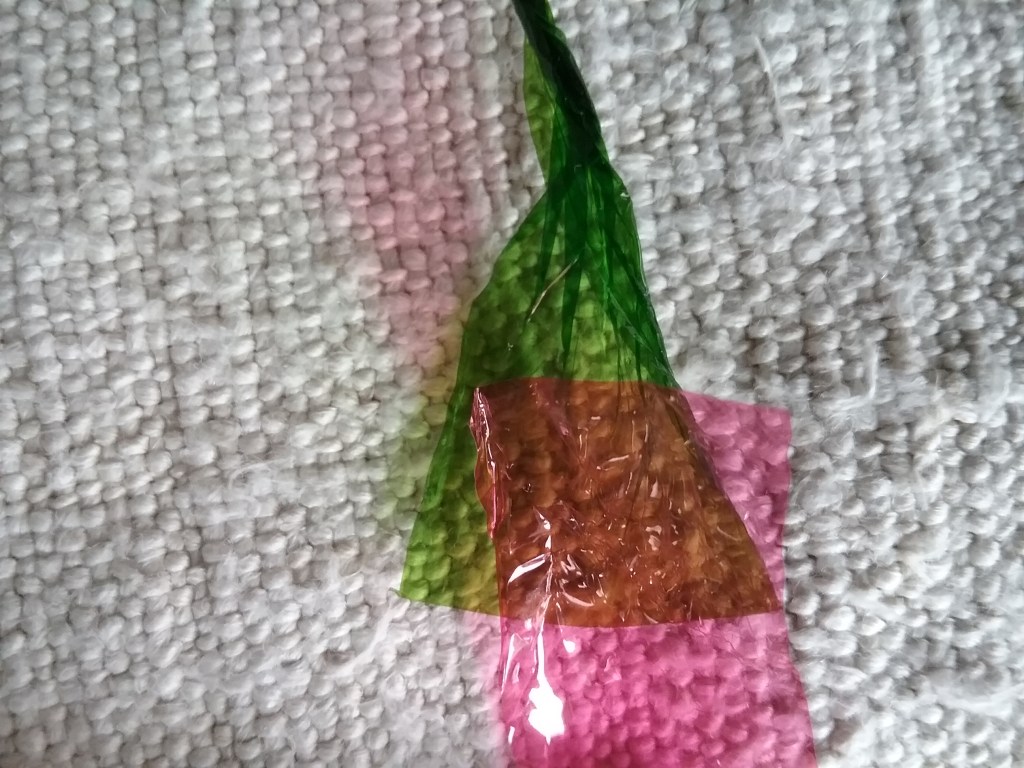
Spinning will always twist the ‘fibre’ in a diagonal direction, so to get the most length out of each strip (if you are spinning with the wheel clockwise) it is best to start in the top left corner and allow the twist to move down to the bottom right (fig.1). Upon reaching the bottom 1-2cm another strip needs to be attached. To do this I overlapped the top left corner of the new strip on top of the bottom right corner of the old strip (fig.2). To begin with I found it useful to stop the wheel whilst positioning the strips. Continue spinning and let the twist travel down catching the new strip in the last 1-2cm of the old strip (fig.3). The process then begins again.
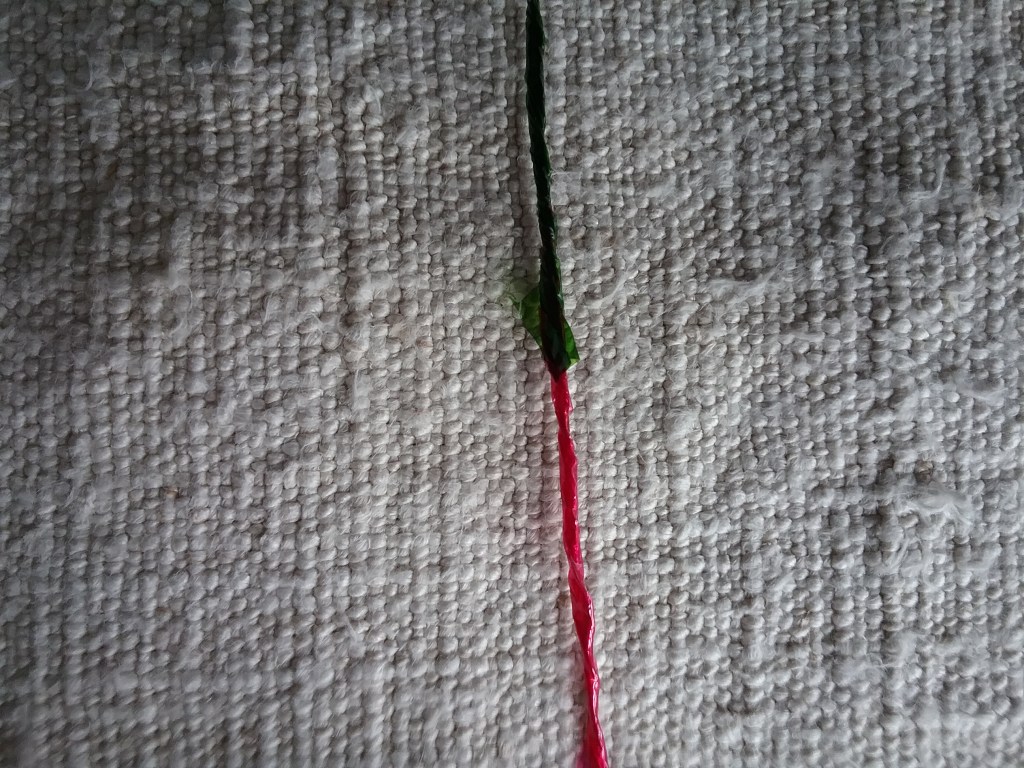
It’s quite a simple process, but does require practice, perseverance and some trial and error. The ‘yarn’ itself is rigid and very rough, but is surprisingly sturdy. I haven’t decided if I’m going to try knitting or weaving with it or what I will turn it into (please feel free to leave any ideas in the comments!) This method should work with any kind of plastic sweet wrapper (with or without foil – I’ve tested it with both) and I imagine that a modified method would work with newspaper and possibly fabric scraps (perhaps I’ll try that another day!).
Let me know if you think you’ll attempt spinning sweet wrappers in the comments below, or if you’ve done any unconventional spinning lately.
Happy Crafting!
 Loose Ends
Interesting! And some dedication for yarn! Could work for crocheting something like a small storage basket?
LikeLiked by 2 people
That’s a good idea – I’ve not yet taught myself crochet, so it would give me a chance to expand my skillset and would probably be much easier than trying to knit with it! I think I’ve also seen a method where you crochet around a piece of stiffer yarn or rope to create a 3D structure (although that might be called something else!), which could also work.
LikeLiked by 2 people
I’m mostly a crocheter rather than knitter or weaver so I’m a little biased but I definitely find crochet is great for more unusual yarns like raffia, twine or in this case, plastic wrappers. Crocheting around rope for a more structured piece could definitely work!
LikeLiked by 2 people