The Fleece
The Dorset Horn was the first raw fleece I had ever worked with, so I needed to do some experimenting with preparation methods that would work best for me and were within my budget (whilst also being as eco-friendly as possible). My first job was to spread the fleece out on a tarpaulin and skirt it (see my policies section for my skirting ethos). The fleece was very clean with minimal kemp/VM and didn’t feel particularly greasy to the touch. The entirety of the fleece felt soft so in the absence of any particularly coarse areas, the whole fleece was washed.
Washing
Although my research described Dorset Horn as reluctant to felt, I was very cautious – I didn’t want to spoil it. I divided the fleece in two and gently placed half into the bath with hot water from the tap and some liquid soap designed for wool & delicate’s and I left it to soak for about an hour. After this I drained the bath and repeated the process again on the same half of fleece, after which I rinsed it until the water ran clear and it didn’t feel soapy on my hands, doing my best not to agitate it. I then pegged it out on the washing line to dry.
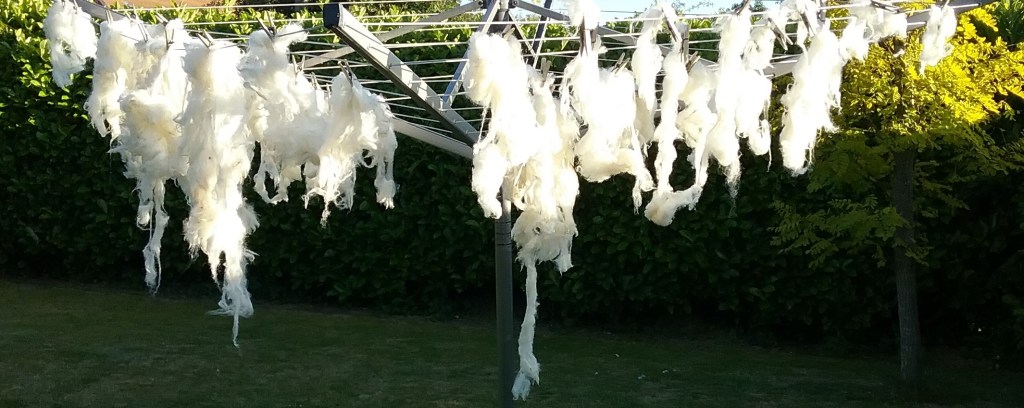
Once dry however, it still felt greasy and after running a small sample through my hand carders it was going to be hard work for them (and my arms!). I tried a different tactic for the other half of the fleece. Like before, I ran the bath with hot water but instead of using liquid soap I dissolved some washing powder into the water before placing the fleece in and instantly the water went brown, so it seemed the washing powder was a better emulsifier for the lanolin than the liquid soap. I repeated this process once more for the second half of the fleece, rinsed it and put it out to dry. When this wool dried I couldn’t feel much lanolin at all, so I re-washed the first half of the fleece once using the washing powder, which removed a substantial amount of the grease.
This process took me about 3 days and as with washing any raw fleece, produced a very organic smell (I found that the liquid soap produced a stronger smell than the washing powder, despite it removing less grease). By the second half of the fleece I was squeezing the water out during rinsing, so discovered that I could be much rougher handling raw fleece than I originally anticipated.
Carding
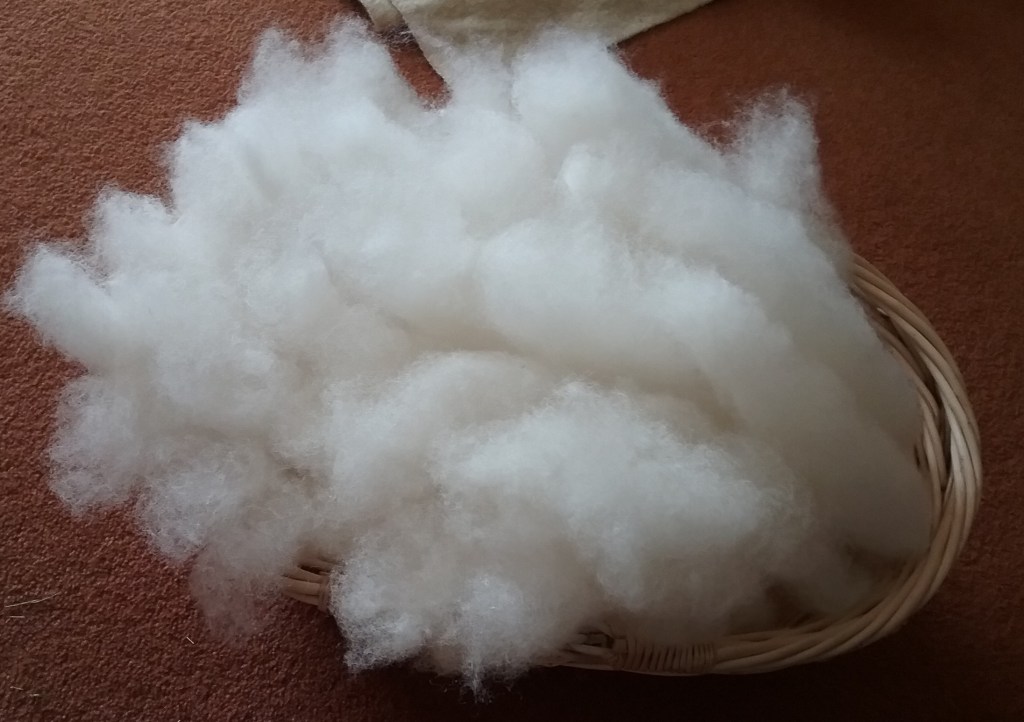
My fibre prep equipment consists of a pair of handmade 72ppi hand carders kindly given to me as a gift. Dorset Horn is quite an elastic fibre with moderate crimp and with a staple from this fleece measured at 3.5″ was easy to separate out and apply to the carders. There was minimal VM/kemp left in the fleece after skirting and washing, but most of what was left fell out during carding. With the fleece now grease free, carding was light work and produced very light, fluffy and bouncy rolags ready to spin.
Overall this process was easier than I expected, but it was more time consuming. Let me know if you have any tips/advice in the comments below.
Happy Crafting!
Further Reading about Dorset Horn:
- Rare Breeds Survival Trust Website – https://www.rbst.org.uk/dorset-horn
- Breed Society Website – http://www.dorsetsheep.org.uk/
 Loose Ends
I really like your website and hope that you keep at it! 🙂 It is a grassroots reckoning with a topic not seen, starting from the ground up. Please share what you learn so the rest of us may become better connected as well. And a very good choice of name as well.
Thanks so much for allowing me to look in from north central Canada.
The Boreal Weaver
LikeLiked by 1 person
Thank you so much!
LikeLike