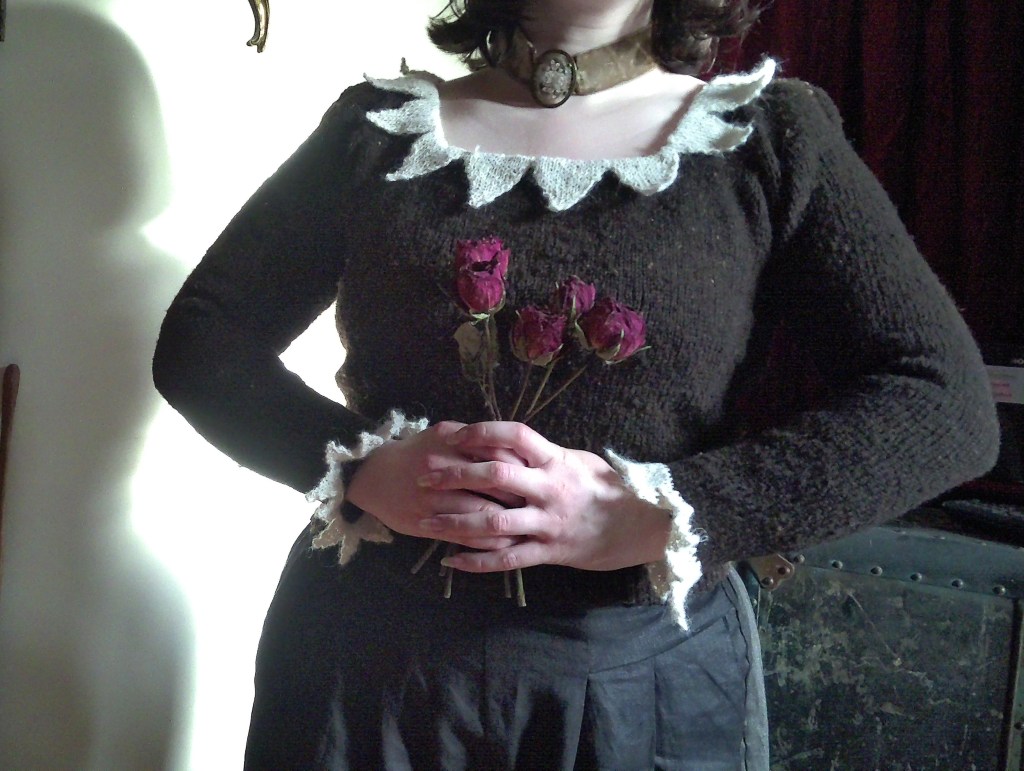
Hello everyone, I’ve been busy over the festive period finishing off a project that has long been on my wish list. I never thought I would make much of a jumper knitter, but since tackling my Victorian cycling jumper recreation the other year, I’m not as intimidated by knitted garments anymore and have realised that if I pick a project with interesting constructional or decorative elements, the proportion of active/mindless knitting is just about right (I personally prefer active knitting).
The Plan
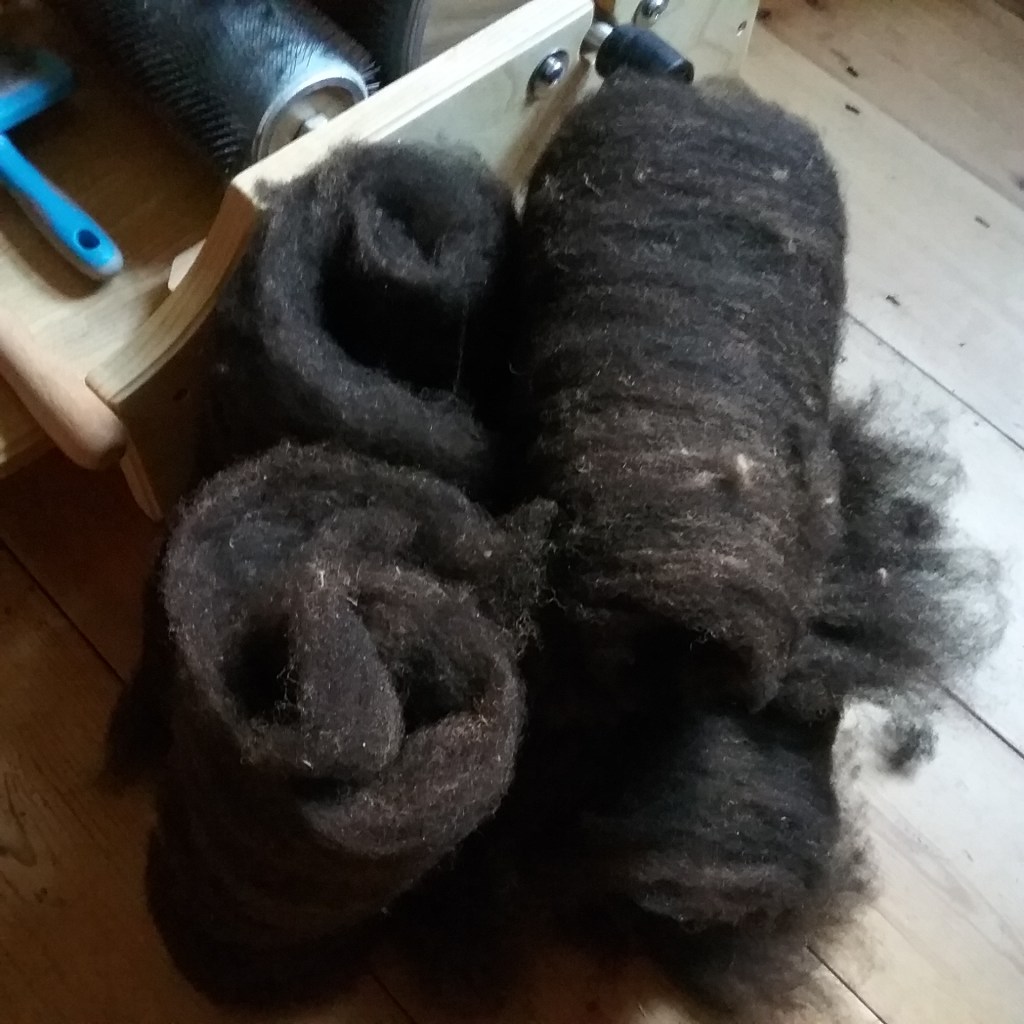
I often find myself browsing the internet for unusual knitting projects, and it was during one of my journey’s down the rabbit hole that I came across Fabel knitwear’s site. I loved the whimsy and vintage silhouettes of Helene’s designs and was particularly taken by the Medieval ruffle blouse, not least because it had a square neckline which is more unusual to see in knitwear. After making the Zwartbles hats I knew I wanted to make a garment for myself and the deep reddish brown of this yarn seemed like it would make the perfect base for the jumper. I paired it with some wonderfully soft alpaca fleece from my stash, which I thought would make an acceptable substitute for the mohair/silk blend used for the ruffles in the original.
The Making
Knitting was a straightforward process and I was following the pattern so won’t go into much detail. The body and the sleeves are knitted bottom up before being joined in the round, followed by knitting raglan and then shaping the neckline, with the decorative ruffles added at the end. I’d never knitted raglan sleeves before, so it was quite a magical moment when I added them to the body in the round and worked them into shape at the shoulders.

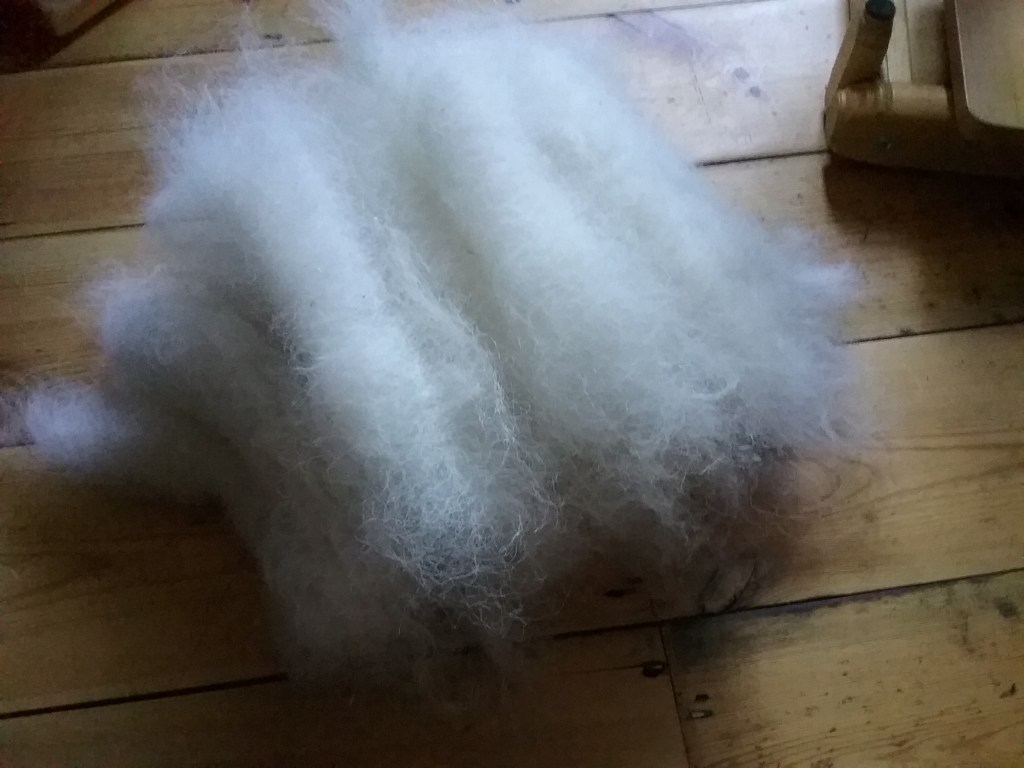
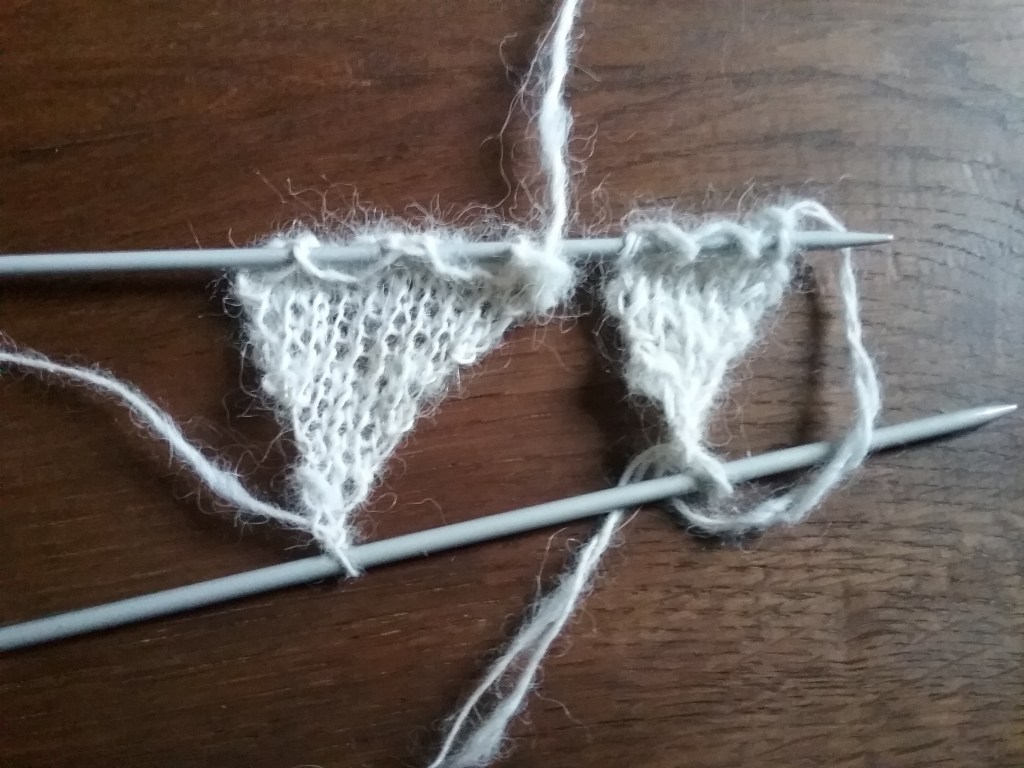
I didn’t take many photos during knitting, but did film the process as I went which you can see in the video below. Then it came to the ruffle detail; Alpaca fibre is finer than most wools and it’s usually recommended to use fine combs or carders with a higher tpi count. When I first got this fleece I experimented with spinning directly from the teased out locks as I didn’t have my combs, which resulted in a thick slubby single. While lovely, this wasn’t the delicate lacey yarn needed for this project, so I decided to sample two different preparation and spinning methods before diving in. I made a sample of combed alpaca spun as a single on my wheel, and a spindle spun sample carded from the combing waste on my vintage hand carders (which are a standard tpi but seem to work ok on finer fibres). Both samples were washed to set the twist before I knitted them into test triangles.
There was little difference in appearance between the carded and combed yarns and since I was looking for the yarn with the most ‘halo’ around I felt that hand carding would be the best option going forward. The wheel spun sample had more excess twist in it (which is unsurprising as I find thin yarns feel quite natural to spin on my spindles), so I initially thought using spindle spun would be the way to go. After knitting my first sample triangle however, I realised that my singles were a bit too thin, so tried another triangle with the yarn held double. This looked much better, so I decided that for the final project I would hand card the fibre and spin it into a 2-ply yarn. I ended up doing this on the wheel as my favourite drop spindle was in the midst of another project and plying is a little quicker to get set up on the wheel (plus I might as well take the opportunity to improve my wheel lace spinning!)
With my 2-ply alpaca yarn at the ready I began adding the decorative ruffle. Despite following the pattern, when I picked up and knitted stitches around the neckline I ended up with a lower number than the pattern suggested I should. Interestingly the neckline is worked in multiples of twelve and I was exactly one multiple of twelve lower than the smallest patterned size. I worked out I would have two triangles fewer than the pattern, but after placing stitch markers to indicate where the triangles would sit, I felt that it was better to work with the maths of my neckline, than to cram 24 extra stitches in and risk the triangles overlapping oddly.
The pattern reminded me to pick up stitches from the inside so the collar folds over, but I did forget which direction I needed to start my round from and just caught myself before the stockinette side of the fabric would have been backwards! Then it was onto the cuffs and weaving in all those pesky ends before steam blocking the ruffles so they would sit beautifully flat.
I’m pleasantly surprised by how this turned out and how comfortable the raglan sleeves are; raglan sleeves were originally designed to make clothing more accessible and easy to put on, but I was a little worried my thicker yarn might have negated this and reduced my arm movement, but that was not the case. Since it also doubles as quite a festive jumper, I think I might be inspired to go full jester and add some bells to the collar tips in time for next Christmas, in the meantime it will add a little fun to my winter wardrobe!
As ever, do let me know in the comments below what woolly projects you are working on/looking forward to working on in 2026, and if you have any raglan tips or tricks you want to share do let me know!
Happy Knitting!
 Loose Ends
Combining weaving and knitting sounds interesting. I look forward to seeing what you come up with.
LikeLiked by 1 person
I love this sweater! Good for you for sticking with a complicated project to the finish. There is a fine line for something being too boring (just tons of stockinette) or too complicated. Interestingly, I am in the middle of a sweater that starts out with the body and sleeves joined in the same way, and then a circular yoke with some colorwork. I knit the body and sleeve pieces on the flat knitting machine.
LikeLiked by 1 person
It is such a fun twist on a classic raglan shape! Your colourwork yoke sounds great and knitting the stockinette base on the machine definitely speeds up the process and means you get to spend more time on the fun bit! I may try doing something similar combining weaving and knitting as one of my goals this year is to think up some projects to use some of my earliest handspun stash that never got turned into final projects. For one of my fleeces I had been thinking an oversized slouchy jumper would have been nice, but just couldn’t face knitting large panels of plain stockinette, but now I’ve become more confident with jumper construction, I think combining the two techniques might work quite well.
LikeLiked by 1 person