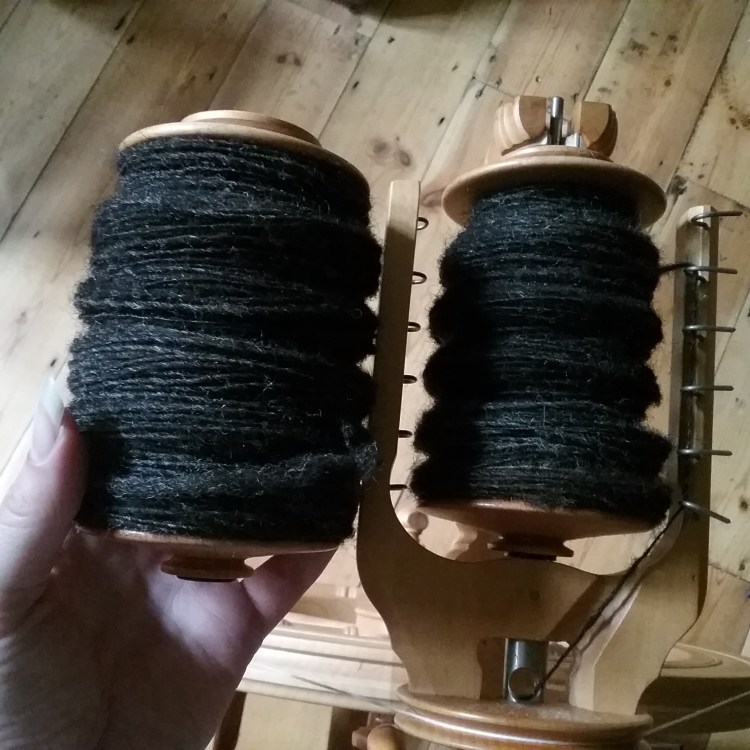
One Fleece Spun Two Ways
Some of you will have spotted this post is a little out of order; I’d planned to get this out before making the final projects in Wovember, but I’m quite glad I was delayed as I ended up spinning two very different types of yarn with this fleece, which I think makes for much more interesting reading! Once again, my experience spinning with this fleece may be very different to another since it wasn’t the best quality, so do feel free to share your experiences in the comments!
Standard 2-Ply
During TDF I combed the fleece to separate the best fibres for spinning with the intention to turn this into a 2-ply handspun yarn (a good all rounder as at that point I hadn’t decided on a project). This was the first whole fleece I’ve used my wool combs on, and I enjoyed having a large basketful of combed nests to spin from for a change. I began spinning worsted style as is traditional for combed fleece, but the fibres also very naturally fell into a thin long draw. I experimented with both techniques (and supported long draw) during spinning and found very little visible difference between them – both had the same diameter, and interestingly the yarn was both stiff and drapey (though I suspect the stiffness was more to do with the yarn being slightly coarser).
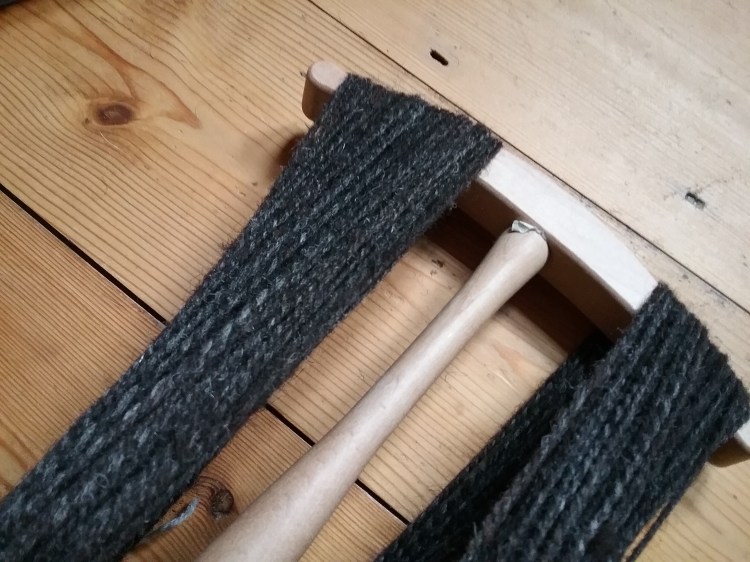
There were a few odd second cuts left in the fibres, which I removed since they were scratchy and the yarn wasn’t naturally lumpy and I was pleasantly surprised by how even the yarn was after plying, as I really hadn’t been sure what to expect from this fleece. Unfortunately I started work on the Raven Collar before I got round to measuring how much 2-ply yarn I salvaged from the fleece (in fact I was knitting and spinning at the same time!).
Art Yarn Singles
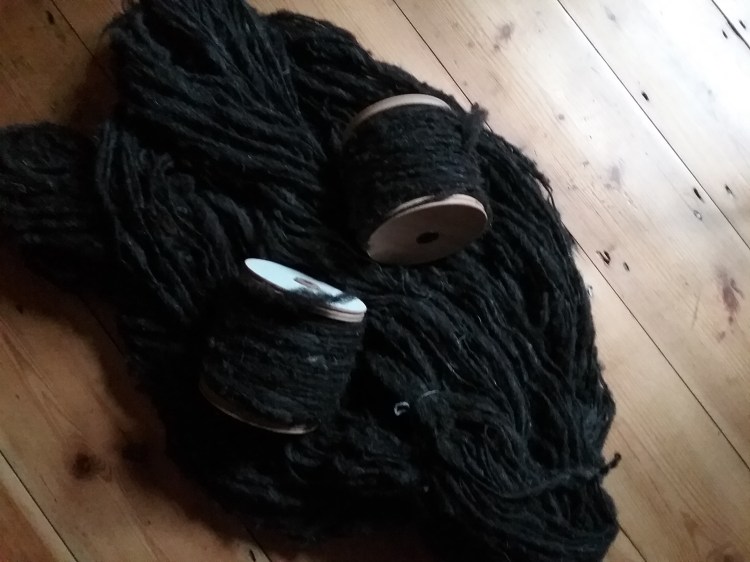
After my felting project fell through I opted to loosely spin the batts carded from the combing waste on my jumbo flyer. I utilised the same techniques I used when working with the Herdwick, however I did find that the combing waste was slightly trickier to work with as the longer fibres were all in the 2-ply, and due to the condition of this fleece some of the shorter fibres were more inclined to snap, so the yarn was more susceptible to breakages, particularly in the slubbiest sections. To combat this decided to spin a slightly thinner yarn than I initially planned so more fleece was caught in the twist. It wasn’t my favourite art yarn when I took it off the bobbin, but I love how it looked after weaving, and do have a couple of spare skeins which are inspiring me to use them into a mixed textile piece in the future.
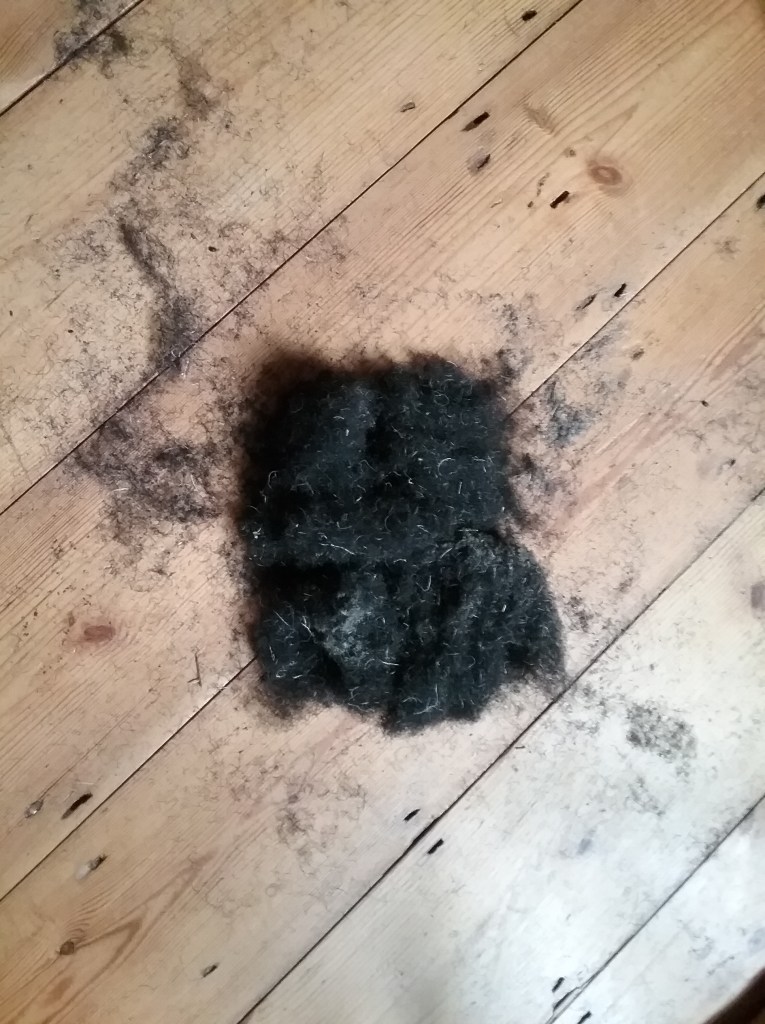
Overall, the spinning process was relatively straightforward, considering the quality of the fleece and produced some really beautiful yarn, however, what I was least prepared for was the sheer amount of shedding. I usually have an apron to hand so as not to spread wool around the house on my clothes after spinning (though most dust etc. falls out during fibre prep), but no matter how well prepared this fibre was, or how far along the process, my floor, apron and socks were covered in a layer of second cuts and broken fibres (understandably worst with the combing waste).
My goal was to see what was possible to produce from a poorer quality fleece and I’ve definitely achieved more than I expected; so if you also have a dodgy fleece lingering in your stash I highly recommend experimenting with it – but maybe prep it outside to save yourself the clean-up!
Happy Spinning!
 Loose Ends