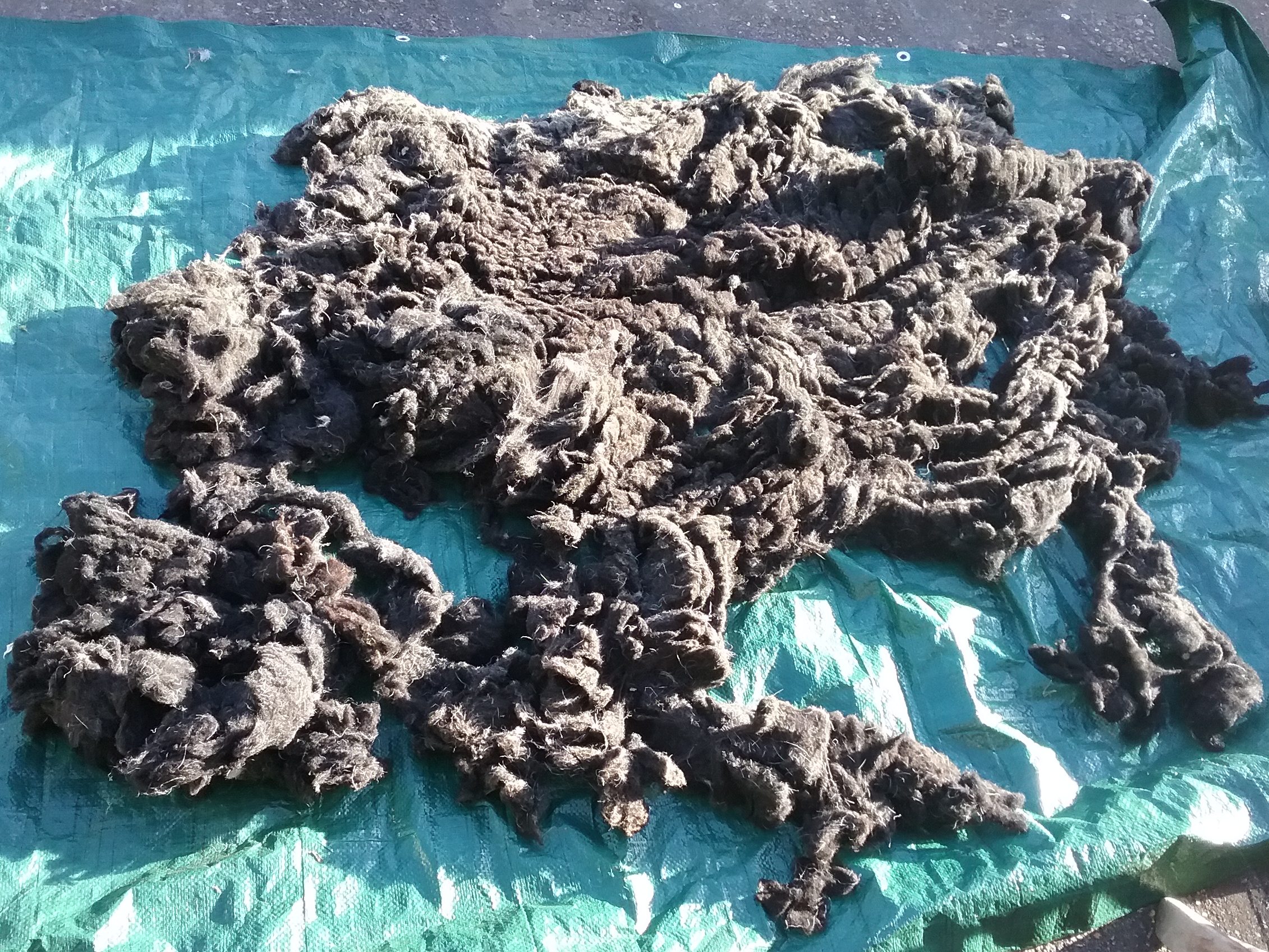
The Fleece
I purchased this fleece from an online marketplace several years ago when I was just starting out and hadn’t heard of yarn shows, made connections with local flock owners, or discovered breed societies selling fleece online. I also didn’t know that when buying fleece, it’s always good to check for weaknesses in the yarn by tensioning a lock in your hands as any snapped fibres indicate a poorer quality fleece. The seller contacted me apologising that the fleece had got unexpectedly damp in storage and that they could dry it out before sending it to me, or refund me, and I opted for the former as I was happy to take a chance and the fleece wasn’t pricey.
I’ve since read several spinning books which suggest that any fleece that isn’t up to standard is only good for compost, and while wool contains a lot of nutrients, I’m of the opinion that all but the most dirty, tangled fleeces can be used for something – it just takes a bit more preparation and thinking outside the box, so hopefully these BWM posts will serve as inspiration for anyone wondering what to do with an imperfect fleece.
Washing
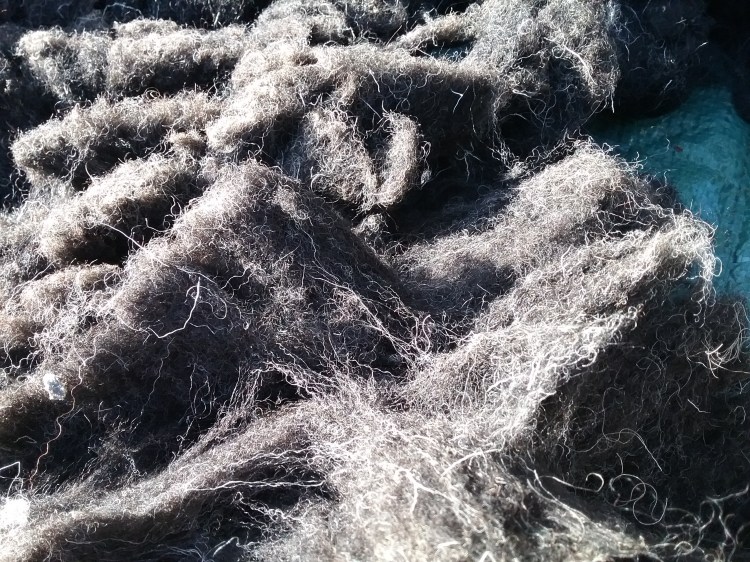
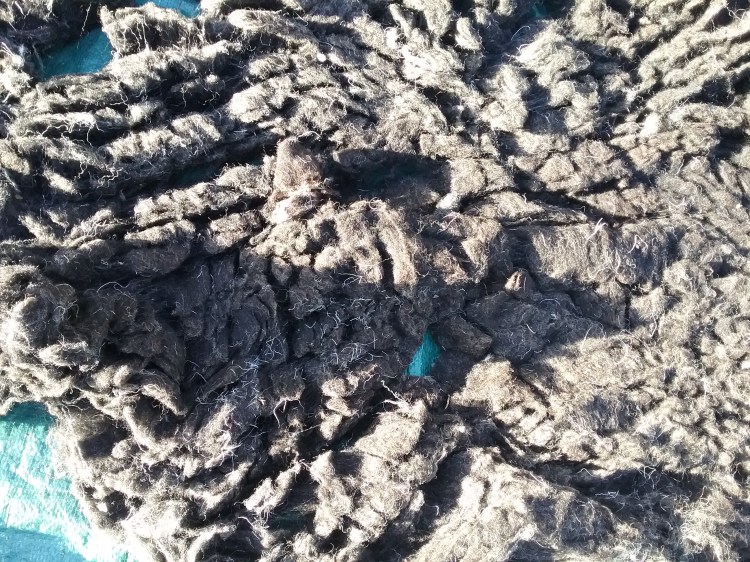
Once the fleece arrived I inspected it (there was very little VM or particularly dirty areas), washed it in the suint bath and then detergent, dried it thoroughly and stored it in a cloth sack indoors until I had time to process it. Unfortunately I don’t have any photos of the washing as I didn’t record as much in my early days of blogging!
Combing
When I got the fleece out ahead of this year’s TDF I tested to see if the fibres snapped in my hands – some did, but most of the fleece seemed ok. I decided to comb rather than card as combing separates out the longer and shorter fibres and would also separate out any broken fibres from the combed tops. This would give me the best fleece to spin with and mean that I could use the combing ‘waste’ to felt with, as any broken fibres wouldn’t matter.
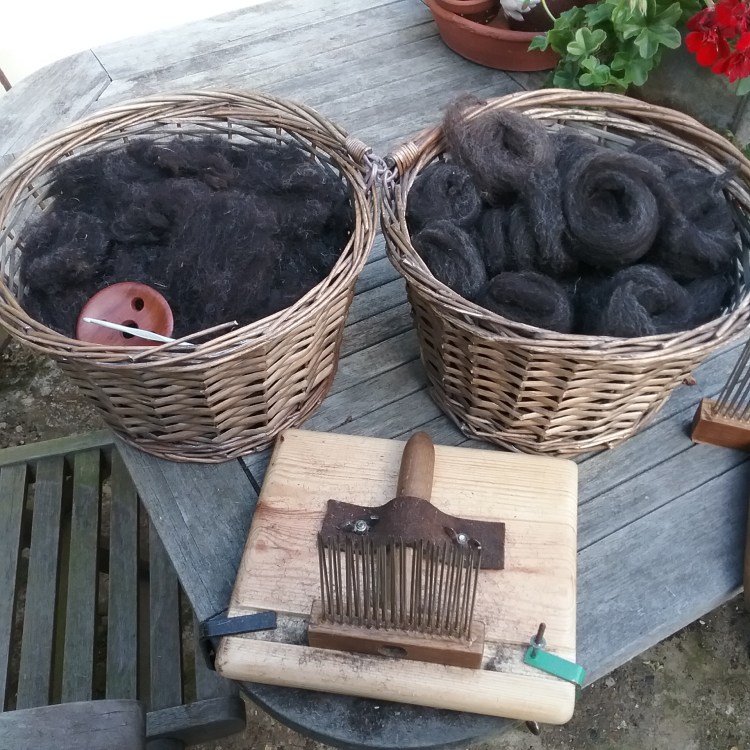
Combing was fairly straightforward, although some areas had a shorter staple length, which made combing a little more challenging. It produced more combing waste than I was expecting, which is good for the felting project, not so good for spinning, but happily the project I have planned for that shouldn’t require too much yarn!
Since my experience with this fleece is likely to be different to working with better quality BWM fleeces, do feel free to share your experiences in the comments below!
Happy Crafting!
Further Reading about Black Welsh Mountain:
- Breed Society Website – https://blackwelshmountain.org.uk/
- British Sheep & Wool by the British Wool Marketing Board – ISBN 9780904969108
- The Field Guide to Fleece by Deborah Robson & Carol Ekarius – ISBN 9781612121789
- The Fleece & Fiber Sourcebook by Deborah Robson & Carol Ekarius – ISBN 9781603427111
 Loose Ends