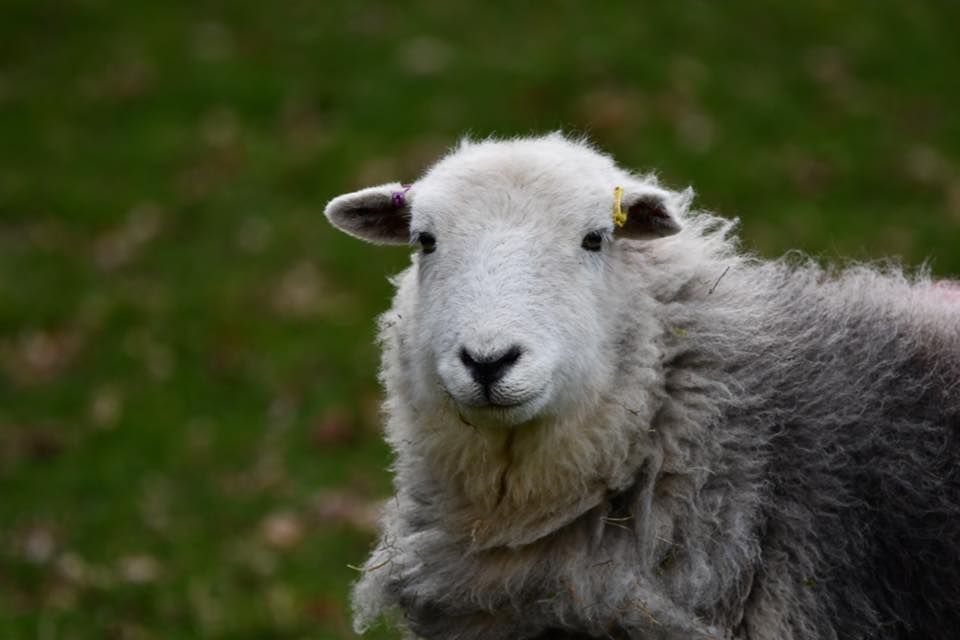
Photo Credit Herdwick Sheep Breeders Association
History
Herdwicks have been around in the UK since the 12th century and there is significant debate over how they arrived; some stories say they came from a shipwreck from the Spanish Armada, while others suggest they originated in Scandinavia and came to England with the Vikings (the name is believed to have come from the Norse herdvyck or herdwyck, meaning “sheep pasture”). Either way, today’s Herdwicks are one of Britain’s hardiest sheep, adapted to living in the rugged landscapes of the Cumbrian Lake District.
Fleece Research
Herwick’s handle is considered ‘harsh’ by the British Wool Board, with a staple length of 10-20cm. As a hardy fibre, it is used commercially for durable items such as carpets and insulation, though if the soft undercoat can be separated, it can be used for making outer garments. The fleece has multiple components a soft undercoat, kemp fibre and heterotypic hair which changes consistency with the seasons, giving the fleece a textured look. The multiple components of the fleece make it quite unique and Robson & Ekarius say this presents a challenge for fibre preparation, but happily their recommendation in Fleece & Fibre Sourcebook is to experiment and just ‘go for it’!
Since I want to showcase all the textures, I won’t be separating out the different fibre types or dyeing the wool (due to the kemp hair it will not take dyes evenly anyway). I also want to link my project with the more commercial use for this fibre, so I have plans to turn the fleece into a rug, but to spin the fibres loosely so the different fibres show through to put my own handmade spin on it.
Further Reading
The following sources have been used for reference
- Breed Society Website – https://www.herdwick-sheep.com/
- British Sheep & Wool by the British Wool Marketing Board – ISBN 9780904969108
- The Field Guide to Fleece by Deborah Robson & Carol Ekarius – ISBN 9781612121789
- The Fleece & Fiber Sourcebook by Deborah Robson & Carol Ekarius – ISBN 9781603427111
 Loose Ends