Happy Wovember! This year I’m travelling back in time to explore the lasting impact wool has had on our culture. I’ll be exploring various magical and mythological stories and imagery to see what links them to wool and if there was any truth in these tales.
Fairy Tales & Folklore
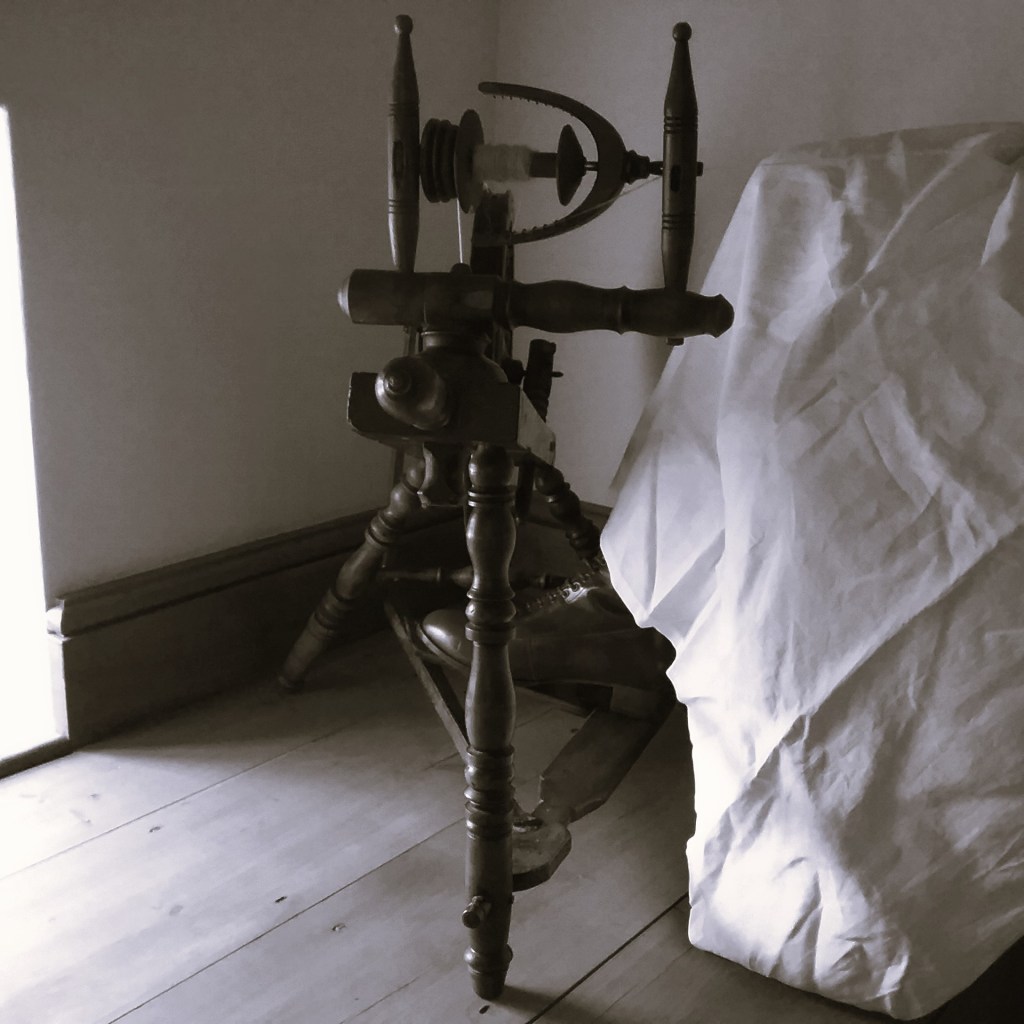
Many traditional children’s tales make reference to spinning and weaving; Rumpelstiltskin spinning straw into gold (likely a reference to flax spinning) and Sleeping Beauty being pricked with a flax splinter originally, but more traditionally a spindle (though I take issue with Disney portraying her pricking her finger on the distaff of a wheel that would never have had a spindle, but that’s a discussion for another time!). In both these tales the spinners are tricksy beings bringing the heroine great distress (and perhaps they also give a safety warning about working with spinning equipment), but there are tales of more benevolent creatures.
In Scottish folklore the fairy Habetrot agrees to spin flax into yarn on behalf of a girl who prefers exploring to sitting with a distaff and is distressed that she will never find a husband unless she can spin. In the tale Habetrot and her friends not only spin the yarn for her, attracting the prince who marries her, but also ensure that she will never have to spin again (Habetrot and her fellow spinners are described as having misshapen lips from constantly moistening their fingers; upon seeing this the prince declares that his new wife should never spin again lest the same fate befall her)1. The young girl suffers no repercussions the prince leaves his estates fleeces by Habetrot’s dell to be turned into yarn.
Children & Wool
It is odd that so many fairy tales seemed to discourage spinning in a time when children, particularly young girls would have been expected and encouraged to learn how to spin, since, as discussed in the Fate & Destiny post, it was one of few ways women could have some financial independence. The word ‘fairy’ is thought to have originated from the old French translation of the Latin word for Fates, since it was believed that much like the Moirai, fairies could change a person’s destiny for good or evil through their actions. This is interesting, since the ability to spin well could literally change a person’s destiny by earning them a wage, so although fairy tales are more extreme examples of a change of fate, they do still illustrate the point.
Children would be encouraged to help collect and process wool and would learn skills from a young age. Up until the establishment of elementary education in 1880, girls from working class backgrounds were encouraged to knit woollen garments to supplement the family finances and prevent them from being idle (particularly if they were in the workhouse). Informal schools were set up to teach, and some accomplished knitters were younger than five years old2! Though the gender bias associated with wool was restricting, working class women at the time had very few rights and little education, so learning a skill from a young age meant they would be more likely to find legitimate paid work. Being able to produce your own clothing allowed you to be more self-sufficient and less reliant on others, so perhaps the fairy tales don’t simply illustrate how spinning or magic could suddenly improve your lot, rather they remind children that if they patiently practice a craft, they won’t have to rely on others or make dodgy deals with fey creatures to prove a claim to a talent they never had.
If there are any other good fairy tales involving fibre crafts that I should hear about, let me know in the comments below. Next week I’ll be exploring some of the links between wool and witchcraft.
Wovember posts from previous years can be found below:
- Celebrating Wovember: What is Wool?
- Wovember: Fibre Library Part 1
- Wovember: Fibre Library Part 2
- Wovember: Fibre Library Part 3
- Wovember 2022 – The Importance of Wool: Wool & the Environment
- Wovember 2022 – The Importance of Wool: What is Wool?
- Wovember 2022 – The Importance of Wool: Fast Fashion
- Wovember 2022 – The Importance of Wool: Care & Repair
- https://electricscotland.com/history/fairy/fairybook11.htm ↩︎
- Coulthard, S. (2021) A short history of the world according to sheep. Chapter 9 ↩︎
 Loose Ends