Happy Wovember! This year I’m travelling back in time to explore the lasting impact wool has had on our culture. I’ll be exploring various magical and mythological stories and imagery to see what links them to wool and if there was any truth in these tales.
The Moirai
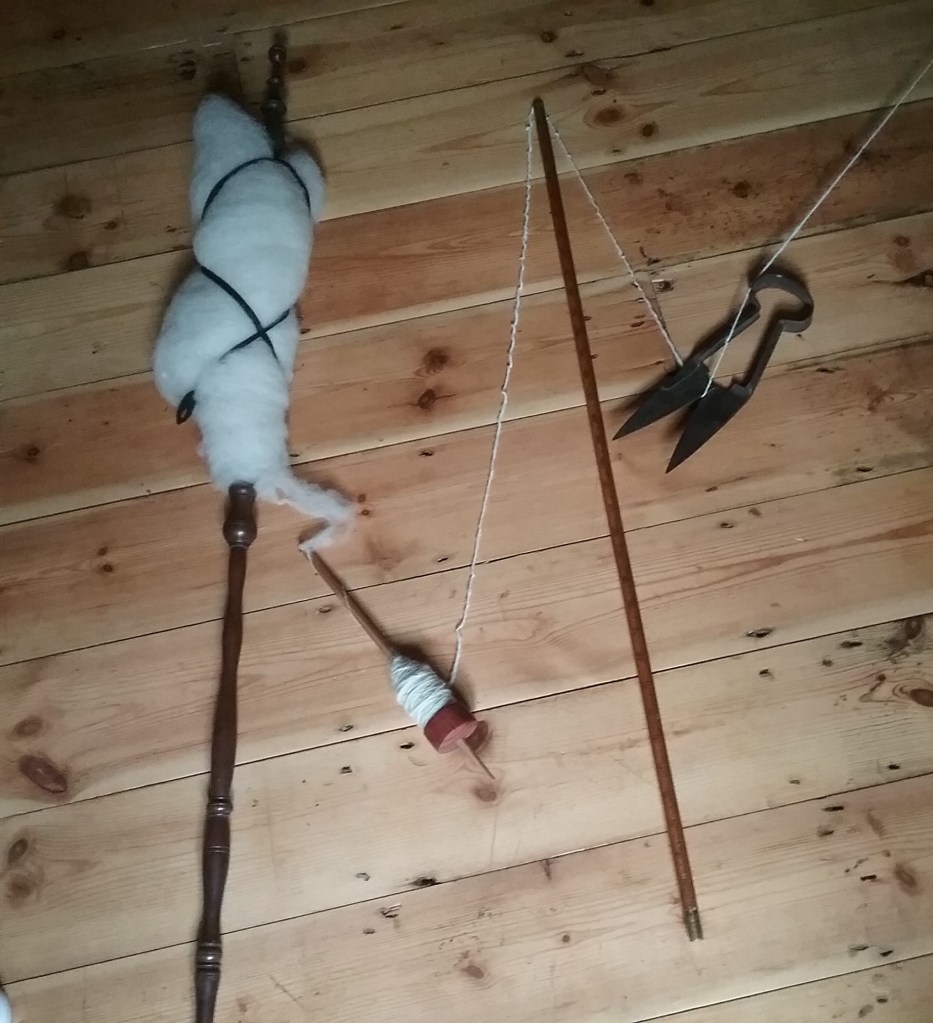
The Moirai or ‘fates’ are three ancient Greek goddesses who were responsible for deciding the destiny and lifespan of mortals. Represented as three women (sometimes young and beautiful, sometimes old and ugly) each was responsible for a different task of apportioning life. Clotho was the spinner, often pictured with a distaff and spindle for spinning the thread of life; Lachesis was the allotter who used a measuring stick to measure the length of the life and Atropos was the ‘inflexible’, responsible for rendering the decision unchangeable by cutting the thread with her shears. The fates decision could not be changed even by Zeus1, arguably making them the most powerful figures in Greek mythology. The one individual said to have outwitted them met a swift and sudden end, so it is unsurprising that they are often portrayed as the villains.
The Power of Spinning
The image of the fates using spindle, stick and shears has endured throughout the years and is interesting to unpick. It is curious that such powerful beings were given such commonplace tools, after all, spinning would have been part of the daily chores at the time. However, wool had significant value; sheep were a source of nutrition, but the wool they produced could be turned into cloth and sold or traded, allowing individuals to make and afford basic necessities. Despite being a common resource wool was a necessity; the humble drop spindle would lay the foundations for the industrial revolution many years later, the quality of a fleece for spinning would depend on the shearing and a greater yardage would determine the price. So, although ordinary, the Moirai’s tools hold enormous potential, which seems apt considering their function as allotters of destiny.
Spinning was a task performed nearly exclusively by women2. It required very little equipment and was portable; distaffs could be secured in a belt allowing women to spin while walking, cooking, or caring for children. Spinning was not financially lucrative, it provided women with a meagre wage even up until the industrial revolution3, but would have given them some limited financial independence. Weaving was a practice dominated by men, arguably because it was a form of self-expression that women were not often entitled to4 since stories could be woven into fabric (which reminds me of the poem ‘Dangerous Coats‘ by Sharon Owens). Spinning was therefore both a source of independence, but also repression, so it is interesting that such powerful beings should be portrayed as lowly spinners.
One possible reason for this is the romanticisation of spinning in art. An internet search of paintings depicting spinsters provides multiple images of women elegantly (and impractically) draped at a wheel, delicately turning fibre into thread. The Moirai are no exception to this; though often cast as the villains, many sculptures and paintings depict them gracefully, one major difference being that the Moirai are more realistically poised to spin. Perhaps this distinction is meant to make them appear less feminine than other mortal muses, highlighting their independence and immortality.
Though the Moirai are mythical beings, their depiction provides an insight into the importance of wool to everyday life and the role of women in textile production at the time. The thread of life symbolising the livelihood created by wool and the Moirai representing the women fated to spin but laying the first seeds of their independence.
If I’ve missed out anything important feel free to let me know in the comments below. Next week I’ll be exploring some wool related fairy tales.
Wovember posts from previous years can be found below:
- Celebrating Wovember: What is Wool?
- Wovember: Fibre Library Part 1
- Wovember: Fibre Library Part 2
- Wovember: Fibre Library Part 3
- Wovember 2022 – The Importance of Wool: Wool & the Environment
- Wovember 2022 – The Importance of Wool: What is Wool?
- Wovember 2022 – The Importance of Wool: Fast Fashion
- Wovember 2022 – The Importance of Wool: Care & Repair
- https://www.greekmythology.com/Other_Gods/The_Fates/the_fates.html ↩︎
- https://plymagazine.com/2020/07/a-womans-work-was-never-done-spinning-in-medieval-art/ ↩︎
- Humphries, J. and Schneider, B. (2019) ‘Spinning the industrial revolution: SPINNING THE INDUSTRIAL REVOLUTION’, The Economic History Review, 72(1), pp. 126–155. Available at: https://doi.org/10.1111/ehr.12693.
↩︎ - Pantelia, M.C. (1993) ‘Spinning and Weaving: Ideas of Domestic Order in Homer’, The American Journal of Philology, 114(4), p. 493. Available at: https://doi.org/10.2307/295422.
↩︎
 Loose Ends
This reminds me of an article I read fairly recently about the often overlooked contribution of women to Viking age economy. It stated that at some point a sort of standardised cloth developed specifically for trade. I’ll have to dig it out sometime and see if I can reproduce that kind of cloth just for the fun of it.
LikeLiked by 1 person
If you manage to find the article I’d love to read it – women’s contributions throughout history are often overlooked, particularly in older periods when we tend to think more about the famous battles than daily life. I recently read about a type of Roman cloak that was made in Britain and exported around the empire. It was made of wool and the lanolin was left in so it was waterproof – I imagine that women were heavily involved in the manufacture, but the records we have (engravings etc.) are all of the military men wearing it which erases the makers from the story. I’m also tempted to see if I can replicate some historic fabrics one day, particularly any examples from pre-history (although I might have to tick some other projects off my to-do list first!).
LikeLiked by 1 person
The article was in a random magazine I happened to pick up because it had that story on the cover.
https://www.spektrum.de/pdf/die-wirtschaftsmacht-der-wikingerinnen-spektrum-geschichte-2-2023/2084568
I can’t figure out where I put my copy, so I can’t look up any details. I think there was something about archeological evidence showing that at some point the preferred direction of spinning changed to produce threads that would “grab” each other better, as well as a standardised sett and width of the cloth.
LikeLiked by 1 person
Ah thank you very much for sending the link, I will see if I can access it online. The standardisation of sett and width sounds particularly interesting since all tools would have been made by hand and by lots of different people.
LikeLike