Wovember 2023
Happy Wovember! This month is all about celebrating wool; previously I’ve discussed the importance of wool, correct product labelling, shared some of my fibre book recommendations and sources of woolly information. Wool is an incredible material, both due to its rich history, but also the role it can play in reducing environmental harm. It has been clothing humans for thousands of years and is embedded in our culture. This year I’m travelling back in time to explore the lasting impact wool has through some magical/mythological stories and imagery. Why was wool referenced so much? Was there truth in these tales? This month I’ll be exploring wool’s influence on these legends here on the blog and taking part in the daily photo prompt on Instagram.
Jason & The Argonauts
As with many myths and legends, there are various interpretations of the story, but most sources tell the following tale. King Aeëtes of Colchis placed the fleece of a golden ram that saved the children of Athamas from Zeus on a sacred tree guarded by a serpent that never slept.
Across the Black Sea, Jason, son of Aison, rightful king of Iolkos returns to claim his throne from Pelias, his father’s half-brother. Reluctant to cede his crown, Pelias sets Jason an impossible task; he will give Jason the throne if he brings him the golden fleece of Colchis. Along with a team of Argonauts, Jason faces perilous waters and journeys across the Black Sea to Colchis. Upon the Argonauts arrival, King Aeëtes sets Jason two further tasks in return for the fleece; he must harness two fire breathing bulls to a plough and defeat the warriors grown from the teeth of a dragon. With the help of the King’s daughter, a sorceress named Medea who provides him with the means to succeed in return for his hand in marriage, Jason accomplishes the tasks. King Aeëtes still refuses to part with the fleece, so Medea drugs the guarding serpent while Jason steals the fleece before they both escape on the Argo.
Gold Extraction in Early Georgian States
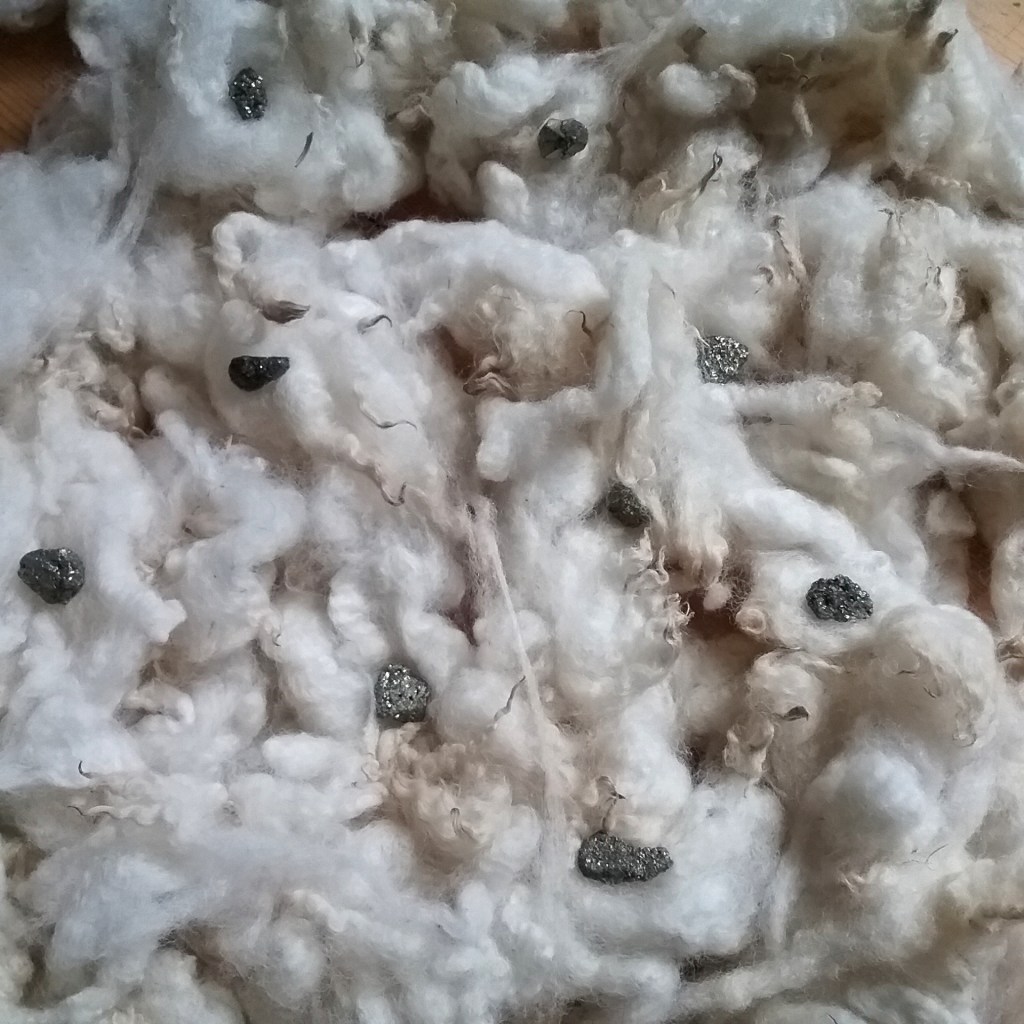
Myths are full of fantastical objects and there are many different interpretations regarding the significance of the golden fleece. Historically textiles were expensive and generated significant capital for those who worked with them (the English economy was significantly supported by the wool trade), so metaphorically, the fleece could simply represent great wealth. There is however a much more literal suggestion involving a method of extracting gold from rivers. The Svaneti region in modern day Georgia has high river gold deposits and is thought to be the site of the ancient kingdom of Colchis1. Ancient tribes in this area would strategically place a sheepskin or fleece in the river to trap the gold grains making a ‘golden fleece’ which was then washed, and the grains sifted from the wash water. The practice of gold panning is quite a tourist attraction in Svaneti nowadays, although the equipment is slightly different2. The practice of using a sheepskin as a sieve was not constrained to the Black Sea region; many bronze age artifacts in the UK and Ireland thought to be made from alluvial gold sieved through sheepskin3.
It seems therefore that the story of the golden fleece may not be as fictional as it first sounds. The riches of Colchis were well documented at the time by Pliny the Elder and Homer, so could the Argonauts have in fact made the journey not to steal from a serpent, but to learn the methods of Colchian gold extraction and bring this knowledge back home to Iolkos? There is another theory, that the term golden referred to a tan coloured sheep native to Colchis4, however coloured sheep were usually less favoured as their fleeces would not take up dye as easily, so why the Argonauts would journey to bring back a coloured fleece is unclear, but certainly highlights the importance of wool at the time.
Greek mythology has a lot to unpick so I’ve tried to be brief, but if there’s anything I’ve missed out, do let me know in the comments below. Next week I’ll be exploring the association between wool, fate and destiny.
Wovember posts from previous years can be found below:
- Celebrating Wovember: What is Wool?
- Wovember: Fibre Library Part 1
- Wovember: Fibre Library Part 2
- Wovember: Fibre Library Part 3
- Wovember 2022 – The Importance of Wool: Wool & the Environment
- Wovember 2022 – The Importance of Wool: What is Wool?
- Wovember 2022 – The Importance of Wool: Fast Fashion
- Wovember 2022 – The Importance of Wool: Care & Repair
- Okrostsvaridze, A., et al., A modern field investigation of the mythical “gold sands” of the ancient Colchis Kingdom and “Golden Fleece” phenomena, Quaternary International (2014), http://dx.doi.org/10.1016/j.quaint.2014.07.064 ↩︎
- https://www.georgia-tours.eu/looking-for-gold-in-svaneti/ ↩︎
- https://microsites.museum.ie/bronzeagehandlingbox/object-sheepskin.html ↩︎
- Ryder, M.L. (1991) ‘THE LAST WORD ON THE GOLDEN FLEECE LEGEND?’, Oxford Journal of Archaeology, 10(1), pp. 57–60, https://doi.org/10.1111/j.1468-0092.1991.tb00005.x. ↩︎
 Loose Ends
As an enthusiast of both fibres and history I loved reading this. I am always fascinated by anything revealing the hidden truths behind well known stories.
LikeLiked by 1 person
Glad you enjoyed reading it! I love social history so had a lot of fun doing the research – it turns out you can fall down quite the rabbit hole of fibre, myths and stories so I’ve had to narrow it down to some of my current favourites to talk about this Wovember, but there are a lot more out there – perhaps something to continue exploring next year.
LikeLiked by 1 person