Spinning Singles
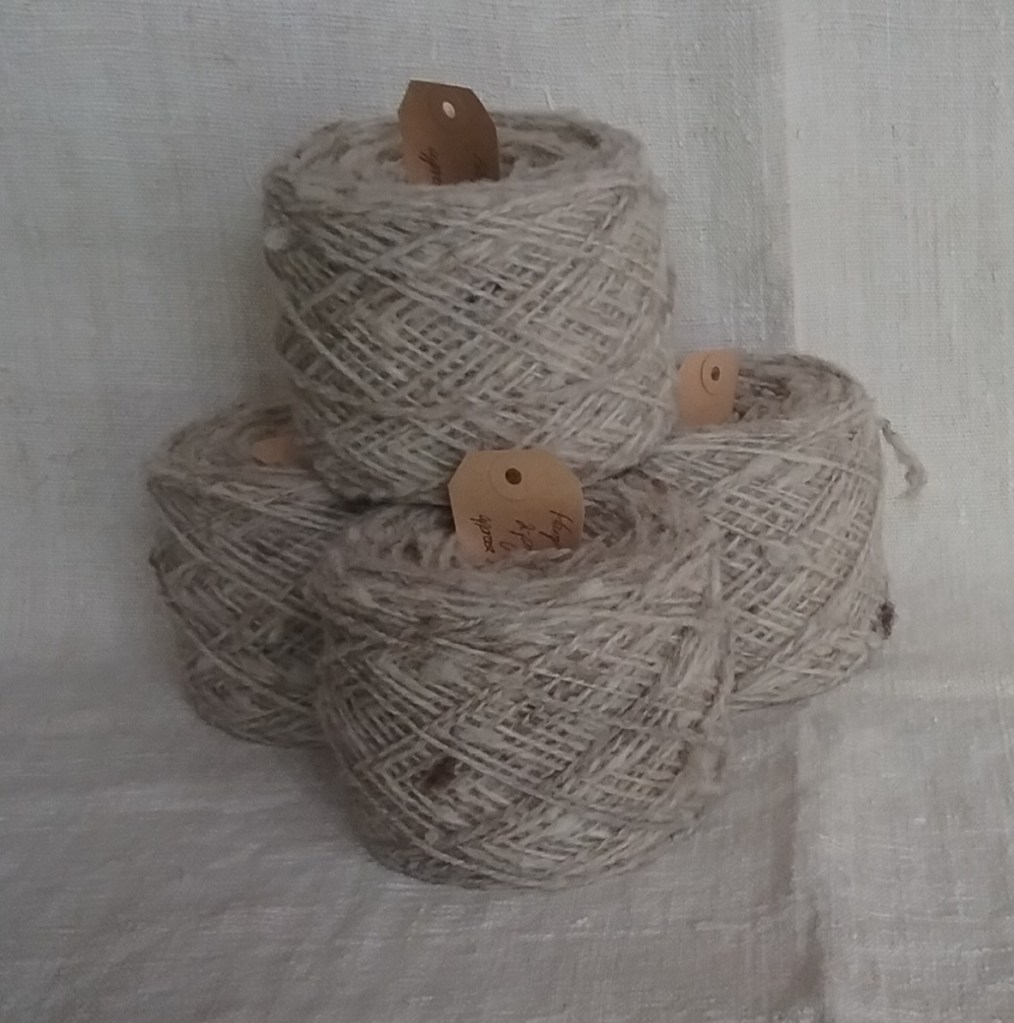
The Hampshire Down is probably the shortest staple fleece I’ve worked with so far and I was concerned that spinning might have been more challenging, but was pleased to find this was not the case. I had good control with a long draw, using my other hand to even out any slubby areas and remove any large nepps as I spun. Since this yarn is destined to be woven, I needed to spin thinly to accommodate both plying, but also any fulling after washing. To that end, I decided to use my Kromski wheel as it was set up for spinning thin yarn and the double treadle gives a little more control. My carding hadn’t quite removed all the nepps in the fleece (they are harder to locate in fleeces with shorter fibres) and I left some in to help maintain the character of the fleece. Securing the nepps was harder than usual since the surrounding short fibres didn’t hold as much twist which caused several yarn breakages until I’d got the balance right.
I decided to compare spinning from rolags with spinning the batt I carded as an experiment on the drum carder. For this fleece, spinning from a batt was much harder, as the parallel fibres of the batt slid past each other quite erratically making tension control difficult. To reduce the sliding of the fibres I ended up spinning worsted style from strips of the batt, but spinning short draw with short fibres was challenging. This may be the reason that Hampshire Down is often blended with longer fibres commercially.
Below is a video of some quiet spinning filmed during TDF this year.
Plying
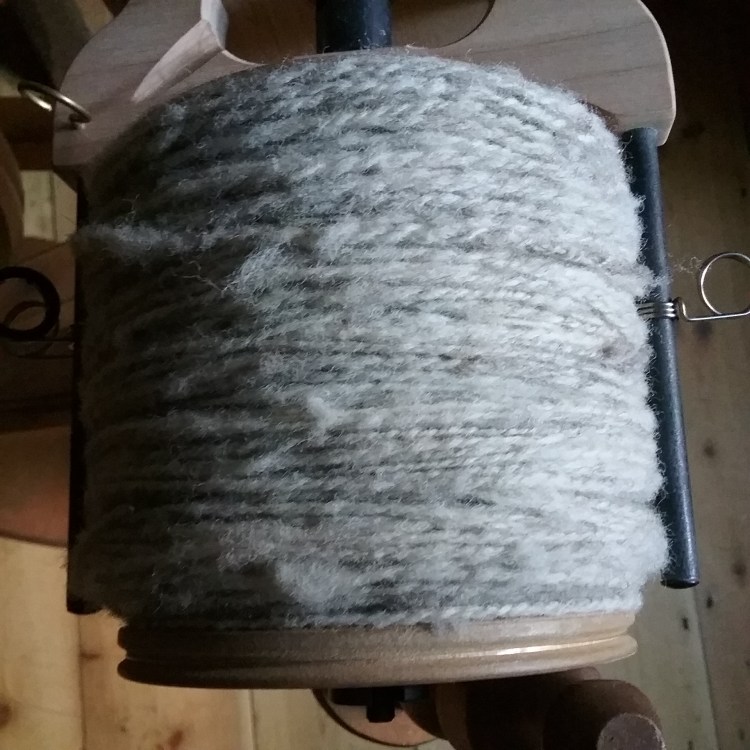
Since my plan is to use the yarn for both warp and weft, I needed to make sure that it was strong enough to be under tension, but also thin enough to fit through the reed I plan to use. I decided to start with a 2-ply and test the strength after a couple of metres; it didn’t break, so I continued in 2-ply. I used my Ashford jumbo flyer to ply as the bobbins are larger so can hold a longer continuous length of yarn, which should mean there is less waste when warping later. This was the first time I had used it to produce thin yarn and although treadling did become harder as the bobbin filled up, I still had good control, particularly with the orifice reducer in the flyer to prevent the yarn from jolting.
Setting the Twist
Deciding I would experiment with Hampshire Down’s felting resistance, I washed the yarn in quite hot soapy water. I didn’t agitate it, but the fibres never started to catch so the yarn does appear to be as hardy as my research suggests which bodes well for turning it into something more hard wearing. After washing there was some fulling, but the yarn should still be thin enough to fit through the reed I plan to use.
Overall this fleece produced over 1km of 2-ply yarn. I have a rough idea of what I want to make with the Hampshire Down, but have yet to do any design or calculations to find out if I have enough yarn for warp and weft, so I may have to save the Hampshire until I have a complementary fleece to use alongside it.
Happy Spinning!
 Loose Ends