The Fleece
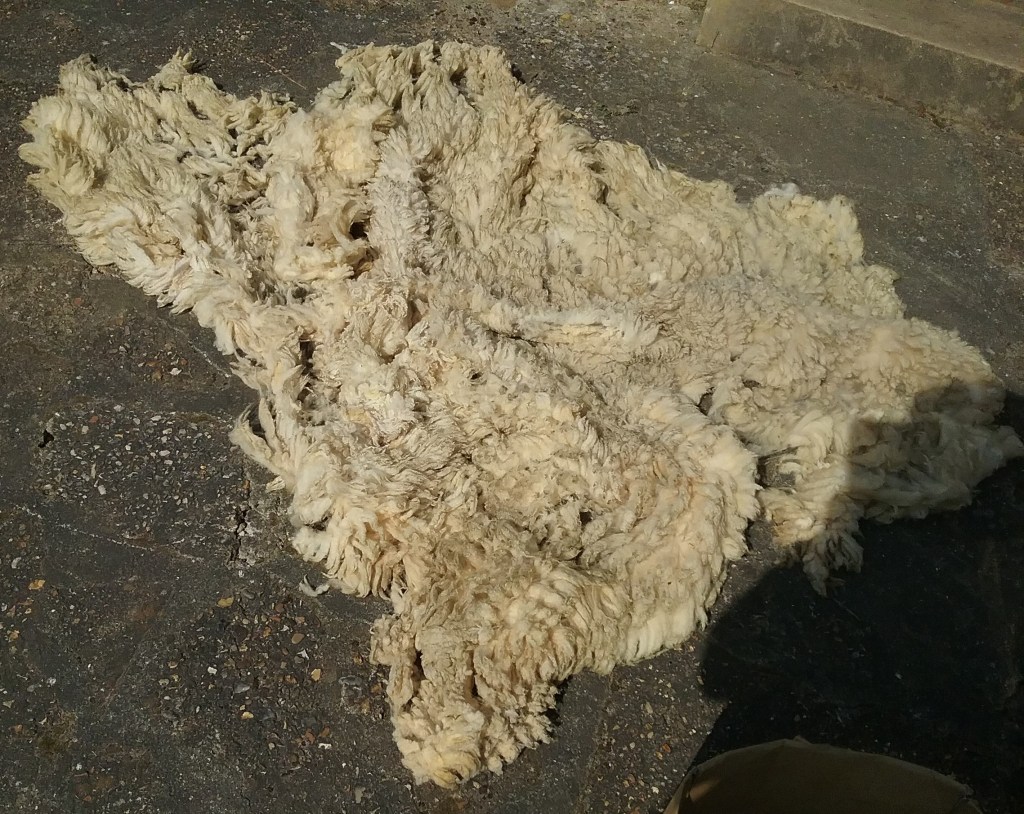
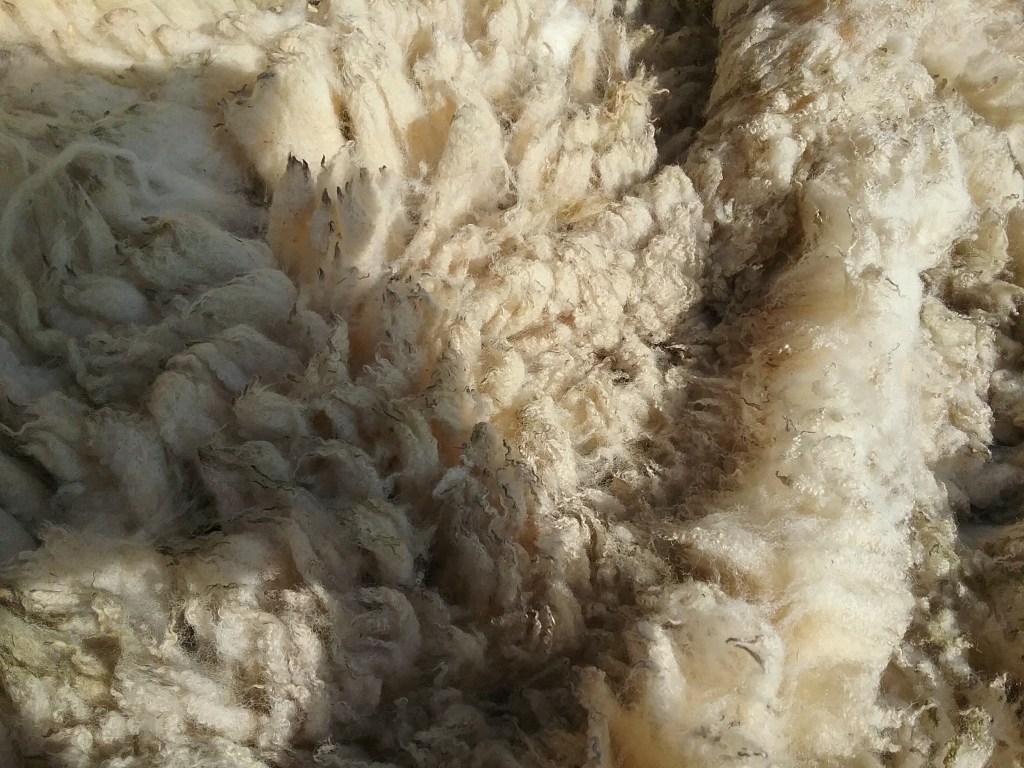
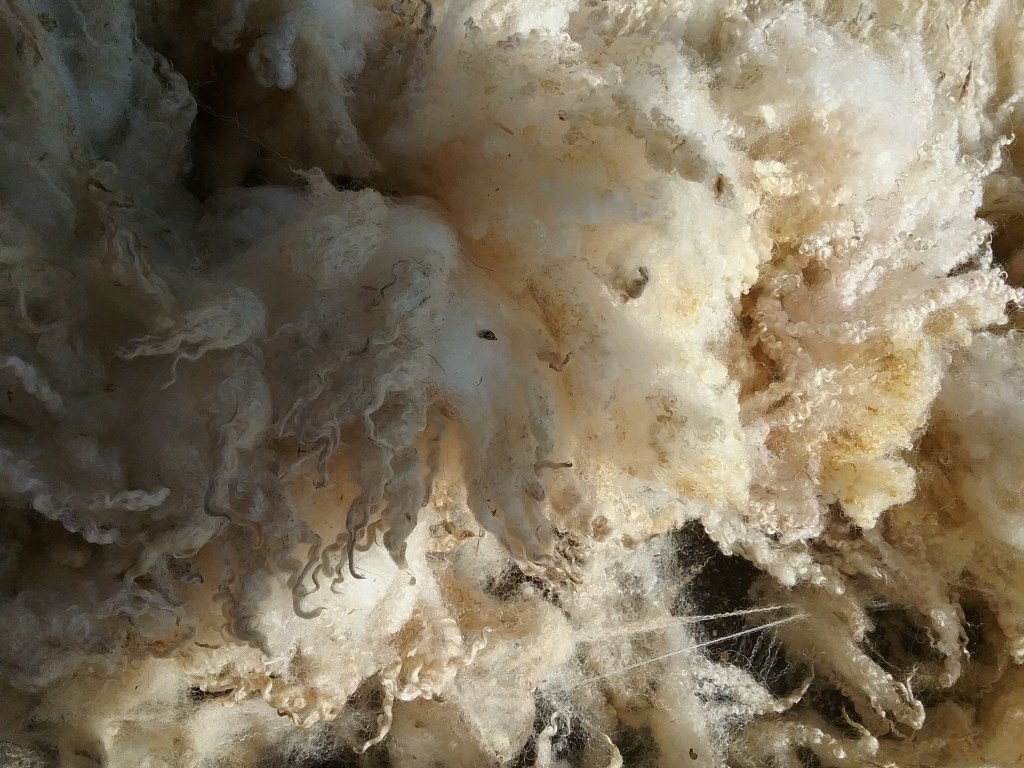
I purchased this fleece by its weight back in 2020 and was pleasantly surprised to have one large and one smaller fleece delivered to me. When spreading the fleeces out on the ground, there was very little VM and I couldn’t see many kemp fibres, which would speed up the process as I wouldn’t need to put it through the wool picker. It was greasy to the touch, however not as greasy as I expected of a shorter stapled fleece. The fibre ranged from moderate to very tightly crimped and required very little skirting as there were no areas that seemed particularly coarse.
Washing
I washed these fleeces back in 2020 after suint fermentation worked so well for the Jacob fleece (you can read more about that process here), I put the Clun Forest fleece into the same suint water and left it for a few days before rinsing it in fresh rainwater overnight. I knew that I would be storing them for a while, so I decided to try washing them once through with soap as soon as they came out of the rinse water to save on drying time (fleeces fresh out of the suint bath can take a long time to dry).
I have since discovered in subsequent fleece washing adventures, that unless a fleece is still very dirty after the suint bath, then washing it with soap before storing is not usually necessary. If storing fleece for any length of time the most important thing is to use either a fabric or paper sack (plastic bags make fleeces sweat and they can start to rot) and to put something scented in with the fleece to discourage pests.
Carding by Hand & by Drum
The fleece had a short staple length, but was also quite fine, so I decided to use my curved hand carders as they seem to handle fluffy fleeces more easily. There was very little structure to the locks in some places, but they seemed to align themselves during carding. The colour of the fleece made it very easy to pick out what limited VM was left.
It’s been two years since I started working with this fleece (long term followers may recall it featuring in my tour de fleece challenges) and although I love working with hand carders, this year (partly due to the volume of fleece I have to process!) I decided it was time to try out a drum carder to see how it compared. So, I can finally do a full comparison.
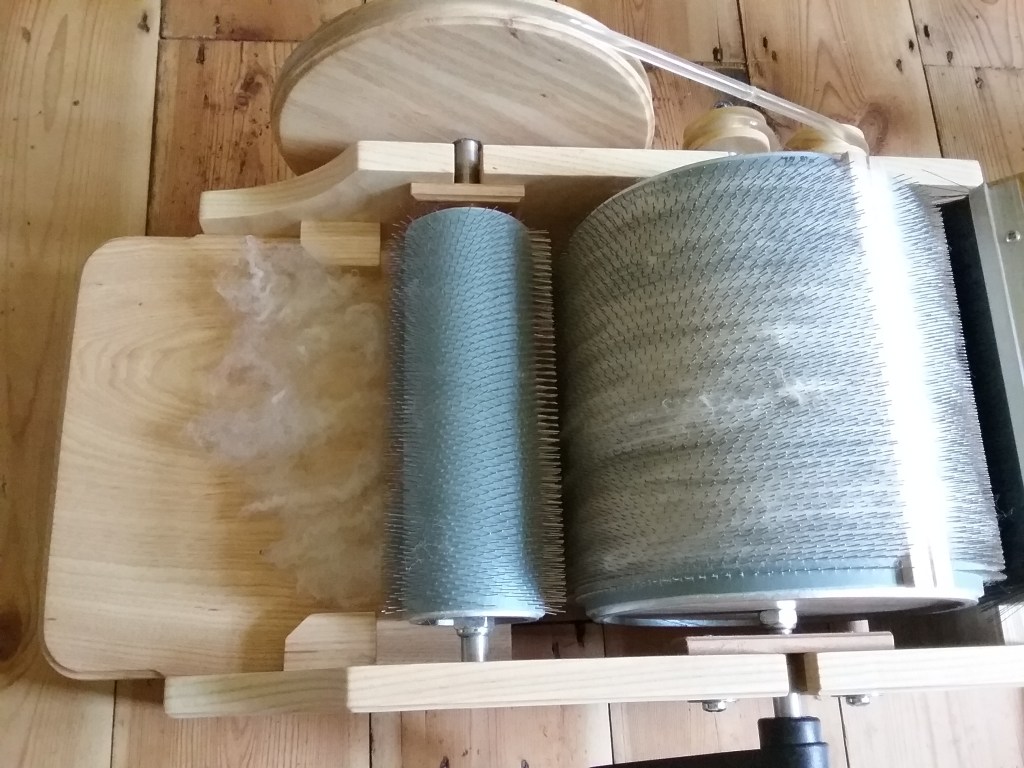
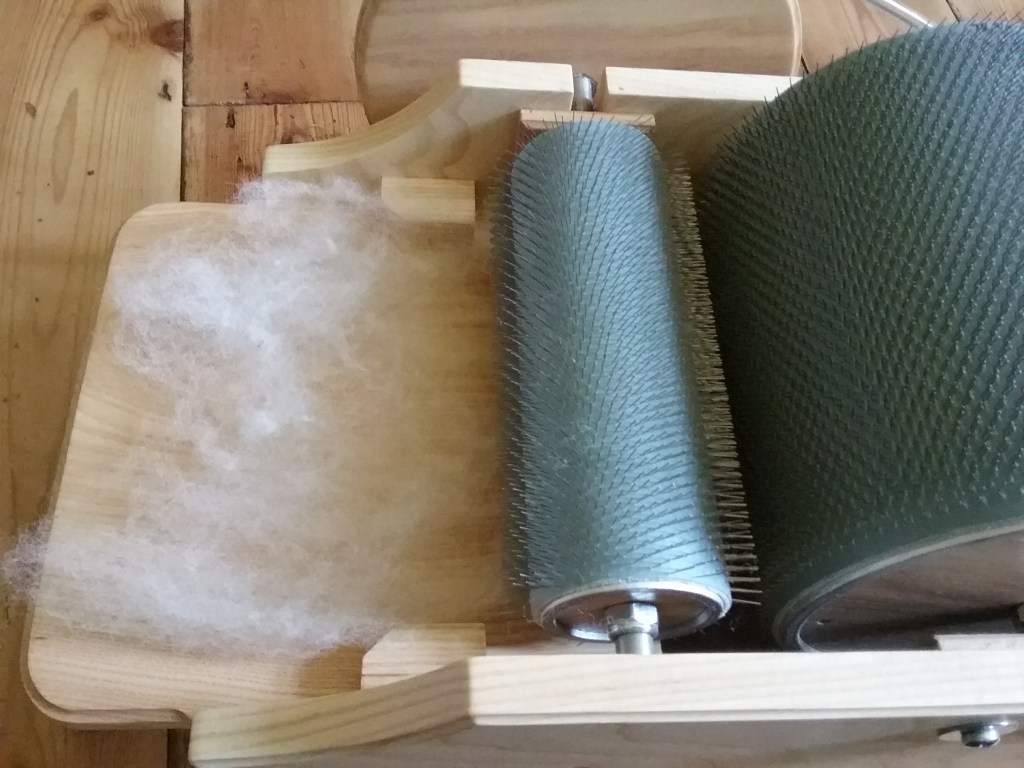
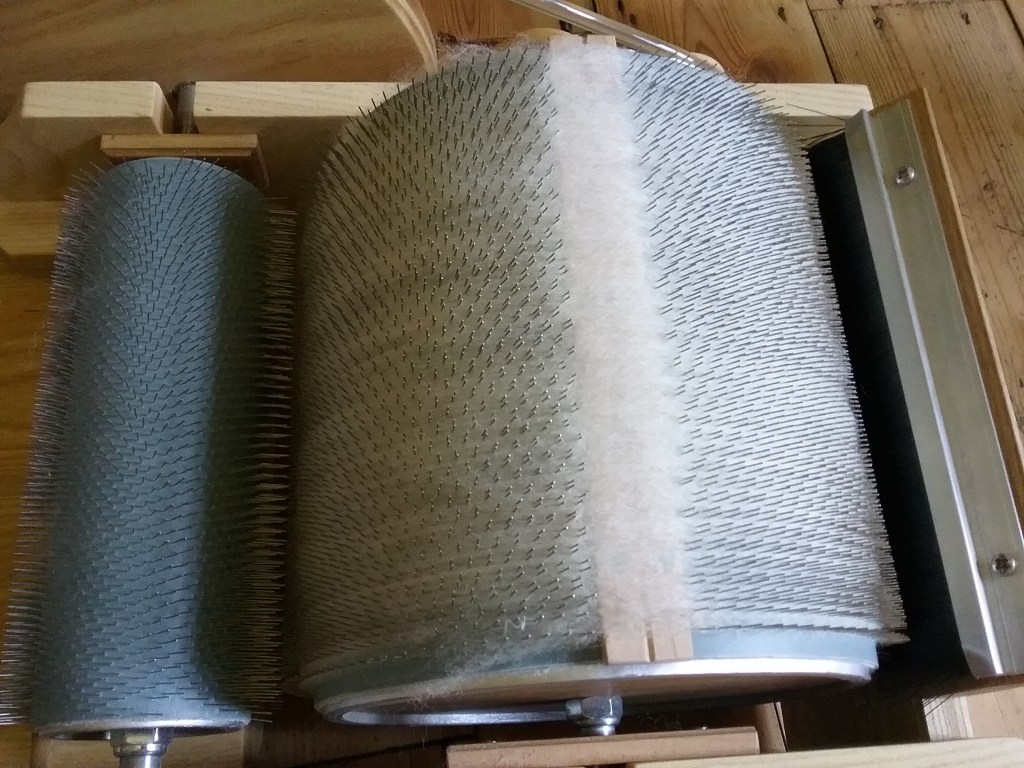
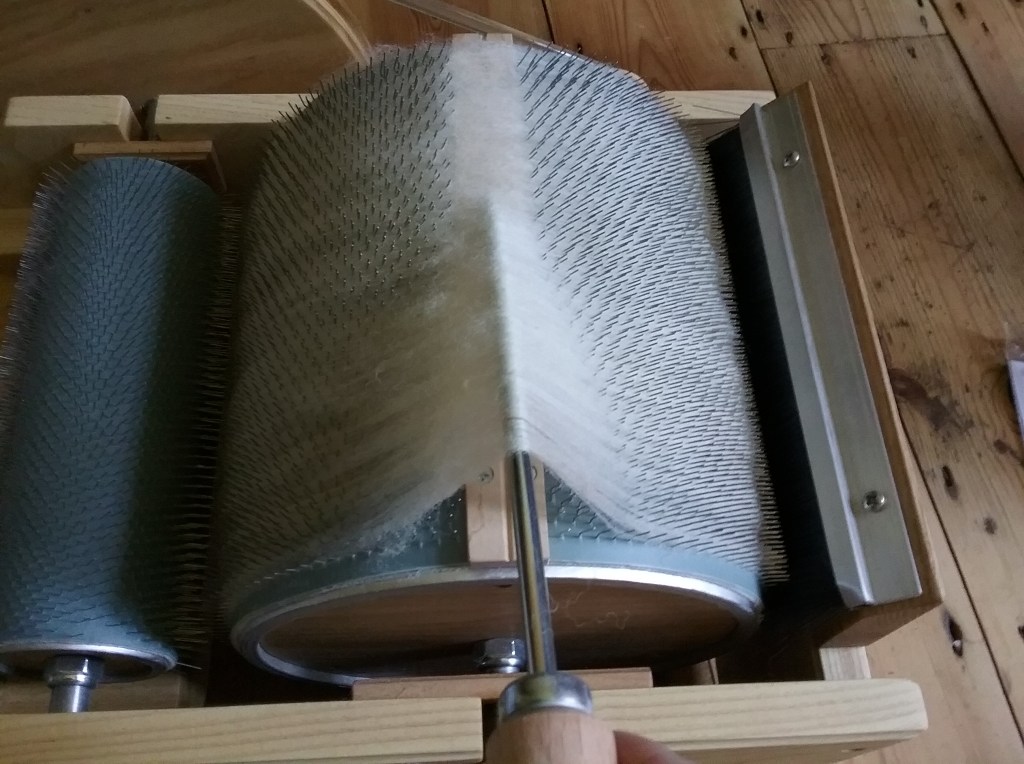
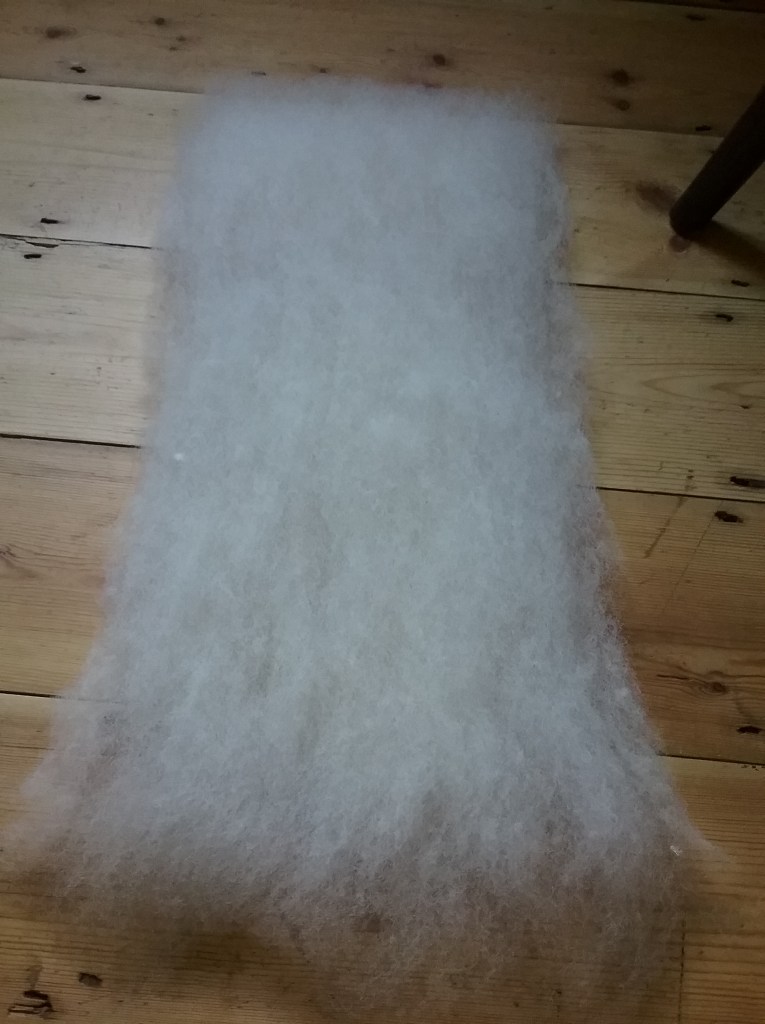
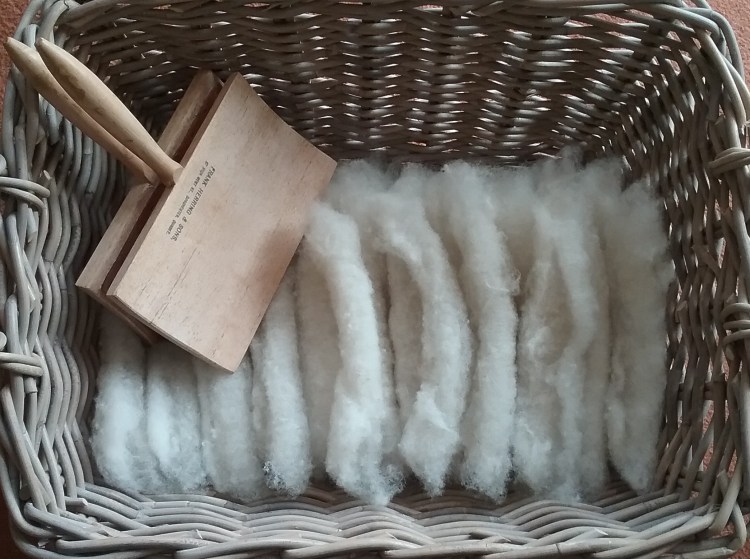
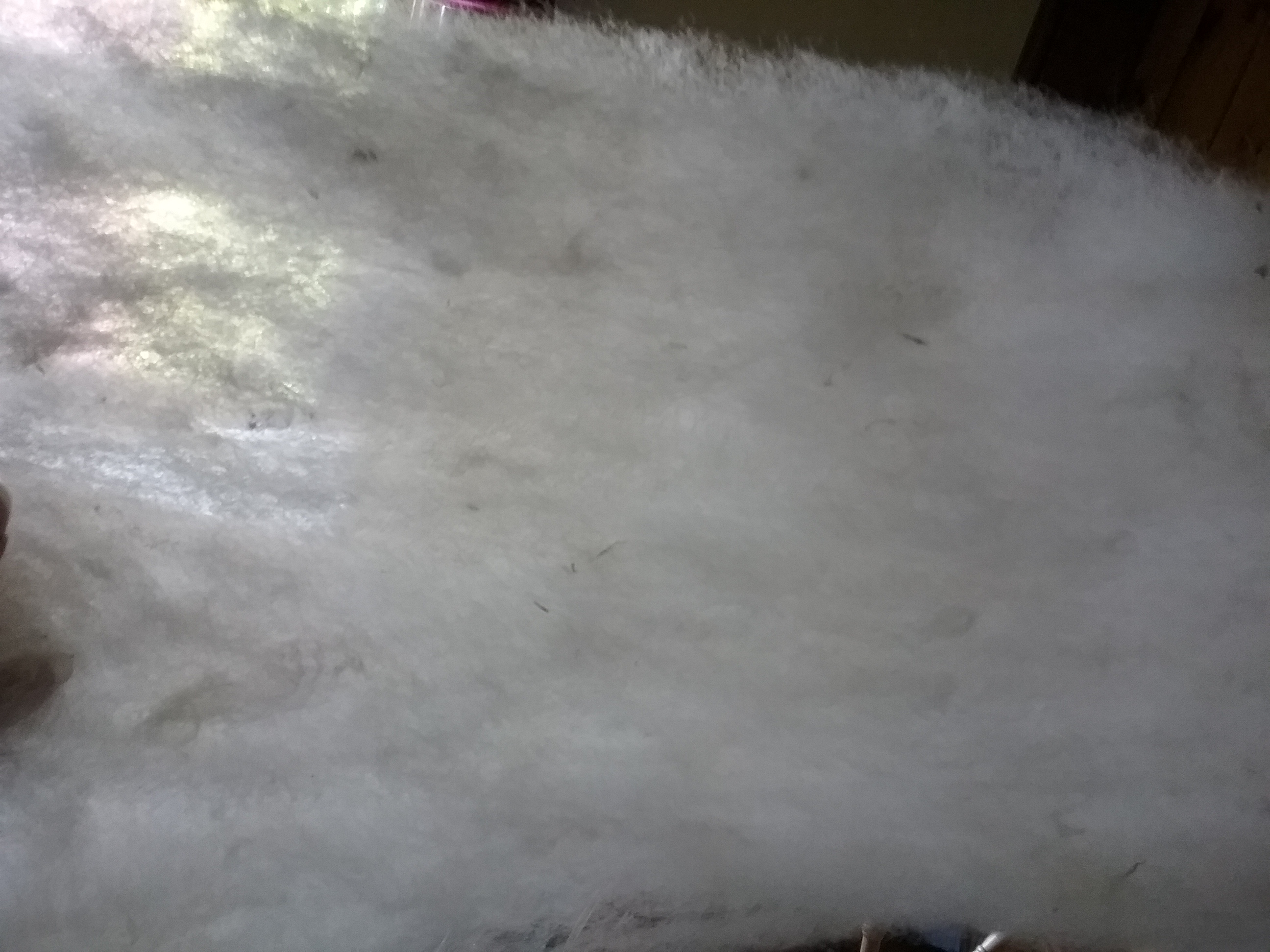
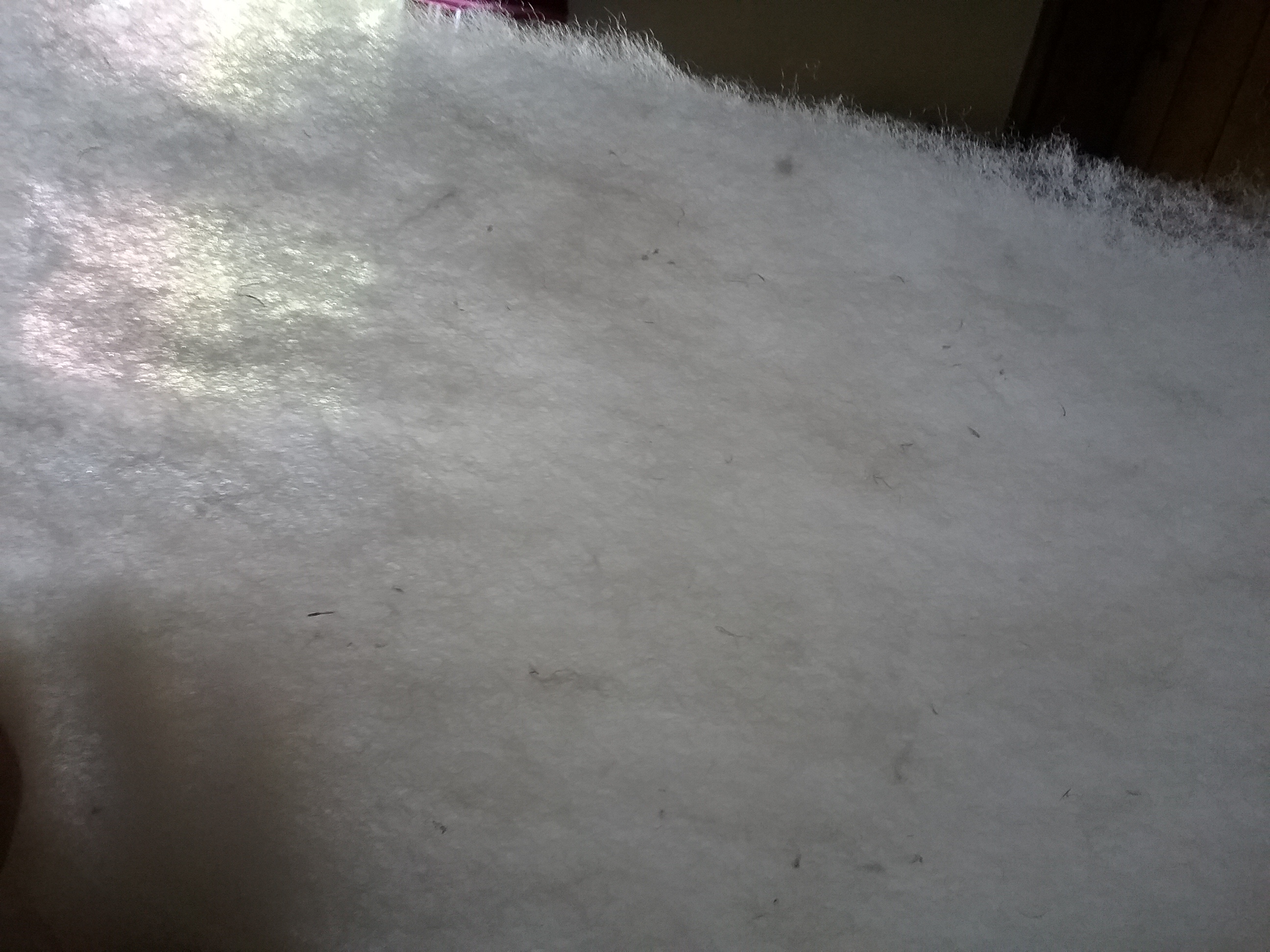
The drum carder requires the fleece to be teased out more than I usually do with my hand carders. I found taking a small handful and teasing it out so it was spread thinly in layers gave a much better result than adding larger amounts in one go. The first pass of the drum carder gave good results, but there were still some uneven areas, so I decided to put it through again. I tore the batt in three lengthways, tore about 6-7cm from each strip and then teased this out before winding it onto the drum (much like I did the first time). The resulting batt was much more even and although I did experiment with another pass through the drum, it made minimal difference for this fleece.
I began this project with the intention of weaving a handspun cloak since I had so much fleece – my plan was to spin and ply all the fleece and then start weaving. I had a small stash of yarn to hand back in January 2022, when I impulsively decided I was going to start knitting a Victorian cycling jumper. This would need a lot of yarn and as the Clun Forest was sitting there I decided to cast on. I put spinning on hold while I knitted and am now in the slow process of carding enough to spin & ply a bobbin full at a time before continuing to knit. Unfortunately, this means my usual blog posts have been in various states of completion, so I am now catching up.
Have you been working on any slow projects, experimented with new equipment, or have any tips for drum carding? Let me know in the comments below!
Happy Crafting!
Further Reading about Clun Forest:
- Breed Society Website – https://www.clunforestsheep.org.uk/
- British Sheep & Wool by the British Wool Marketing Board – ISBN 9780904969108
- The Field Guide to Fleece by Deborah Robson & Carol Ekarius – ISBN 9781612121789
 Loose Ends