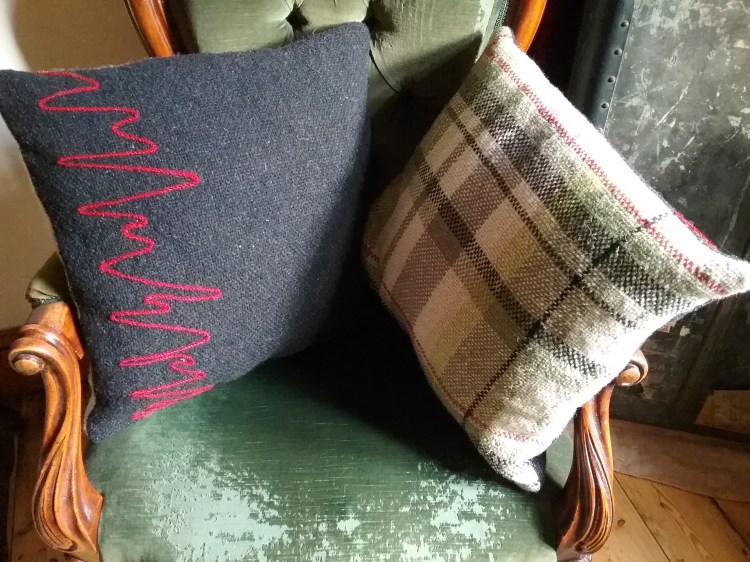
I would like to wish all my fellow crafters a belated Happy New Year. Now that the festive season is over, I can finally showcase the projects that have taken up the last quarter of 2022.
I often find myself analysing costume and textiles in film and so when I needed gifts that were Good Omens themed and not off the shelf I felt it was a good excuse to explore some of the fabrics from the show and turn them into cushions. For those unfamiliar with the book or show, the story follows the comical exploits of unlikely allies Aziraphale and Crowley (and angel and a demon) as they attempt to prevent Armageddon. Both characters have a very distinct style that is shown evolving through time. My chosen medium was weaving so I had to find fabrics or elements from costumes that would translate well and express the personality of each character.
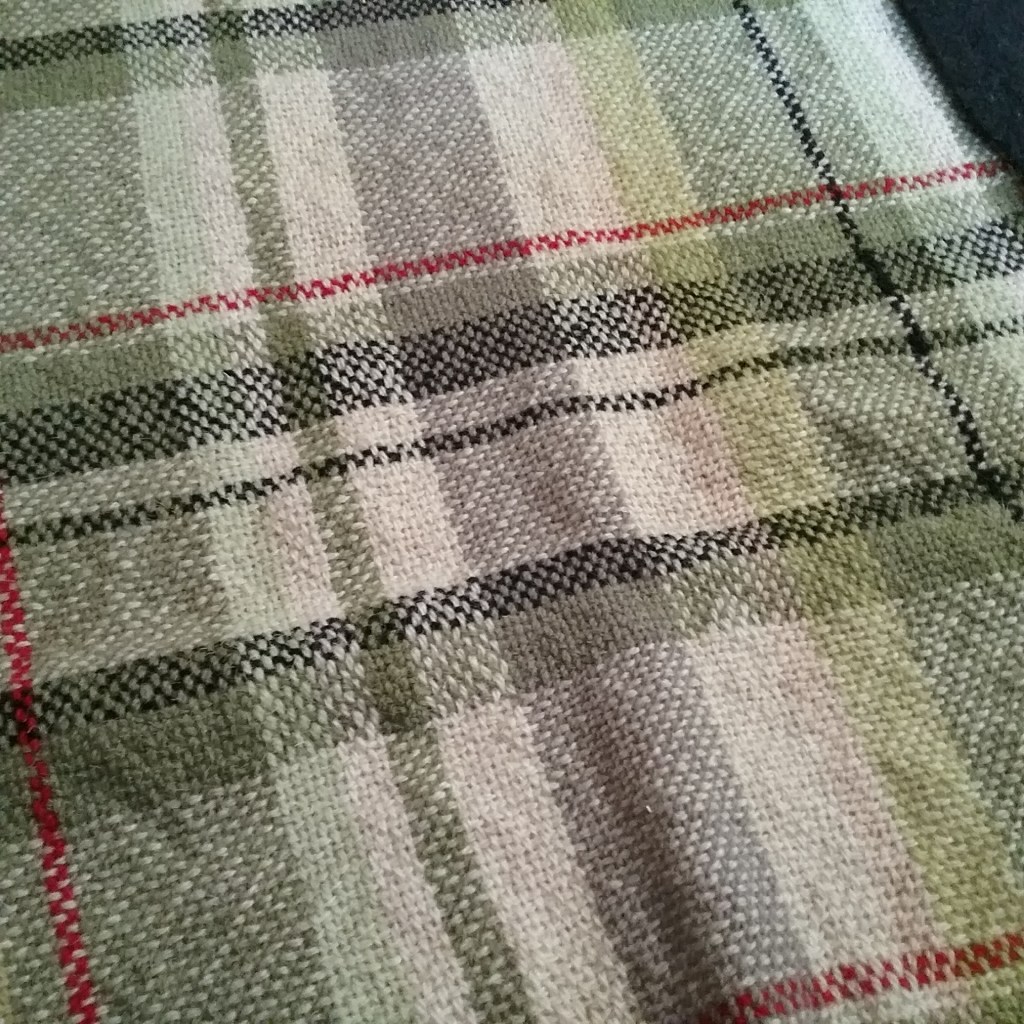
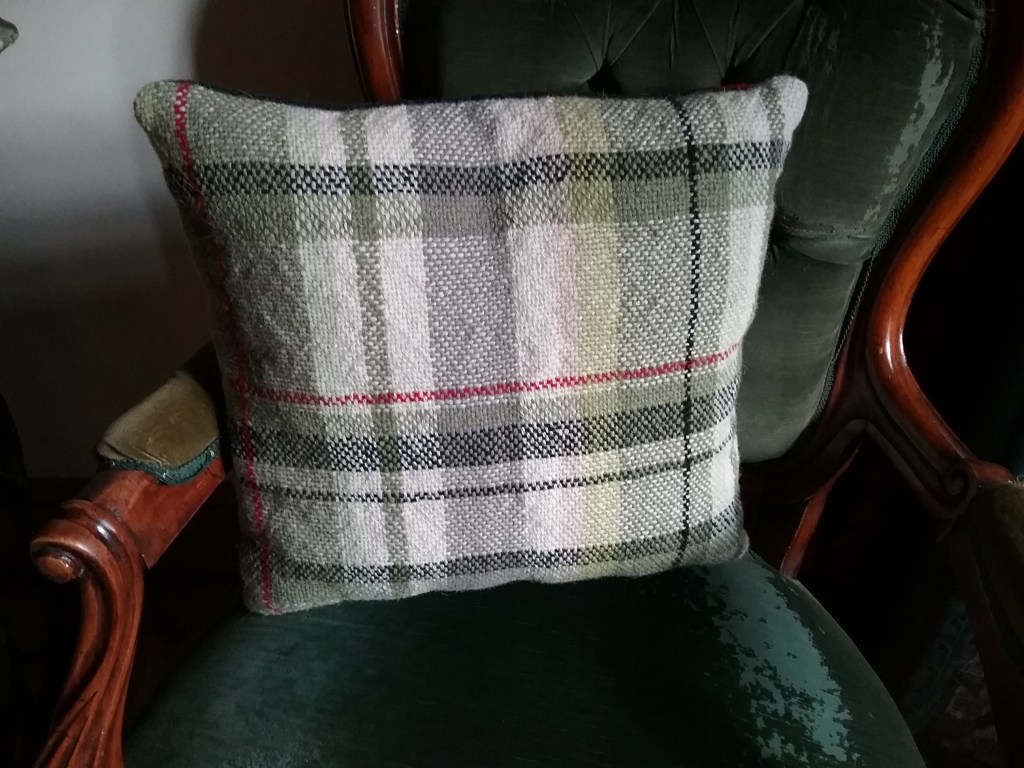
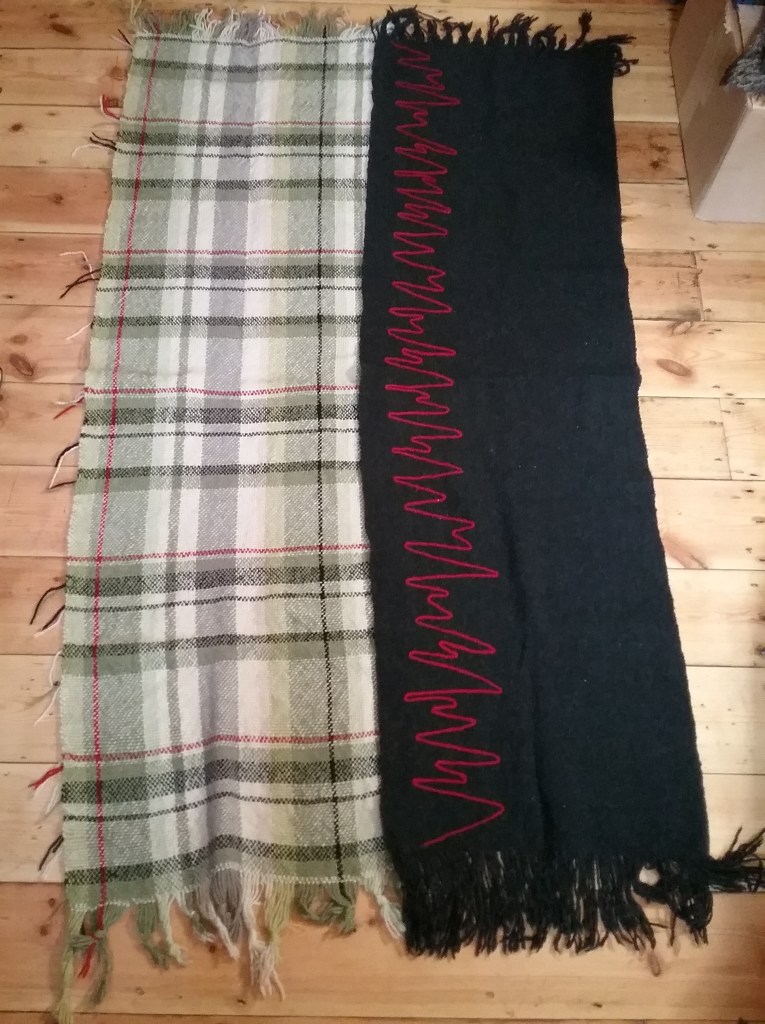
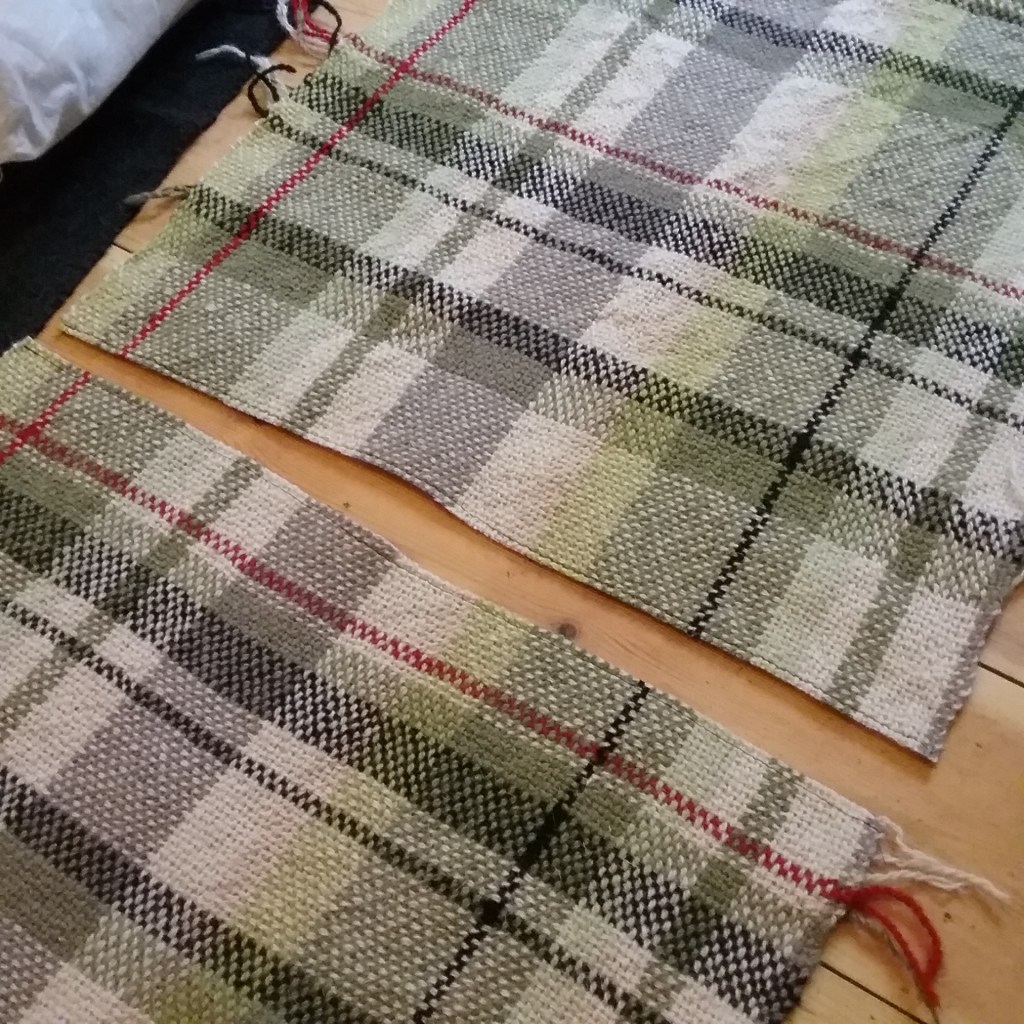
Aziraphale has a fondness for tartan which is something I have been wanting to attempt weaving for a long time. I began to look through images from the show to get an idea of what the tartan looked like and eventually stumbled across an image from Sarah Arnett who it seems designed the specific tartan for the show. Armed with the name of the fabric (Heaven’s Dress tartan) I refined my search and discovered someone had helpfully put this pattern into a tartan designing website. The ’tile’ I printed out measured 200 pixels and my warp needed to be 168 ends wide so I cut off 32 pixels and proceeded to create an indirect warp using each pixel column as a warp thread.
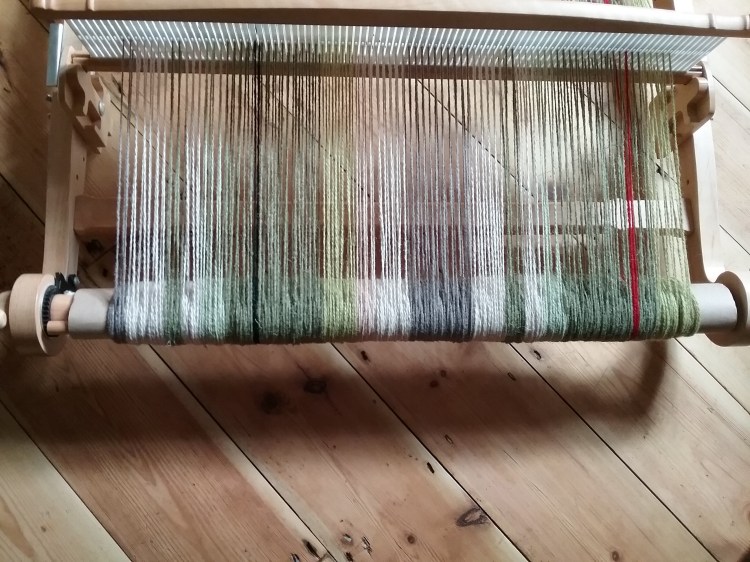
After this it was a matter of threading up the loom and beginning weaving, using each row of pixels as a row of weft thread and repeating the pattern when I reached the end. The whole process was much simpler than I anticipated and ended up being a near exact replica (in pattern at least) of the tartan in the show.
Crowley on the other hand was slightly harder to find a suitable fabric for. His clothing changes a lot in the show and is less homespun in appearance. However, one particular garment did catch my eye and that was the toga/wrap that he wears in Rome. It is plain black (appears to be wool) and has a red slithering line at the border. It isn’t seen for very long, so I zoomed in to a image to have a closer look.
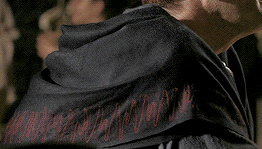
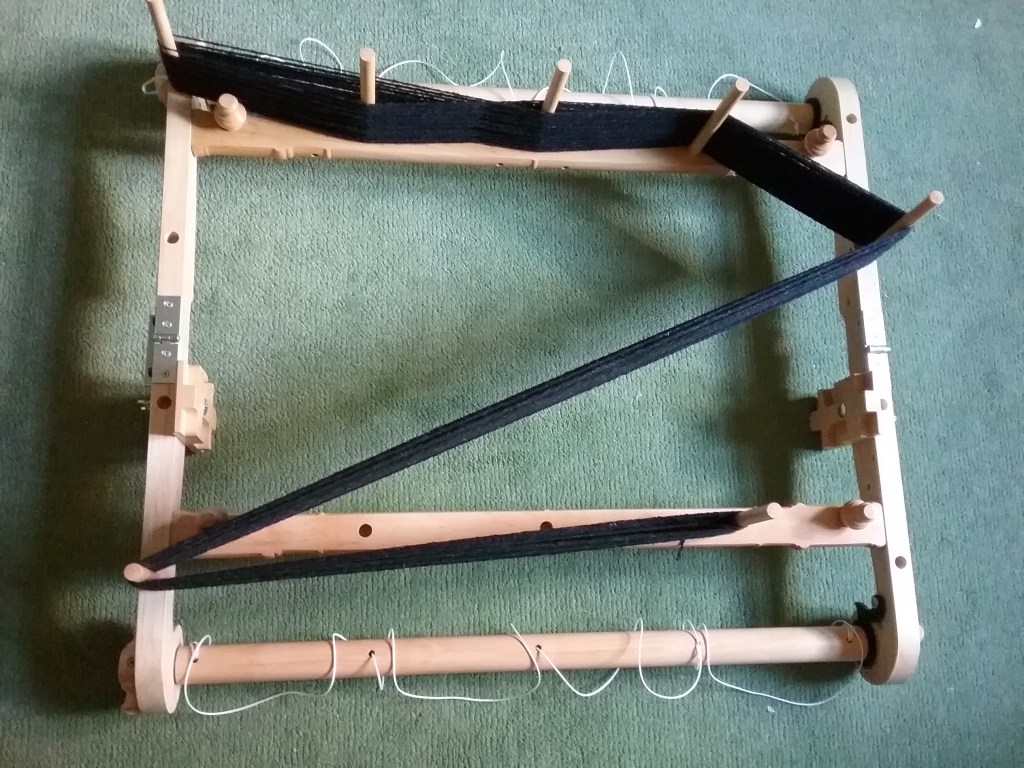
I plied some commercial black wool from my stash to the correct thickness and threaded my loom with a plain warp. At first I though the red line was something woven into the fabric, so attempted to recreate this as an inlay in my weft. It became clear that no matter how I set the inlay it was looking too angular, so I removed the red and looked at the image again wondering how it could be attached to the fabric without weaving. On closer inspection of the image I could see another very subtle line going in the opposite direction to the brighter coloured one which gave me an idea – could it have been needle felted?
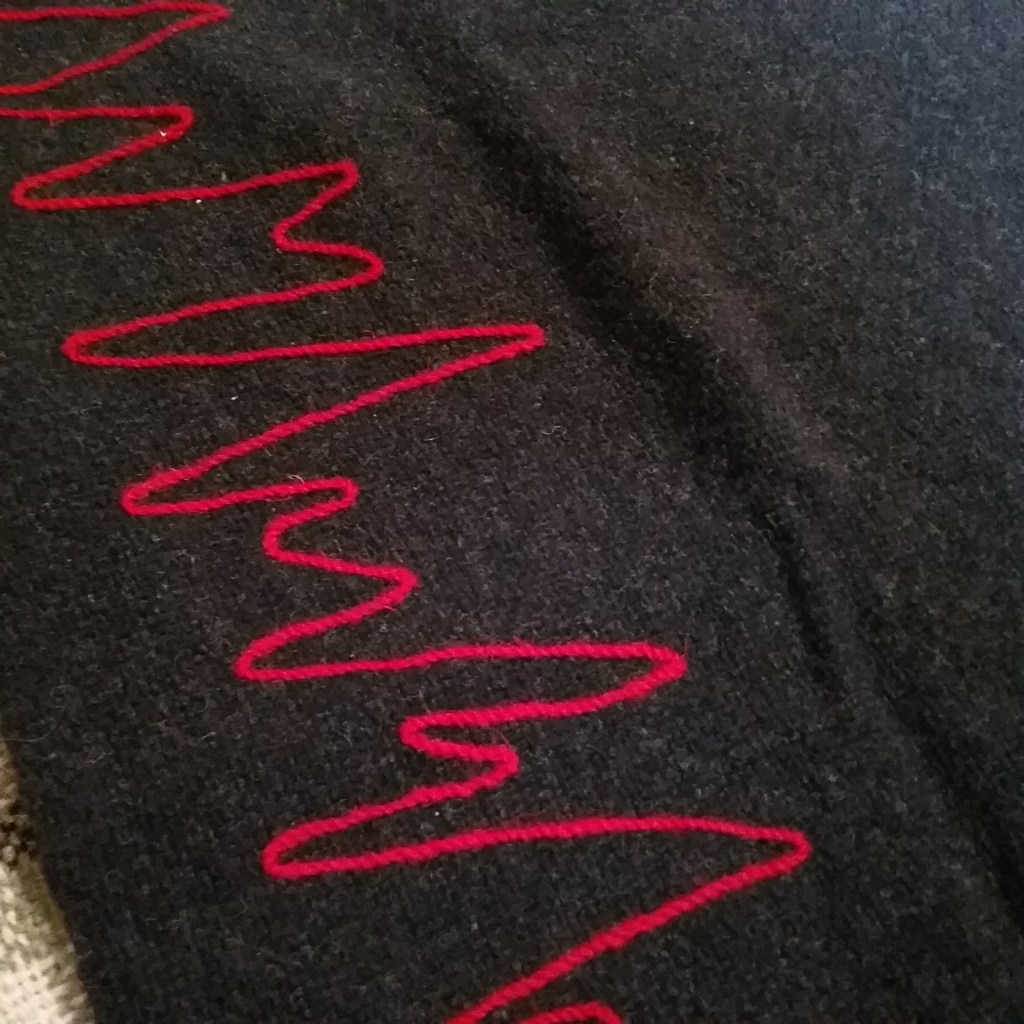
So, I continued weaving in plain black and washed the fabric to allow it to shrink. I have no experience with needle felting but have been keen to have a go at it, so I purchased a mat and some needles and began jabbing a strand of red wool onto my woven fabric following the line on the original garment as closely as I could. I wasn’t sure if the yarn would needle felt onto fabric, but to my surprise it worked well and when I turned the fabric over, the reverse had a very subtle line, just like the picture. Whether the costume designers used needle felting in the original or if the fabric was commercially designed I don’t know, but the technique certainly works.
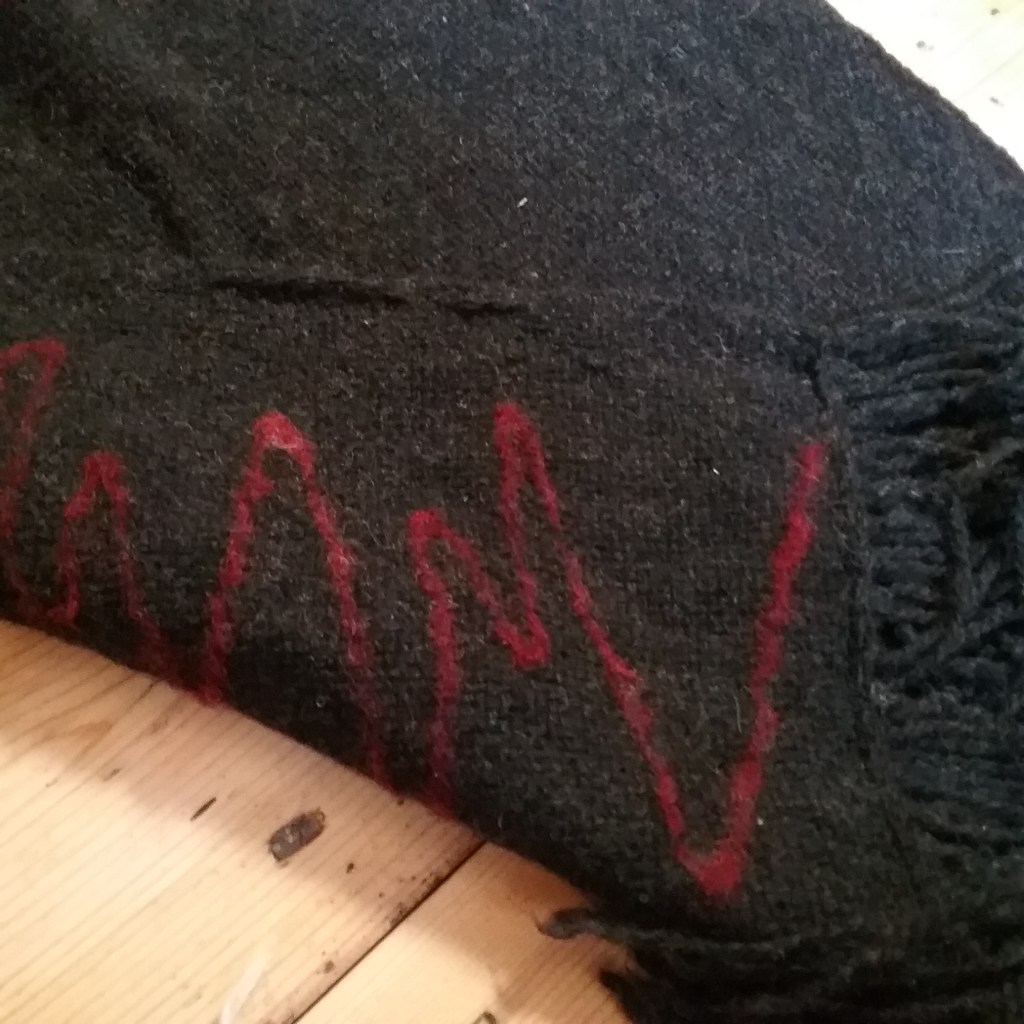
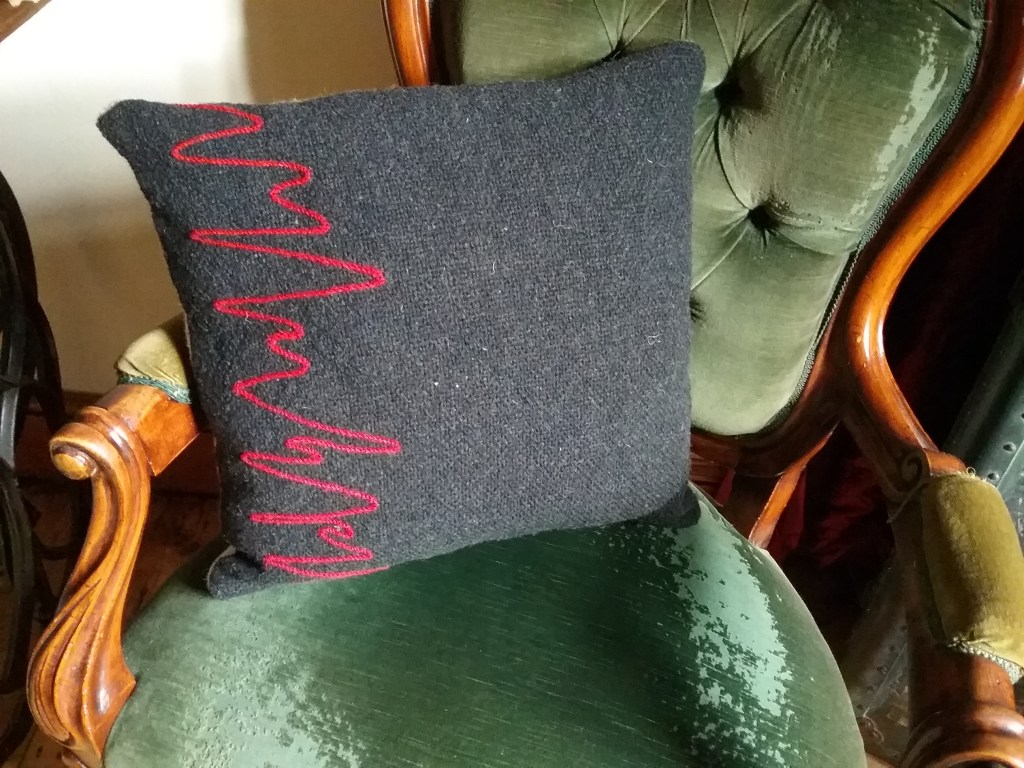
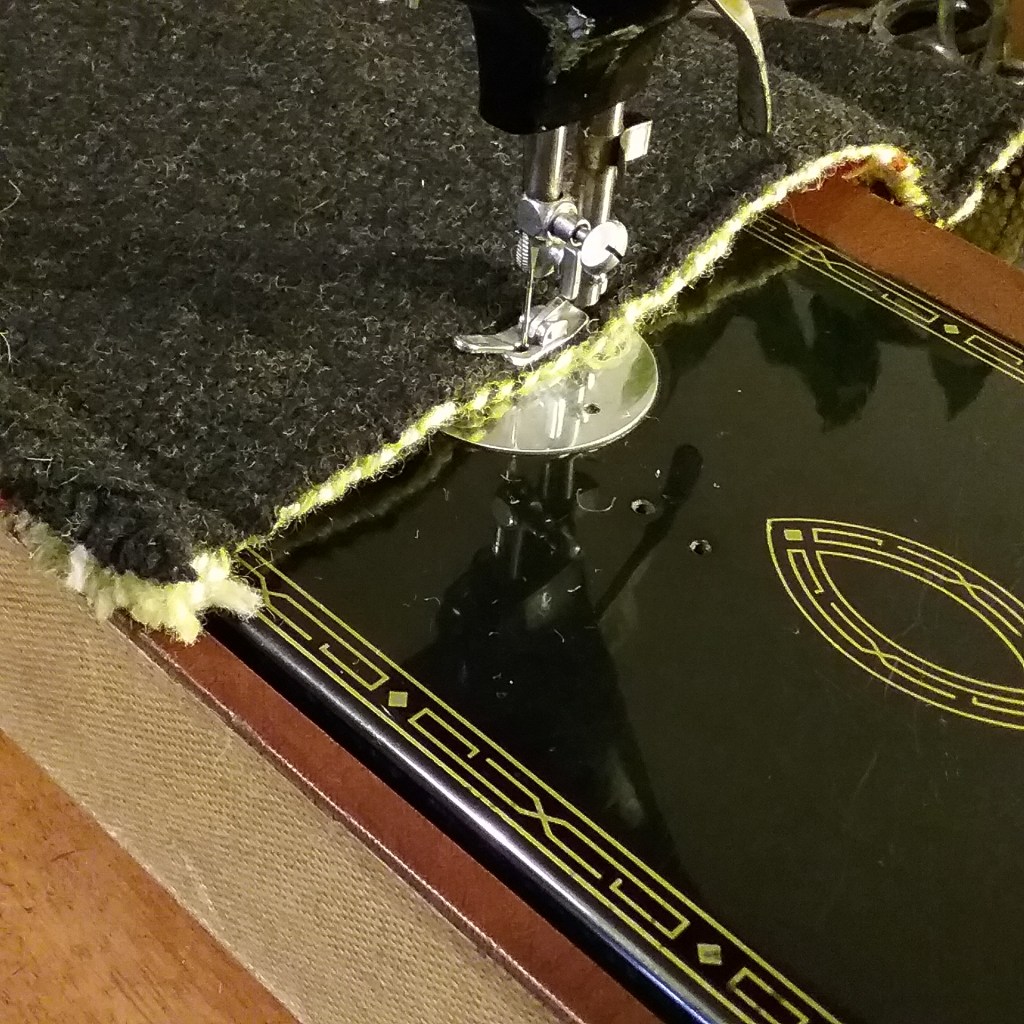
Finally I needed to turn my weaving into cushions. I measured my fabric against my cushion inner, marked my cutting line using pins and then sewed a line either side before taking the nerve-wracking step of cutting through my handwoven fabric for the first time (none of my previous weaving projects have involved cutting). After realising that cutting handwoven fabric isn’t quite as terrifying as I thought it would be – I went about sewing the seams, leaving an opening at the bottom that I hemmed by hand and closed with snap poppers to give a clean finish.
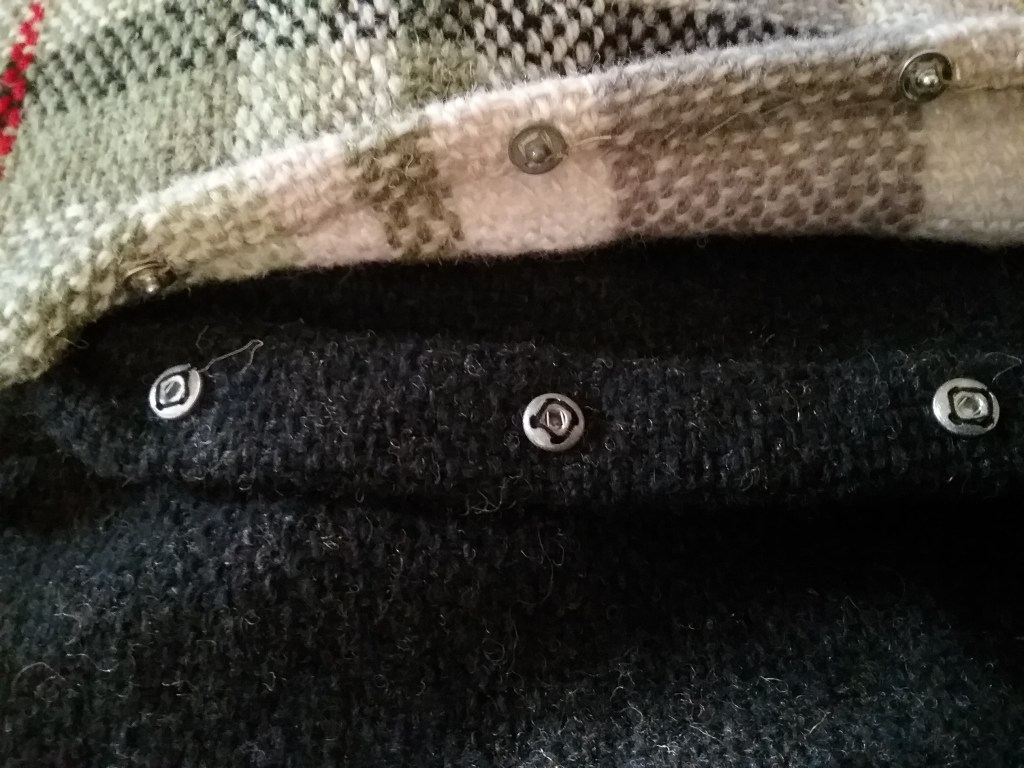
I was very pleased with how the finished products turned out and I have a little fabric spare which I feel might look nice incorporated into some sort of clothing – but that’s a project for another time. Though this deviated from my usual hand processed wool projects, it challenged me to think outside the box and gave me a good excuse to try out some new techniques (I now have the impulse to embellish everything with needle felted yarn!), so I will definitely look at exploring more fictional (and non-fictional) fabric in the future.
In the meantime I have returned to my WIP pile with fresh eyes and have found solutions to the problems that hampered my progress, so am once again moving towards completing some projects. Have you ever recreated any fictional fabric or have any suggestions of fabric you think I should recreate? Let me know in the comments below!
Happy Crafting!
 Loose Ends