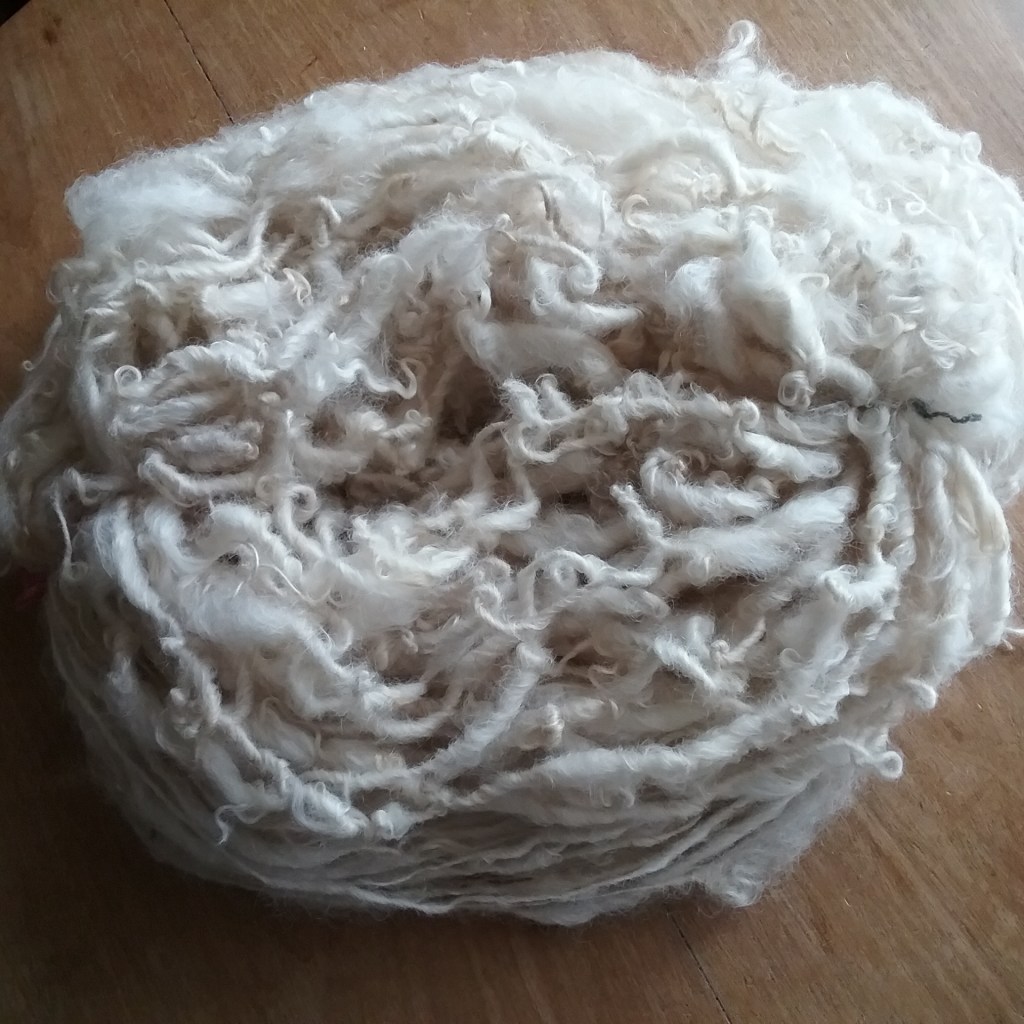
Spinning to Keep Character
Usually long stapled fleeces are combed and spun worsted style to create an even yarn, however I like to try and keep the quirks of each fleece in the finished wool. I decided I would spin the fleece as it came without any preparation apart from some light teasing apart of the fibres to help keep the shape of the locks. Unfortunately back in 2020 when I washed my fleece, the orifice on my standard flyer was too small for locks to pass through; however I recently fitted a jumbo flyer to my wheel so I can now spin thicker yarns.
Attempting a Coreless Corespun
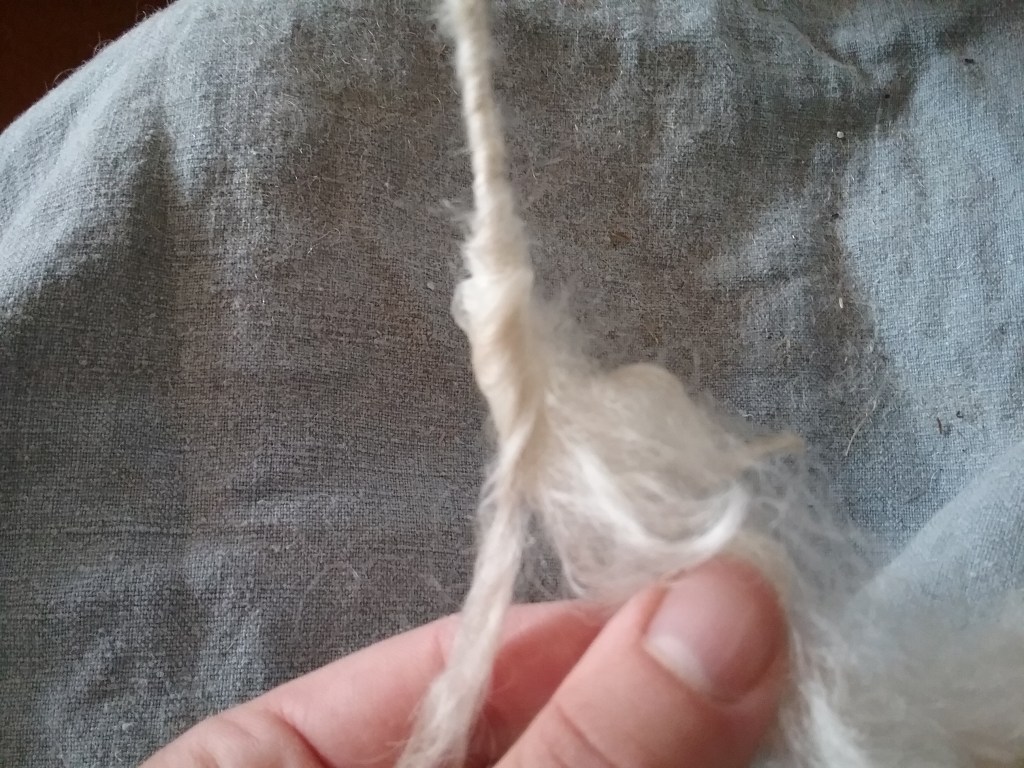
Core spinning is usually done by allowing loose fibre to wrap around a pre-spun or commercial ‘core’ yarn instead of drafting in the usual manner (a good link to this technique on Youtube is here). This core gives added strength and the yarn has a different look. I’ve tried core spinning with roving several times before, but I felt that the Lincoln Longwool fleece would be too slippery to catch properly onto a core, so I decided to try what many people call a coreless core spun. This technique is a little tricky to get the hang of as it involves drafting half of the fleece in your hands to make a core while simultaneously wrapping the other half around the core you’ve just spun. Hopefully the photo below demonstrates this somewhat:
During my first attempt I drafted the fibres a little too much as there were some very thin sections and fewer locks showing. By my second bobbin full I was drafting the fibre less, treadling at a slower speed and allowing a little more twist to build up in the drafting zone to help create a thicker yarn. To help prevent over drafting I found it was useful to hold the two halves of fleece as if you were plying them together. My first and second attempt are shown below:
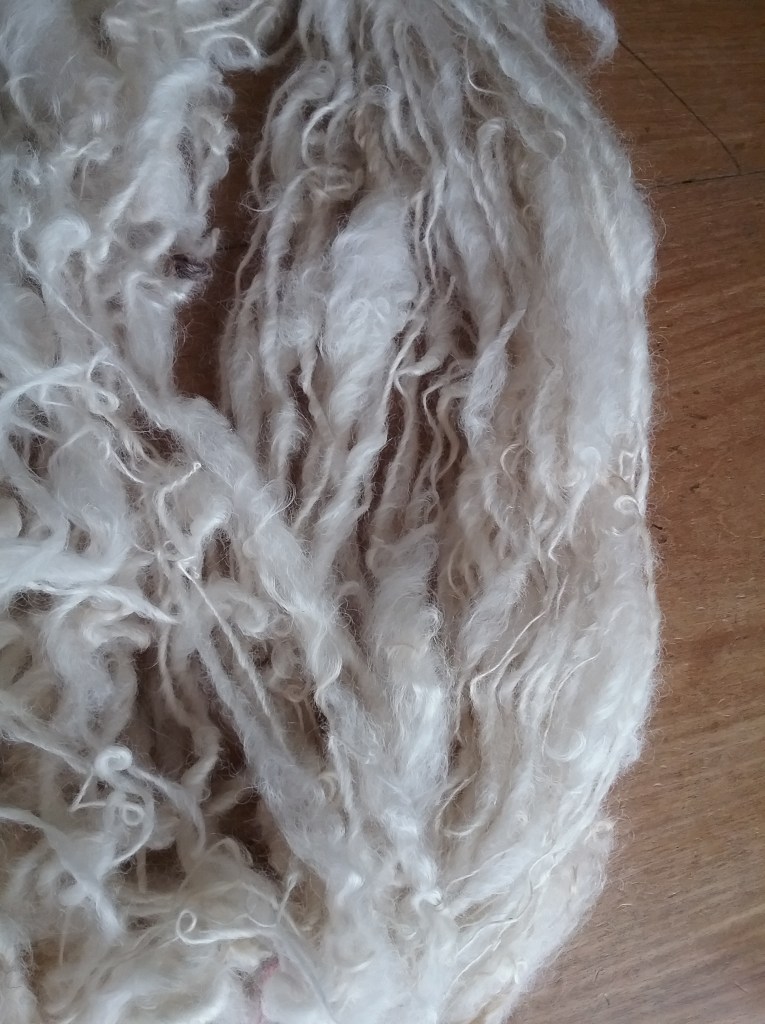
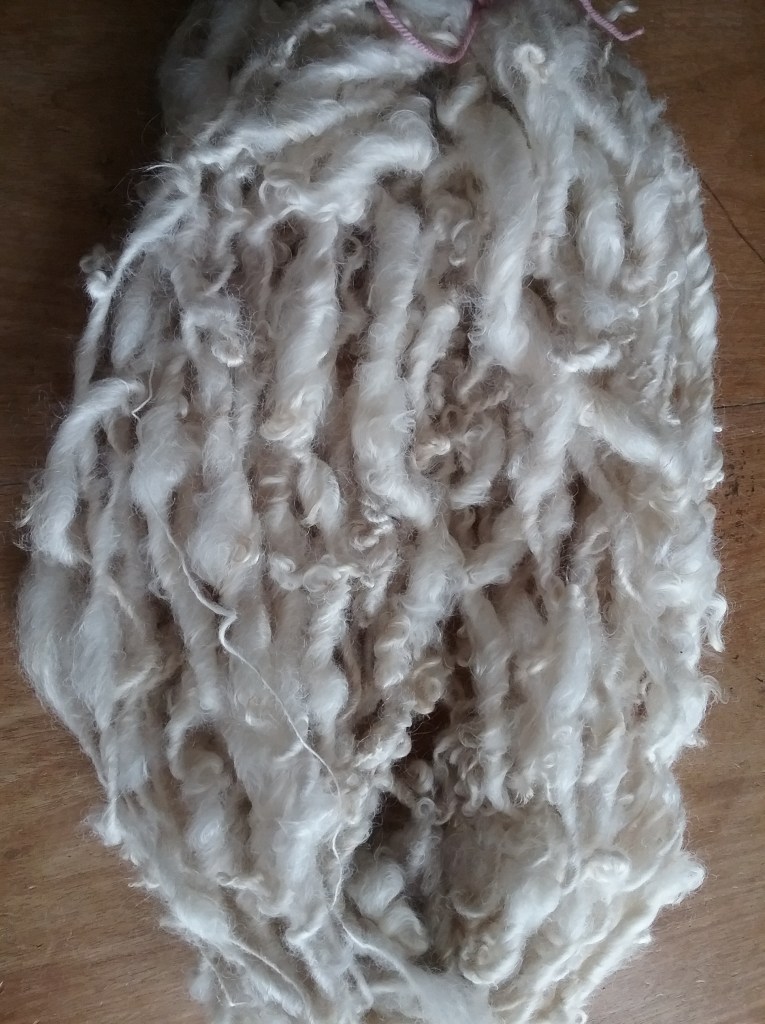
Although challenging, this fleece is making highly enjoyable spinning and as the yarn has a wide diameter, it is spinning up quite quickly. I don’t plan to ply my yarn as I feel this could flatten the locks out (however there are certainly lots of art yarn type plying possibilities) and I will update this post when I have attempted washing a skein to see how the locks behave after, as, still being a ‘single’ the yarn is a little energised straight off the bobbin. Textured yarns like this tend to be shown off best in weaving, so I think this yarn will be reserved for adding texture and contrast to woven projects, rather than a project in itself.
Happy Spinning!
Further Reading about Lincoln Longwool:
- Breed Society Website – http://www.lincolnlongwools.co.uk/
- Rare Breed Survival Trust- https://www.rbst.org.uk/lincoln-longwool
 Loose Ends