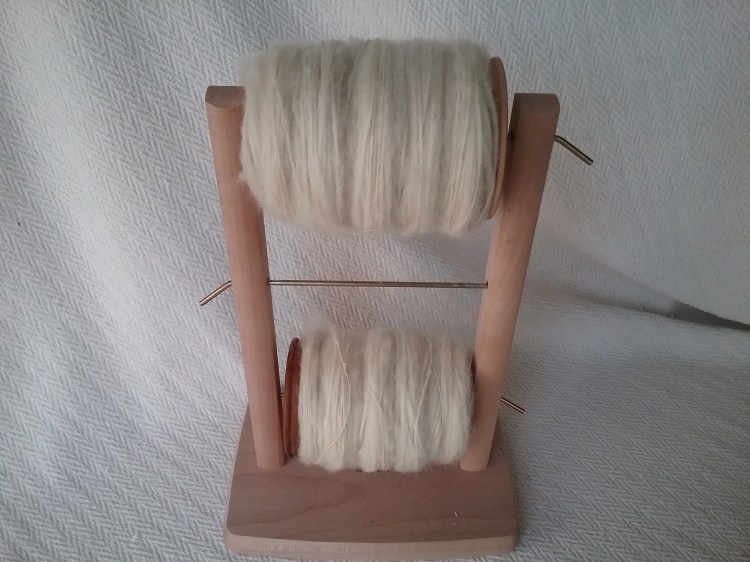
Spinning Singles
As the fleece had been carded into rolags I began by spinning woollen (long draw) as is convention. Due to the length of the fibres however, I found I had less control over how fast the twist was entering the drafting zone and found that spinning with a full long draw was allowing twist to get into the un-drafted fibres. I decided to spin using a short draw instead which gave me more control when spinning and seemed to show off the natural lustre of the wool much better.
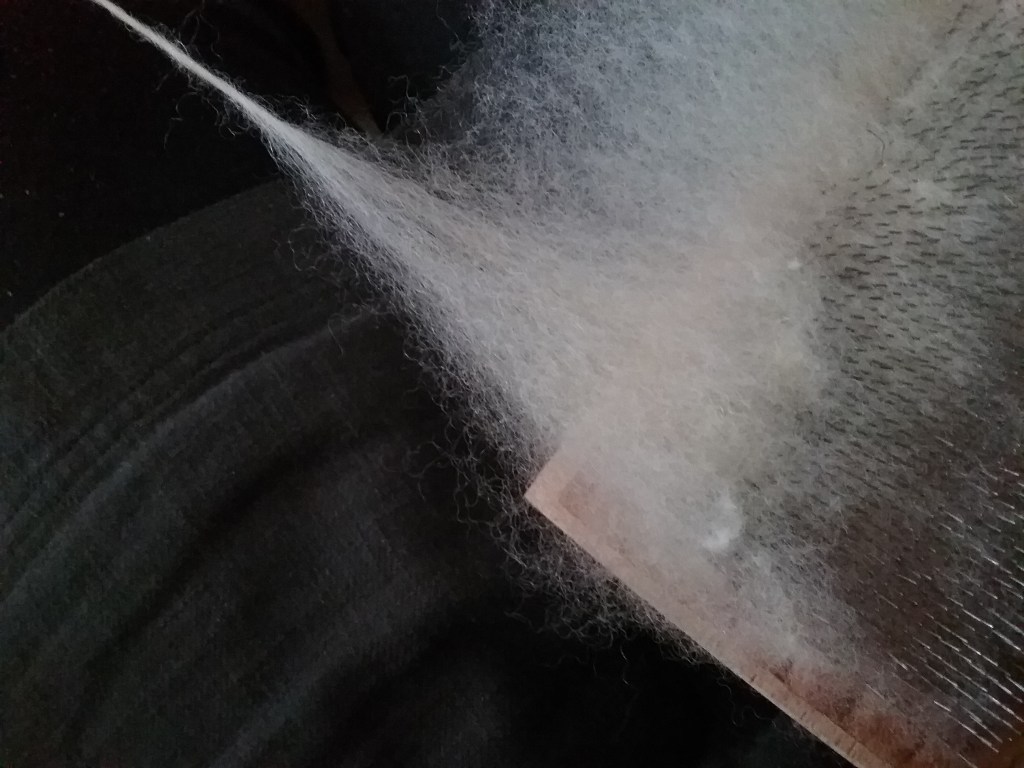
At the moment I have no wool combs to compare the differences between the preparation types, but I had read about spinning directly from hand carders also facilitated worsted spinning. Spinning in this way means the fibres are aligned straight much like they would be on combs, so I thought I would give it a try. I carded the wool as usual, but left it on one carder without making a rolag. I then attached the fibre on the left hand side to my leader and started spinning, drafting the wool directly from the carder, gradually moving across the carder until reaching the right side, upon which I moved back again (in a similar way to how you would use a diz). This method produced a yarn with slightly less ‘halo’, so was probably quite similar to if the fleece had been combed. I have saved a small sample of fleece, so when I get round to DIYing some combs I will update this post with a proper comparison. Spinning directly from the carder felt quite strange to me, as I would normally use both hands for short draw, but with this method one hand had to hold the carder while my non dominant hand had to hold tension and draft at the same time. With more practice I’m sure this is something I would get used to.
Plying
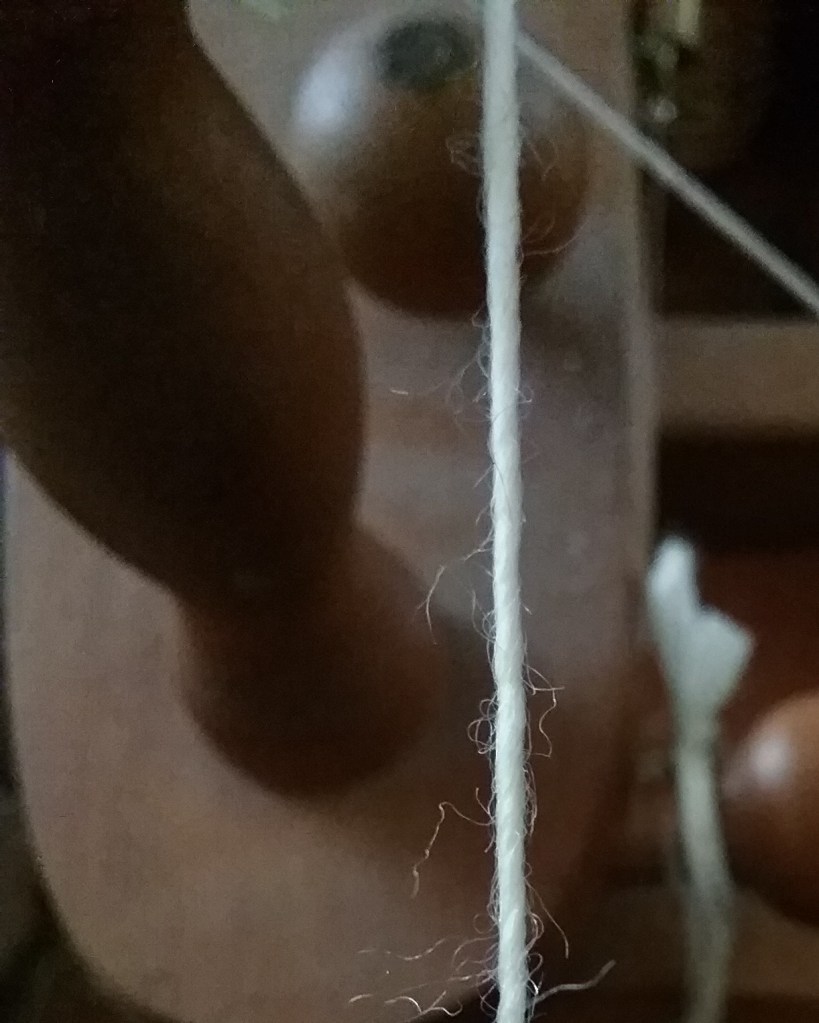
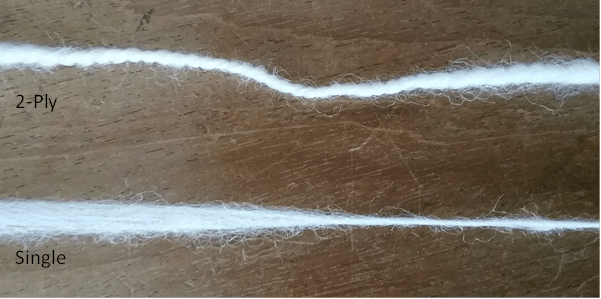
I believe the Romney singles are the thinnest I have so far spun, so although the lack of nepps/additional texture made for easy plying, it seemed to take quite a long time for the bobbin to fill with 2-ply. The wool plied quite neatly and seemed to naturally even out any thicker areas in the singles rather than accentuating them. The total length of plied yarn from 1kg of Romney fleece was approximately 1044m.
Setting the Twist
After plying I washed the wool in warm water with some pure soap just to set the twist. The yarn was quite stiff coming off the niddy noddy, but had much more drape after drying. Quite by accident I was also able to see the felting point of Romney fibre. During one wash I forgot to add some cold water to the bowl and after drying the fibres had started to felt together (thankfully I was able to separate them gently). I imagine with more agitation the fibres would have felted irreversibly.
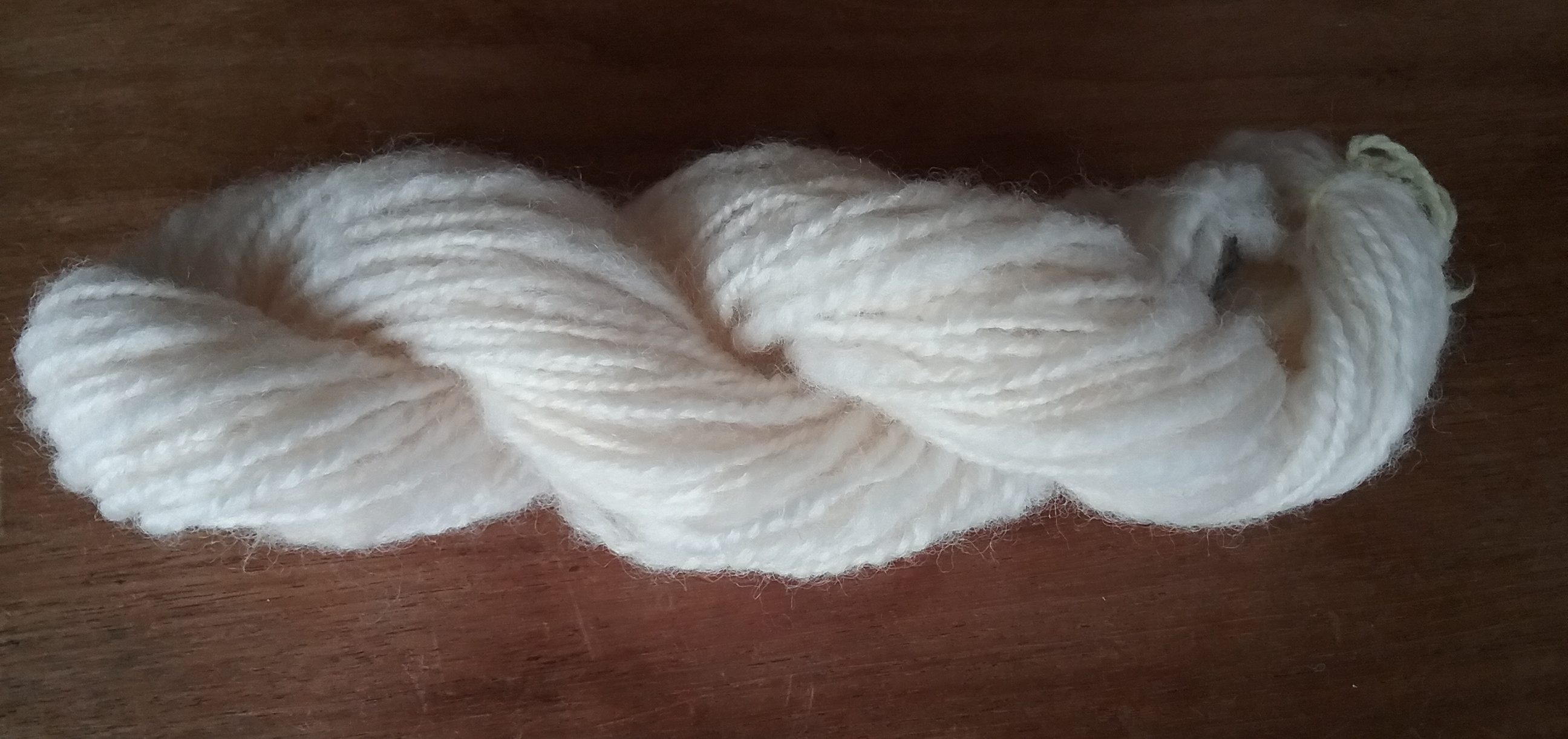
Comparing my spinning experience with my initial research the yarn does indeed have a very pearly lustre which should show up nicely in the final project/s. The woollen preparation method seems to have given the yarn a nice spring but the worsted spinning has given it more drape than the other fleeces I have worked with. My Romney yarn feels soft enough to wear next to the skin so I think my final project will probably be another accessory/garment with some sort of homage to the smuggling history of Romney Marsh. I also plan to cover spindle spinning with the small amount of Romney I have saved to comb, so I will update this post then.
Happy Crafting!
 Loose Ends