The Fleece
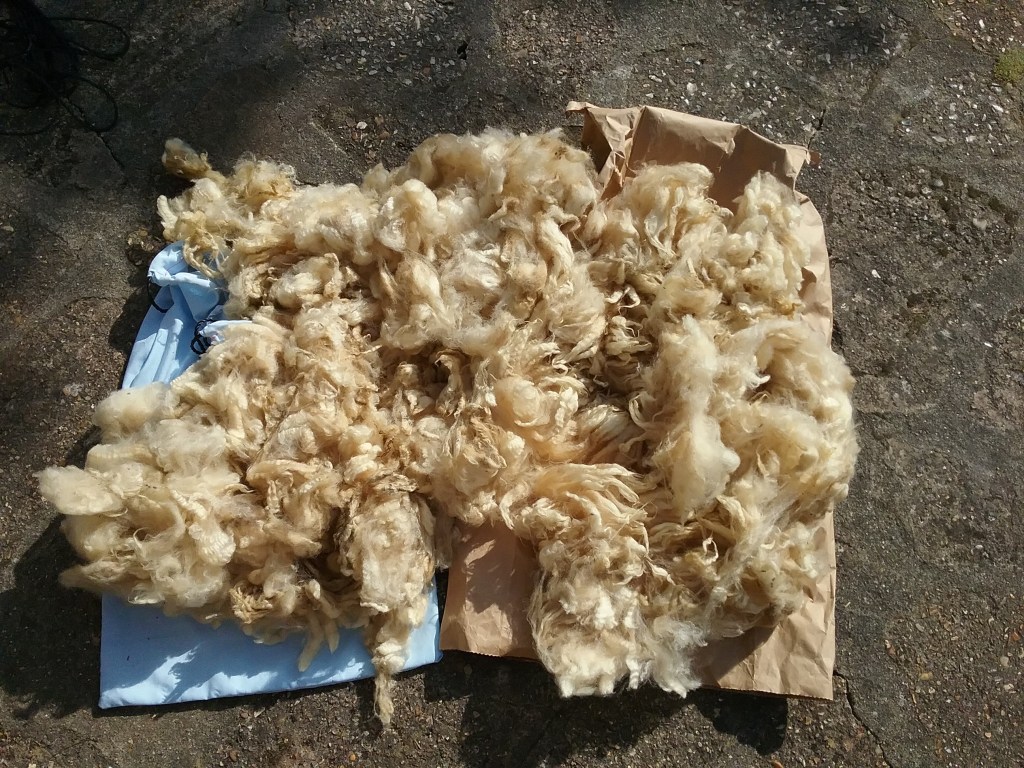
I purchased this fleece from Romney Marsh Wools during virtual Fibre East last year. Romney Marsh sell fleece in either 500g or 1kg amounts rather than as full fleeces and the fleece is pre-skirted with all dags etc. removed. This meant that all of the really dirty work was already done for me, as apart from a couple of bits of straw, there was very little other VM and I couldn’t see much kemp. I would definitely recommend purchasing fleece in this way if you want to have a go at processing raw fleece, but don’t want to get too messy and want to be sure of the quality.
Quick disclaimer – This is not an ad, links are provided for reference only.
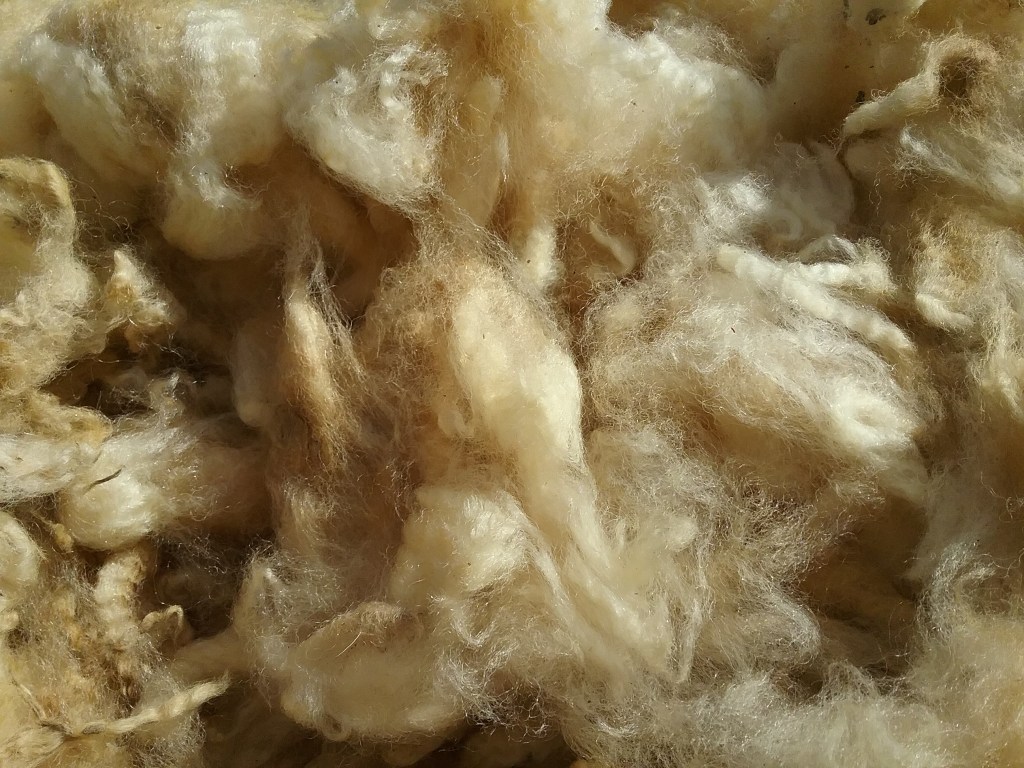
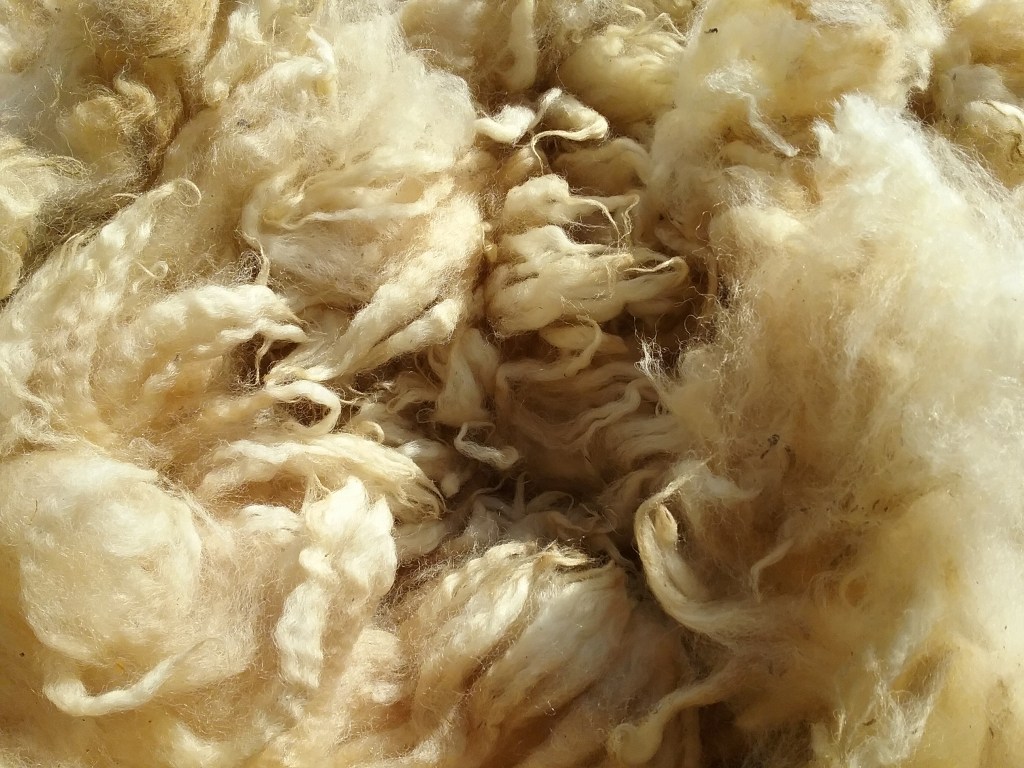
The fleece itself was incredibly soft and was greasier than I expected it to be from my research (see the yellowish tinge to the fleece in the above photos). The crimp was well defined and it had a very bouncy quality and a gorgeous lustre.
Washing
As has been my method most of last year, I decided to put it in the suint bath. Last autumn, I decided to optimise my suint method and found myself a large lidded bin to submerge fleeces in (this prevented the water from evaporating and also stopped insects falling in). The Romney fleece was the first to go into this new bath, so I left it in there for a week before rinsing it in clean rainwater and hanging it out to dry. The suint bath left it very soft and maintained its crimp and lustre. There was still a little grease in the fleece and I could have spun it as it was, but as I was going to be storing it indoors for a while before any further prep, I opted to give it a wash using some gentle soap to remove the rest of the grease.
Carding
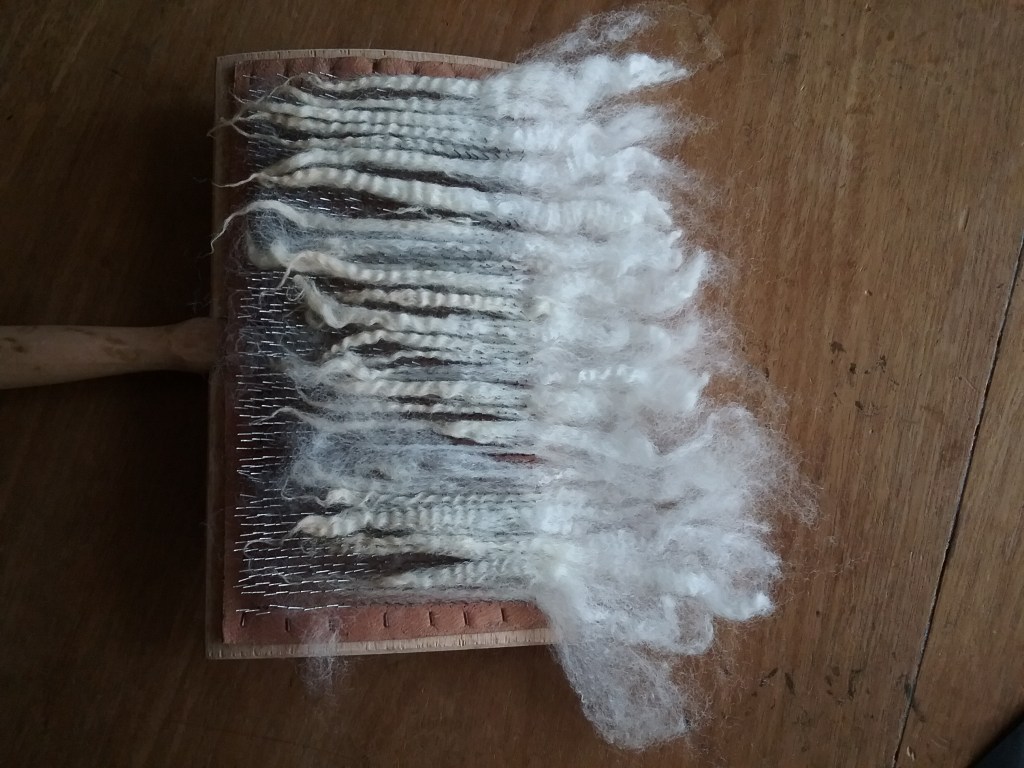
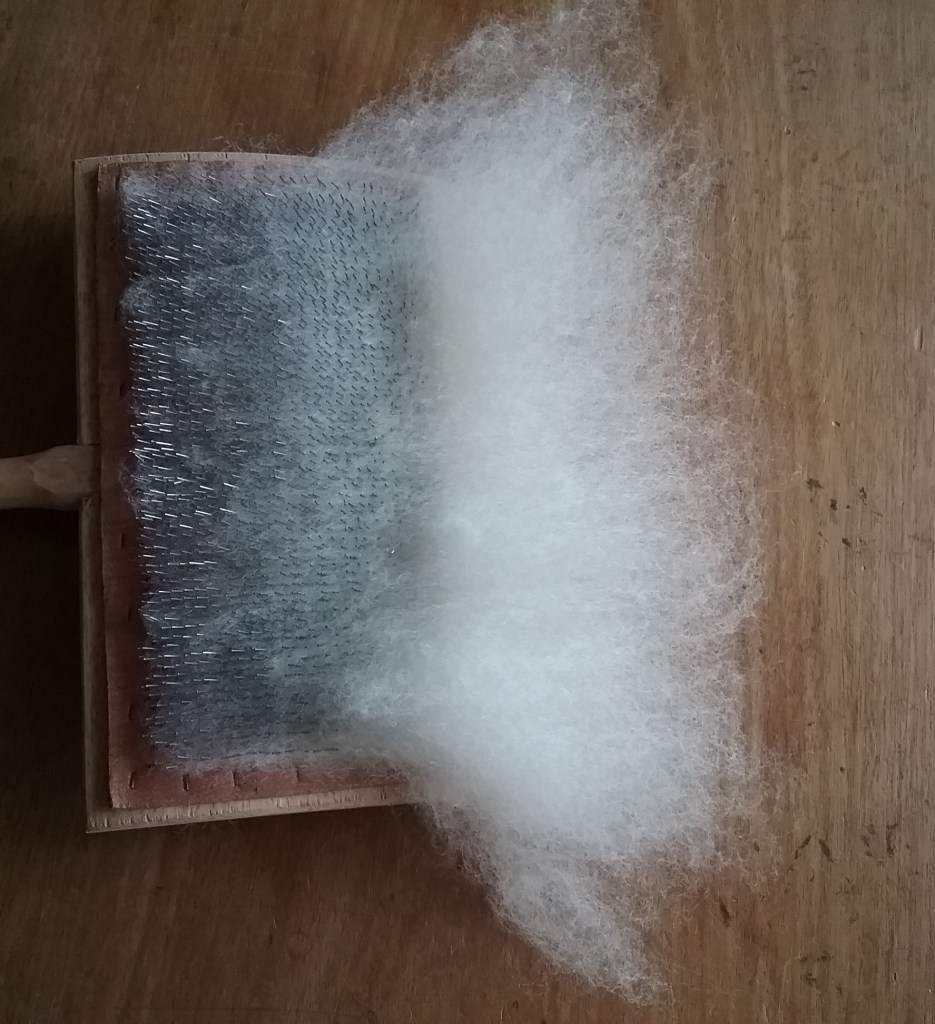
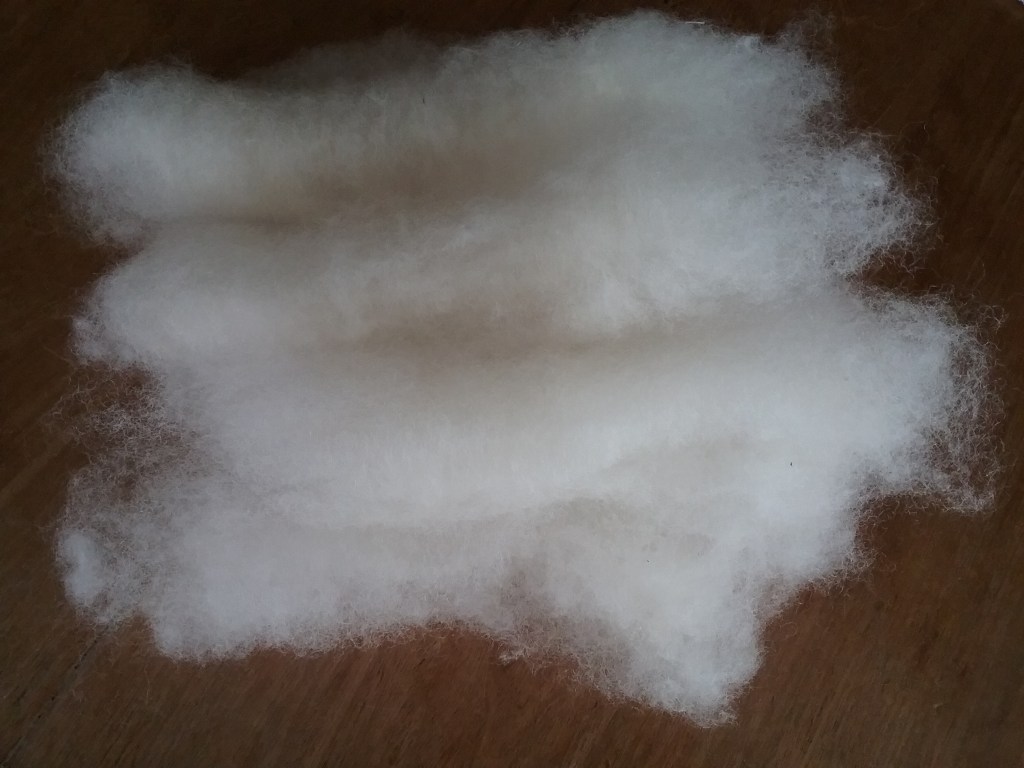
As the fleece was clean and the locks separated easily, there was no need to put it through the wool picker before carding. The average staple length for my fleece was 18cm which is much longer than the other fleeces I have prepped. I only needed to make about 2-3 passes with the carders, however it was slightly harder to manage the wool, as it tended to fan out at the edges – see right. The rolags produced were very full and airy.
I imagine that combing wool of this length might be easier than carding it. I do have plans to DIY myself some wool combs in the future, so I will keep a small amount of this fleece back in order to eventually do a comparison of the two methods.
Alongside making rolags, I thought I would also try out another method I recently heard of, where the fibres are carded and then spun directly from the carder much like dizzing off a comb, but I will discuss this further in the spinning post.
As always, let me know if you have any tips/advice in the comments below.
Happy Crafting!
Further Reading about Romney
- Breed Society Website – romneysuk.com
- British Sheep & Wool by the British Wool Marketing Board – ISBN 9780904969108
- The Field Guide to Fleece by Deborah Robson & Carol Ekarius – ISBN 9781612121789
 Loose Ends