The Fleece
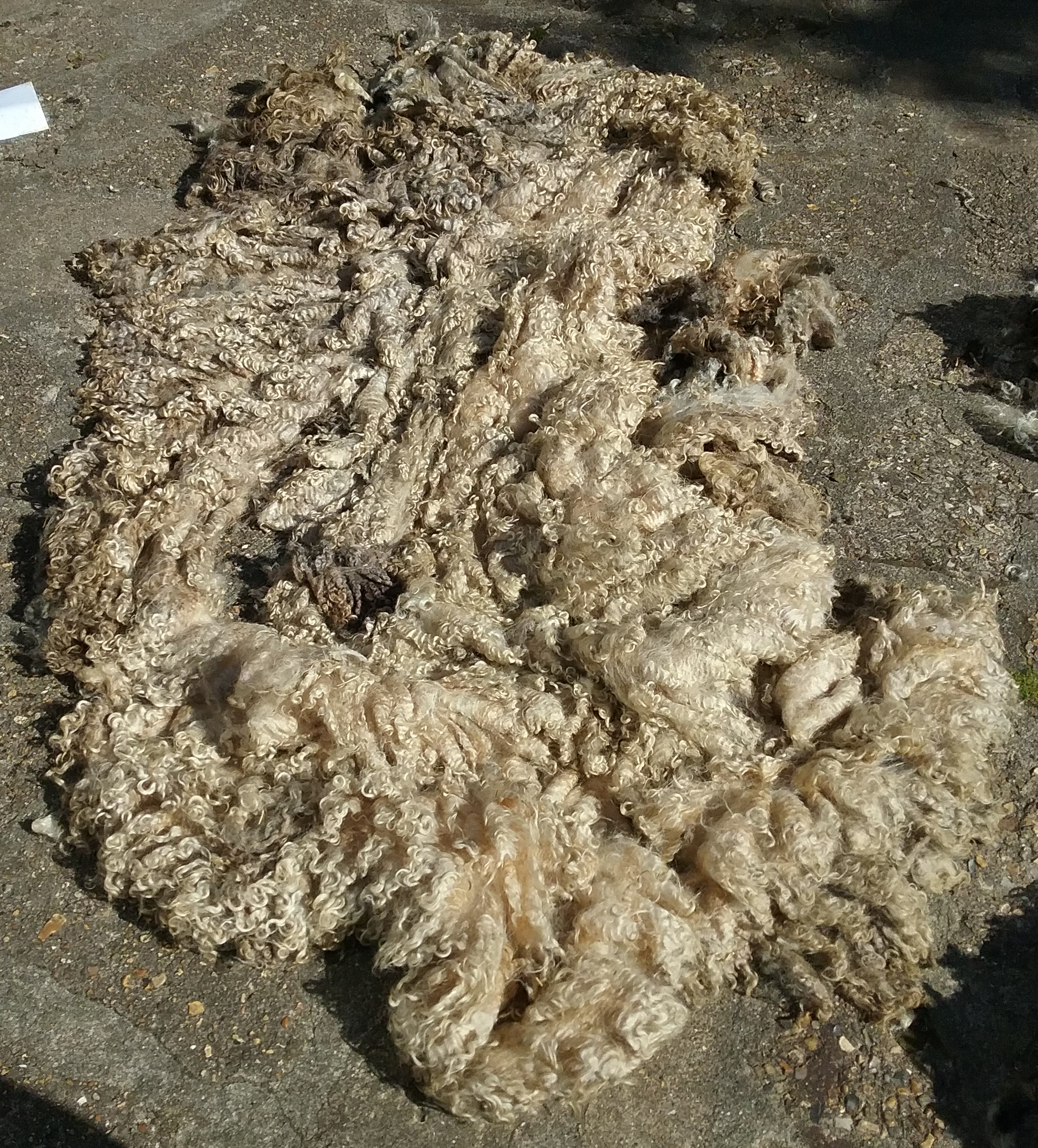
I was surprised by the weight of this fleece when it arrived (some Longwool fleeces can weigh up to 8kg) and by how much there was of it (it isn’t fully spread out in the photo). The fleece was, as my research suggested very greasy, but overall it was reasonably clean without much VM. As expected, there were some dirty sections around the rear, but these were very easy to separate and compost as the fleece is arranged in individual locks. The colours in the fleece were beautiful – areas of grey blended with the white. I had wondered if the grey areas were kemp hairs, however they are the same length as the rest of the fleece and don’t feel any coarser, so as far as I can tell, it is just the natural colouring of the sheep.
Washing
I’ve been doing lots of experiments with suint fermentation over the summer and have been optimising my process a little. One of the changes I made was to sew some sacks from old cotton sheets to put fleeces in before submerging them in the suint bath (this saves me from scooping around in the suint bath trying to fish out all the small pieces of fleece). I had read that historically, fleeces would often be put into sacks and left in streams or rivers to clean, so thought it might work in a suint bath too.
I put the whole Lincoln fleece into a sack and left it in the suint bath for just over a week. When I went to remove the fleece, I realised that in hindsight I should have split it in half to wash, as wool absorbs lots of water, so it was a two person job to lift it out of the suint bath, hold the sack while it drained and then put it into some rinse rainwater. After rinsing I put it out to dry so the suint smell would go, but as the locks were close together and it was a large fleece, it took several days to fully dry (thankfully there was still some sunshine).
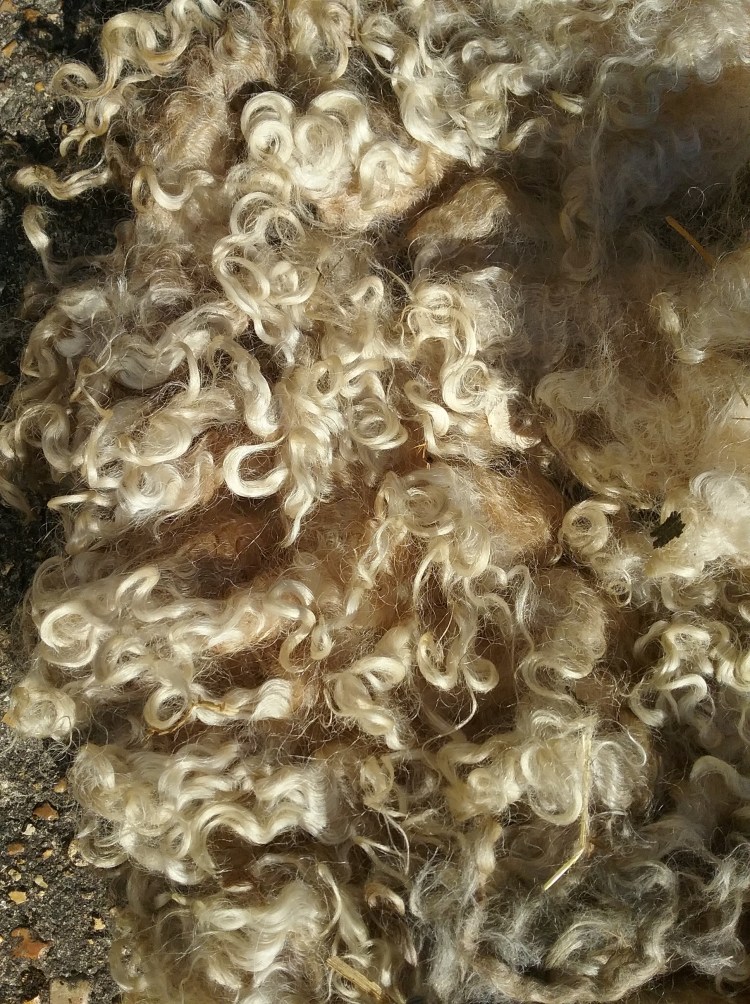
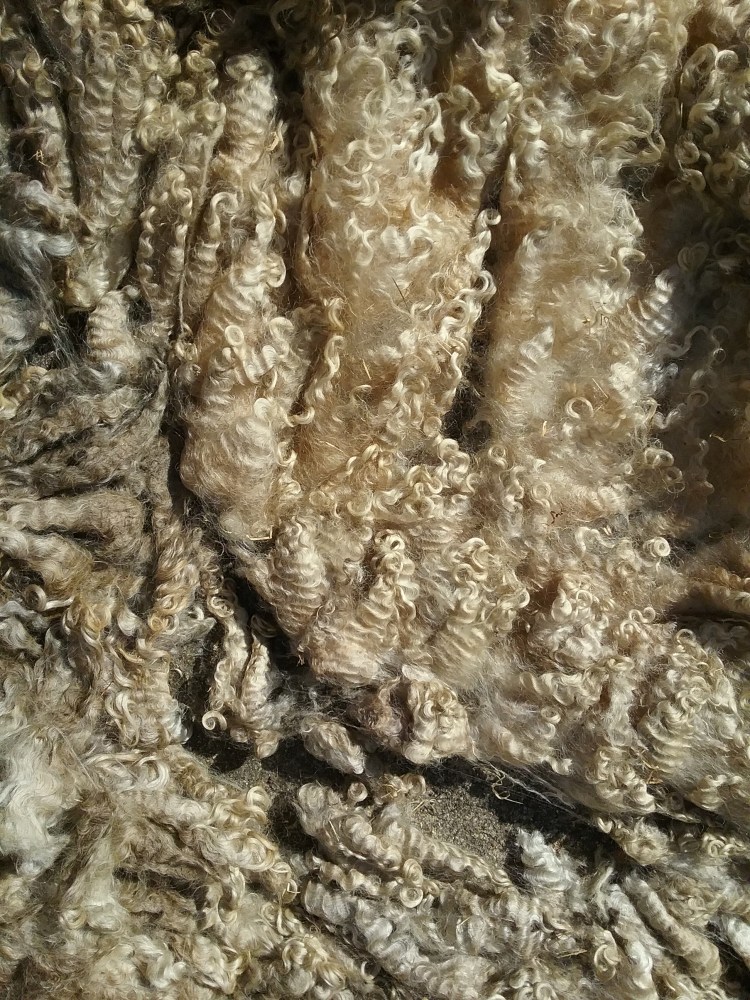
The suint bath brought out the white colour of the fleece and definitely made a difference to the amount of grease left, but it was still too greasy for me to store indoors until I have time to spin it up, so I decided to do another wash using washing powder. Heading into winter, good drying days are limited, so I’m working my way through, washing a bowlful of fleece at a time in good weather. So far it’s taken 2-3 washes with the washing powder and 1 rinse for the grease to come out of each bowlful of fleece. The advantage of using a suint bath first is that it does seem to ‘loosen’ up the lanolin so that it comes off even the greasiest fleeces with fewer washes and somehow it stops the washing powder from stiffening the end of the locks.
The final step in preparing a long stapled fleece would usually be combing. However, I plan to spin this fleece from the lock as it comes, so I don’t need to comb after I finish washing. My final ‘prep step’ will be gently teasing apart the locks with my hands and picking out any bits of VM I missed during skirting.
As always, let me know if you have any tips/advice in the comments below.
Happy Crafting!
Further Reading about Lincoln Longwool:
- Breed Society Website – http://www.lincolnlongwools.co.uk/
- Rare Breed Survival Trust- https://www.rbst.org.uk/lincoln-longwool
 Loose Ends