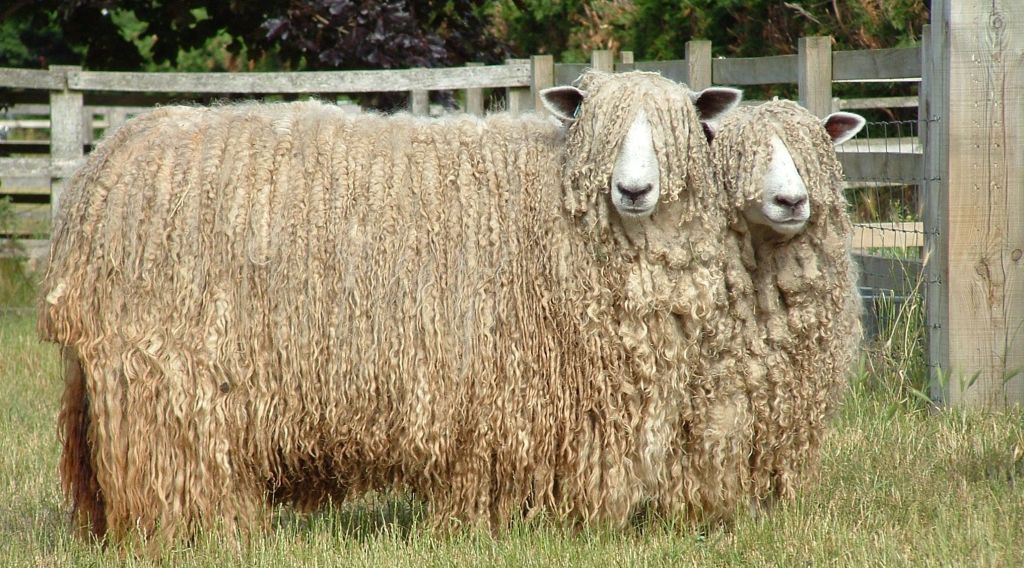
Photo Via lincolnlongwools.co.uk
History
Lincoln Longwool sheep are one of the older British sheep breeds and were established in the English city of Lincoln in the Middle Ages, where their long, lustrous fleeces formed an important part of the wool trade. Lincoln sheep were later developed to provide both wool and meat and were exported across the world during the Victorian era. After WW2 the changing textile industry and reduced exporting of the breed led to a large decline in numbers. Today the breed is categorised by the RBST as ‘vulnerable’ (only 500-900 sheep), with most flocks still located in the Lincolnshire area.
Fleece Research
In 2020 the Rare Breeds Survival Trust launched a campaign called ‘Love a Longwool‘ aiming to draw awareness to the rare longwool breeds, many of which still have declining numbers, so of course I had to try and work with a longwool fleece before the year ended. Lincoln Longwool fleeces are large and have staple lengths of around 20-30cm. The fleece is reportedly high in Lanolin, but difficult to felt, so will hopefully clean up well in a suint bath. The fibres are too long for carding, so combing or spinning from the lock is recommended. It is not the softest of fleeces, often used commercially in carpets, so is probably not best used in clothing. This fleece does however, seem to be the quintessential candidate for lock spinning to make some art yarn and preserve the natural crimp.
Further Reading
The following sources have been used for reference
- Breed Society Website – http://www.lincolnlongwools.co.uk/
- Rare Breed Survival Trust- https://www.rbst.org.uk/lincoln-longwool
- British Sheep & Wool by the British Wool Marketing Board – ISBN 9780904969108
- The Field Guide to Fleece by Deborah Robson & Carol Ekarius – ISBN 9781612121789
 Loose Ends