With the weather getting warmer I decided I needed to find a way of washing fleece that was kinder on the environment and didn’t require as much water and washing powders/detergents, as greasy fleeces can use a surprising amount. I read about suint fermentation a long time ago and thought it too good to be true, but decided to have a play around and see what happened to try and make my wool processing more eco friendly.
What is Suint Fermentation?
Suint is the name given to the sweat and mineral deposits that build up on a sheep’s fleece, this is different from lanolin which is the greasy part. Finer fleeces with shorter staple lengths tend to have more suint and lanolin. By soaking a raw fleece in rainwater, these components and the bacteria on the fleece form a natural ‘soap’ which cleans the fleece when left in the sun to warm up. This suint bath can be re-used again and again, getting stronger after each new fleece. If you’re like me and enjoy a sciencey explanation of the chemical reactions that occur, I recommend reading this post by Blue Barn Fiber.
What did I do?
I recently had two raw Jacob fleeces arrive in the post (yes, my postman thinks I’m slightly mad!) and since the largest of the two would require a lot of water I decided to try suint fermentation (I’ll talk more about the fleece in a Jacob fibre prep post).
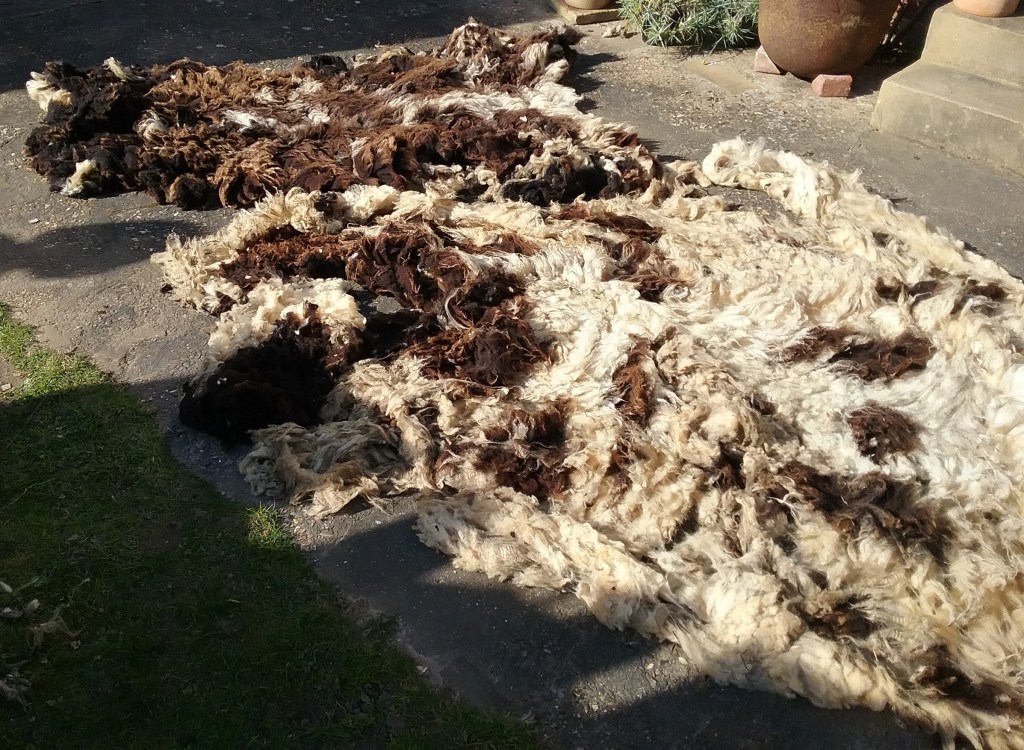
I filled a large plastic bucket with rainwater from a water butt and left it outside for a while to warm in the sun. Unfortunately when I came back it was just as cold as I left it, so I moved it into the greenhouse to get it to a more optimum temperature (I read that around 20 degrees celcius is good). I split the fleece in half and fully submerged the first half in the rainwater and left it (others using this method say it takes a week).
The water very quickly went grey/brown in colour and I checked it each day for any sign of bubbles on the surface and a potent farmyard smell that should mean it’s working, but didn’t notice either until after about 8 days. At this point I removed the fleece, draining the suint water back into the bucket before transferring the fleece to another bucket of fresh rainwater to rinse overnight.
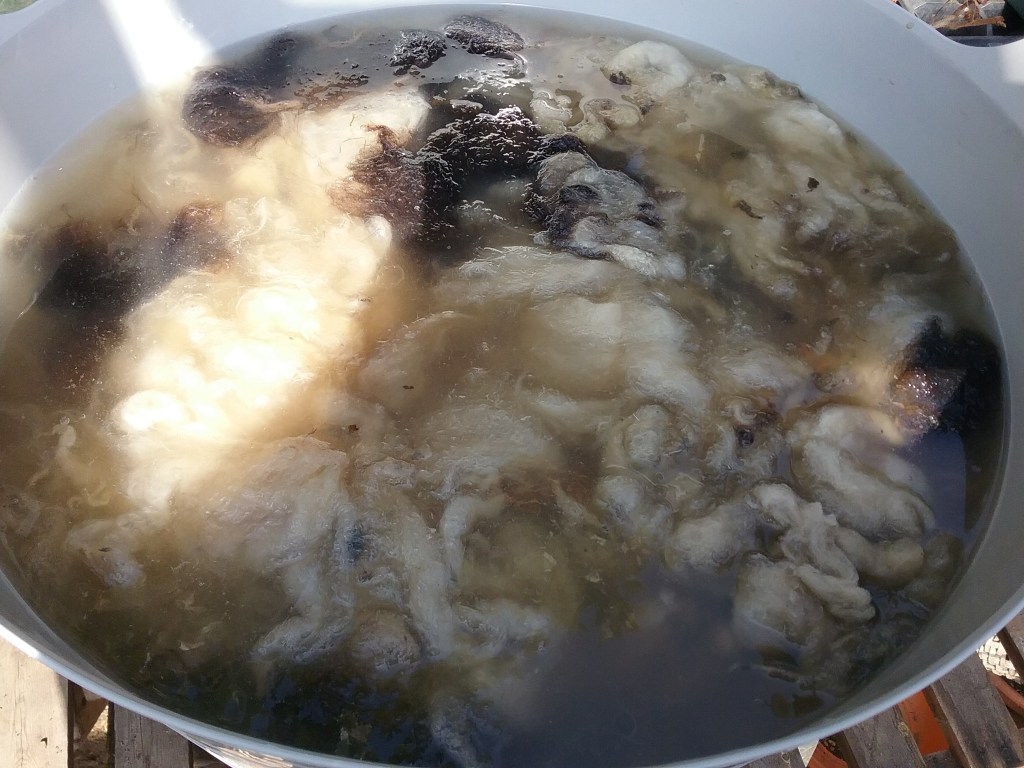
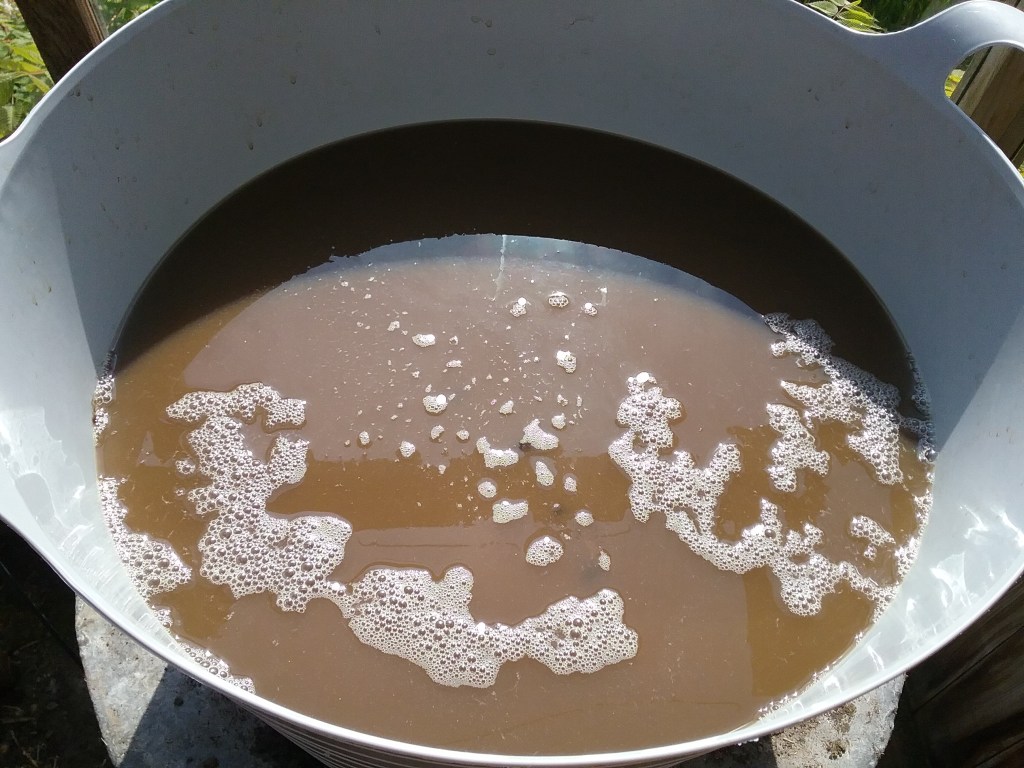
I then put the second half of the fleece in the suint water and topped it up slightly with more rainwater (most people recommend using a lidded container to reduce evaporation, as topping it up dilutes the suint bath, but I’m working with what I already have). The weather then got warmer so I saw bubbles on the second half in about 4-5 days and the smell was much more potent when I removed it for its rinse.
After rinsing, I put the fleece out on the washing line to dry. The smell of the suint bath is supposed to vanish when the fleece is completely dry as the bacteria in the process are anaerobic, so only function in water.
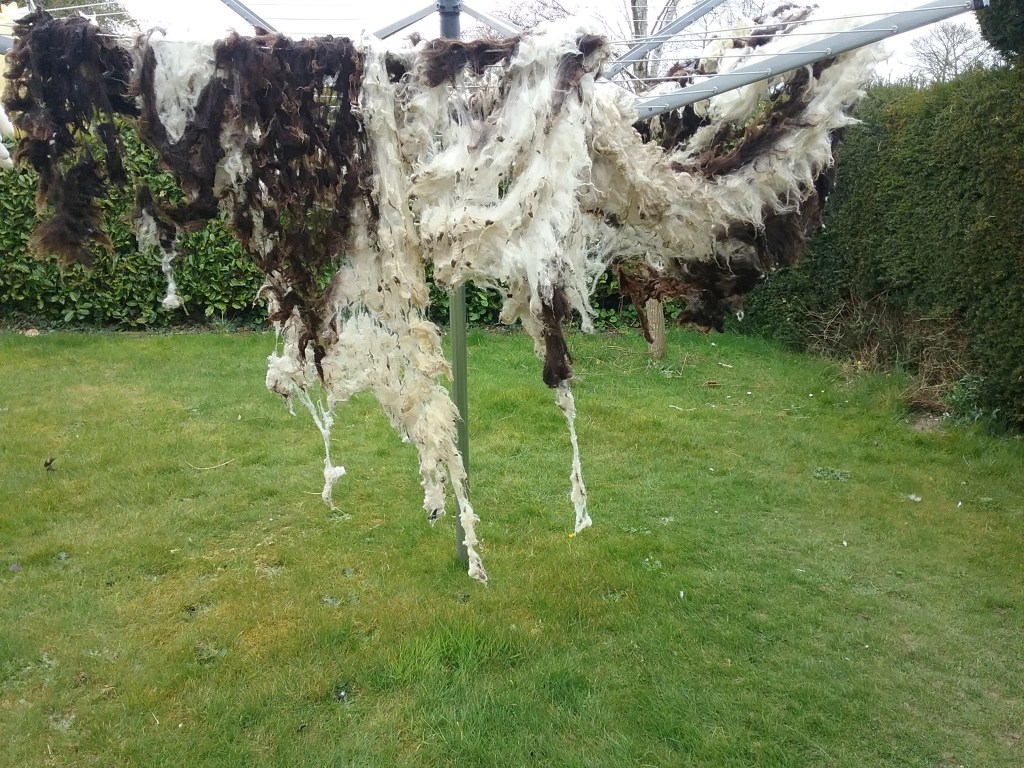
After it dried I was surprised to find the smell had mostly gone, the fleece wasn’t greasy and it was wonderfully soft after it’s suint bath. Normally when I use washing powder, although the fleece is still soft, it has a slight stiffness to it that I hadn’t noticed before (most likely because it’s been stripped of all it’s lanolin in a short space of time and tap water is generally hard). There was still some dirt at the very tips of the fleece, so I washed it once through with some delicate wool wash to make sure the smell had completely gone and any remaining dirt was washed off, but one wash with tap water compared to my usual 2-4 used much less water.
There was another benefit to the suint bath, as although it will never remove any VM from the fleece, the soak does open up the fibres so small plant matter and any neps tend to fall out. Oh, and the rinse rainwater is amazing for watering plants!
I’m going to summarise this long post with a little pros and cons table of suint fermentation and some links to some good posts by other bloggers that I used in my research if you’re interested in any further reading.
Pros
- It’s uses much less water and washing powder so is more environmentally friendly
- If you already have a container it won’t cost you anything
- It doesn’t require any hard work – you can leave it for at least a week, but if it’s left longer it won’t hurt
- It leaves it softer than washing powders etc. and hard water.
- Fleece is less likely to felt as it doesn’t require any agitation or dramatic temperature changes
Cons
- It smells – Set it up it outside or in a greenhouse
- For particularly greasy fleeces you may still need to wash them a few times with washing powders
- The process takes longer than washing in a bowl
- It’s weather dependent requiring both rain and a high temperature.
Update: A further blog post detailing improvements made to the suint fermentation process can be found here and I also have a YouTube video of the whole process including drying updates:
Links to other suint fermentation posts
- https://fibreworkshop.co.uk/tag/fermented-suint-method/
- https://mkburns.com/fsm/
- http://bluebarnfiber.blogspot.com/2017/07/suint-fermentation.html
Let me know in the comments if you have a go at suint fermentation and if you’ve tried it I’m always glad of any advice.
Happy Crafting!
 Loose Ends