Spinning Singles
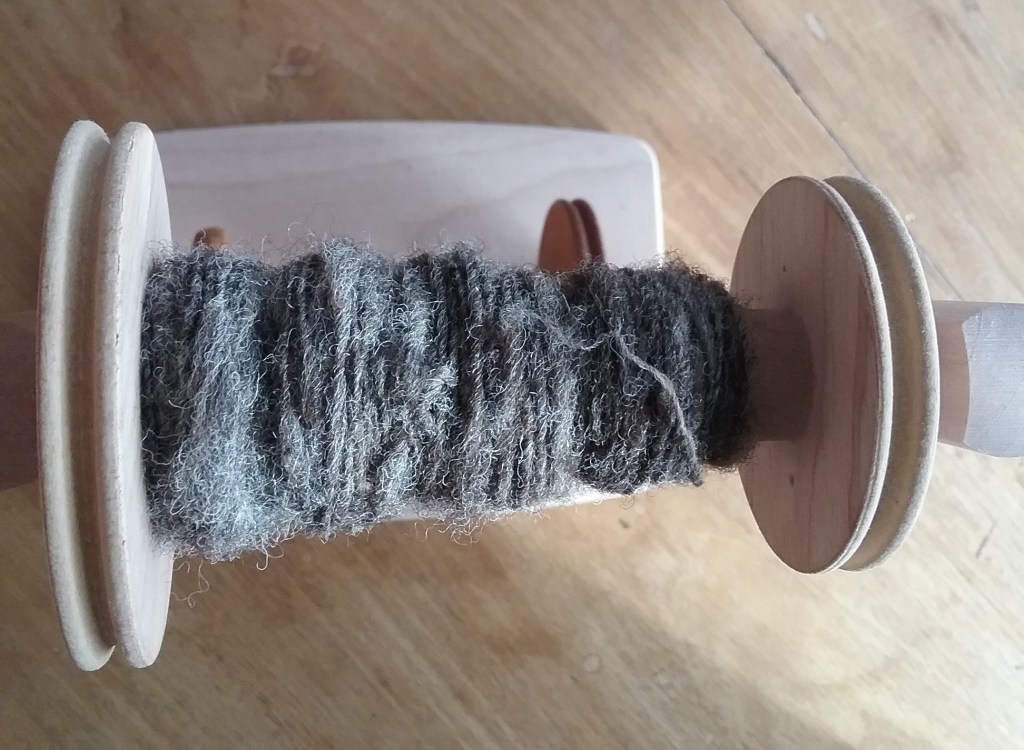
My initial approach to Ryeland was to draft short draw (worstead) until I had got a feel for the fibre and my tension was right, then I could experiment from there. Starting this way however proved challenging since Ryeland fibre is short and worstead spinning is primarily used with mid-longer staple fleeces, so once I had sorted my tension out, I quickly moved onto supported long draw which was much easier. My wheel has a Scotch tension and I found that I needed it to be quite tight to spin the Ryeland singles, with a reasonably strong uptake onto the bobbin (although not so strong that it snaps). I found drafting long draw easiest when the uptake on the bobbin felt like someone was holding the other end securely as I drafted back on the rolag.
With regards to any odd bits of VM and Kemp that were left in the fibre after carding, I found they did fall out during spinning as long as I kept my singles quite thin. Having said that, I believe all wool, like the sheep it comes from has a personality and a way it wants to be used, so although my singles were on the thinner side, I left in any soft neps and locks that had stayed together to add a bit of soft playful texture as I felt this fitted the look of the Ryeland sheep.
I am also hopeful that the other half of the fleece will contain less VM, as I lost track of which bit of the fleece was which after washing, so I think I have started with the rear and side areas which are more likely to have bits in.
Plying
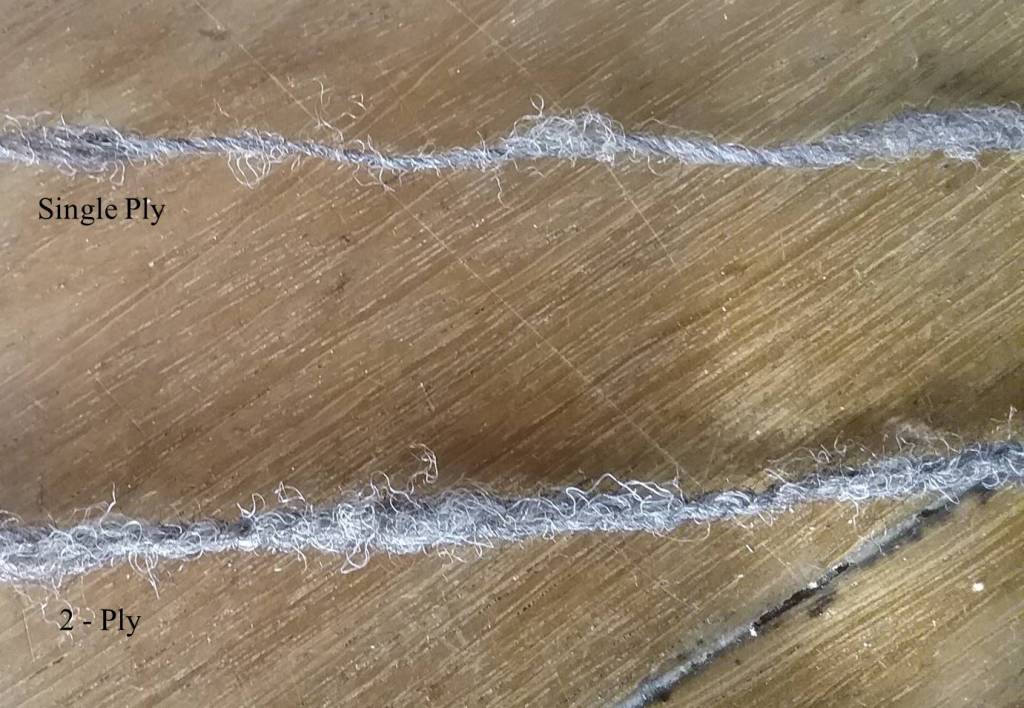
Surprisingly the Ryeland singles weren’t particularly energised, so kinks in the wool weren’t really a problem. I went for a 2-ply as I only have 3 bobbins at the moment, and anything else requires lots of centre pull ball wrapping! Plying was therefore straightforward and very quick. I’ll update this post when I’ve done an experiment with chain (navajo) plying at a later date to see what the result is. I also decided to measure the stretch in my plied yarn to help decide what my final project would be. When I measured it there was a difference of 4cm in length between ‘relaxed’ and stretched yarn.
Setting the Twist
Initially I was quite disappointed with how the Ryeland looked when I wound it onto the niddy noddy. It wasn’t fluffy or soft and it seemed a bit stiff (when I took it off the niddy noddy it retained the shape at the ends), so I wasn’t sure what had gone wrong as it seemed so different from my research. I washed it once with washing powder to remove any remaining lanolin and rinsed it before hanging it out to dry. Normally yarn would twist up a little during drying and you need to hang something to weight it down (I normally make do with a chain of pegs), but since the Ryeland didn’t twist, I left it alone.
When it dried, the wool fluffed up as I had expected it to originally, so it seems the singles just needed to be washed to fall into place, similar to when knitting is fulled. The resulting yarn is soft and very squishy, but has a surprising worstead style drape despite it’s woolen qualities, which I’m excited to make use of in the final project.
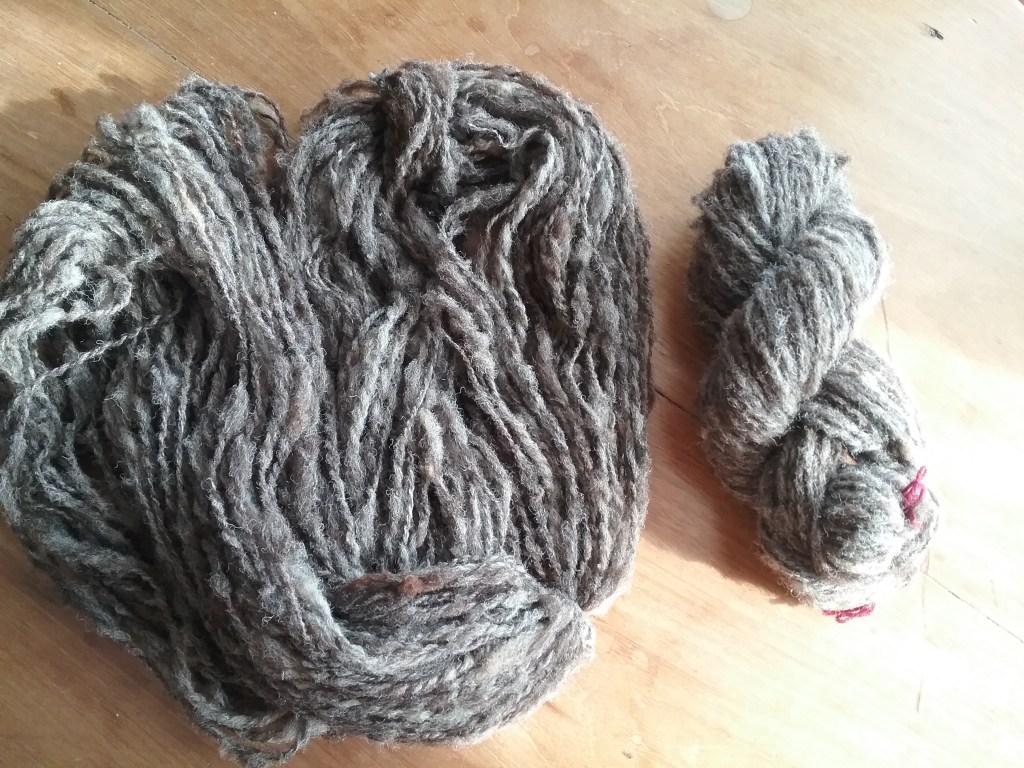
I found the Ryeland was reasonably easy to work with, but had I started my fibre journey with this fleece, I would have probably struggled spinning it since the fibres are quite short. The colours in it are gorgeous and I’ve loved being able to experiment with blending techniques on the carders. I will play around with some on the drop spindle at a later date and update this post with the results as I think it may be harder on the spindle. My project in mind for this fleece is some sort of knitted cowl, so I can attempt something simple as a first project on a circular needle.
Happy Crafting!
 Loose Ends