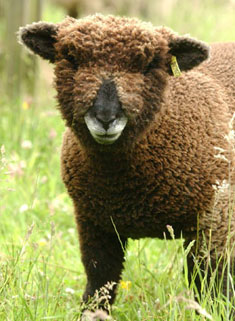
Photo Via http://www.ryelandfbs.com
History
Ryelands are some of Britain’s oldest sheep dating back to the Middle Ages. They are believed to have been developed by Monks in Leominster from the Spanish Merino, a breed with which their fleece once rivaled. Ryeland wool was of such high quality it became the standard for wool to be assessed against and in the 14th century was shipped to Europe for a high price. It’s popularity increased in Elizabethan times when it is rumored that Queen Elizabeth I was given a pair of Ryeland stockings and would henceforth wear no other wool. It is also believed that the Wool Sack in the House of Lords was originally stuffed with Ryeland fleece.
Although once a highly popular breed, by the 1970’s with the decline of the wool industry, it was listed by the RBST as being rare. Since then there has been an increase in popularity of the Ryeland as a hobby sheep, and today they are no longer on the RBST’s danger list.
Fleece Research
Keen to use my spun wool to make something for me to wear, the soft fleece of these teddy bear like sheep sounded like the perfect option. Ryelands can be either white or coloured, with the coloured fleece varying from light browns to greys and blacks. The fibre is a good length to card and with it’s crimp would lend itself to woolen spinning, perfect for making something warm and cosy. Finally, unlike other very fine fibres, my research stated it was reluctant to felt – going as far to say some fleeces could be lightly machine washed, so there was less chance of accidentally felting my fleece during the washing process.
Further Reading
The following sources have been used for reference
- Breed Society Website – http://www.ryelandfbs.com/
- British Sheep & Wool by the British Wool Marketing Board – ISBN 9780904969108
- The Field Guide to Fleece by Deborah Robson & Carol Ekarius – ISBN 9781612121789
 Loose Ends