Spinning Singles
After I had produced my rolags I began the process of spinning. When I started the Dorset Horn spin, I had not spent much time with my wheel and had only spun fibres that were commercially carded, so I wasn’t sure how my rolags would behave. With my limited experience on the wheel, I started off by spinning the rolags using a short draw, anticipating that this would give the finished yarn more of a worsted drape than a woolen spring. I found this fibre held together well, and as I gradually got a feel for it, I began to use a long draw which felt very natural with the Dorset horn, so I continued spinning in this way. Periodically I would come across a stray kemp hair, but since they were dark it was very easy to remove them (and many fell out when I used long draw).
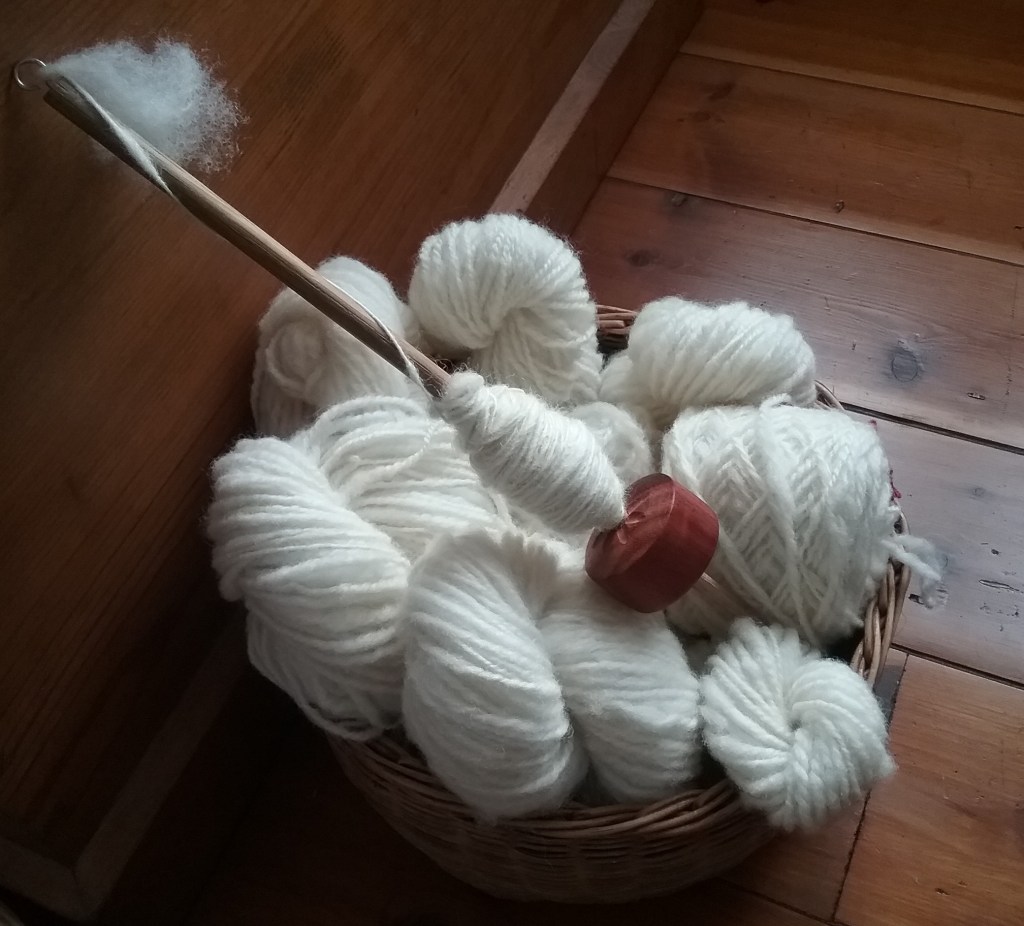
I saved a few rolags to try spinning with my drop spindle and was found it very easy to spin. My go to drop spindle method for new fibre is the ‘park and draft’, but I found that the Dorset Horn had a way of almost spinning itself and it was so easy to draught out that I actually began to spin continuously on the spindle without ‘parking’ it.
Plying
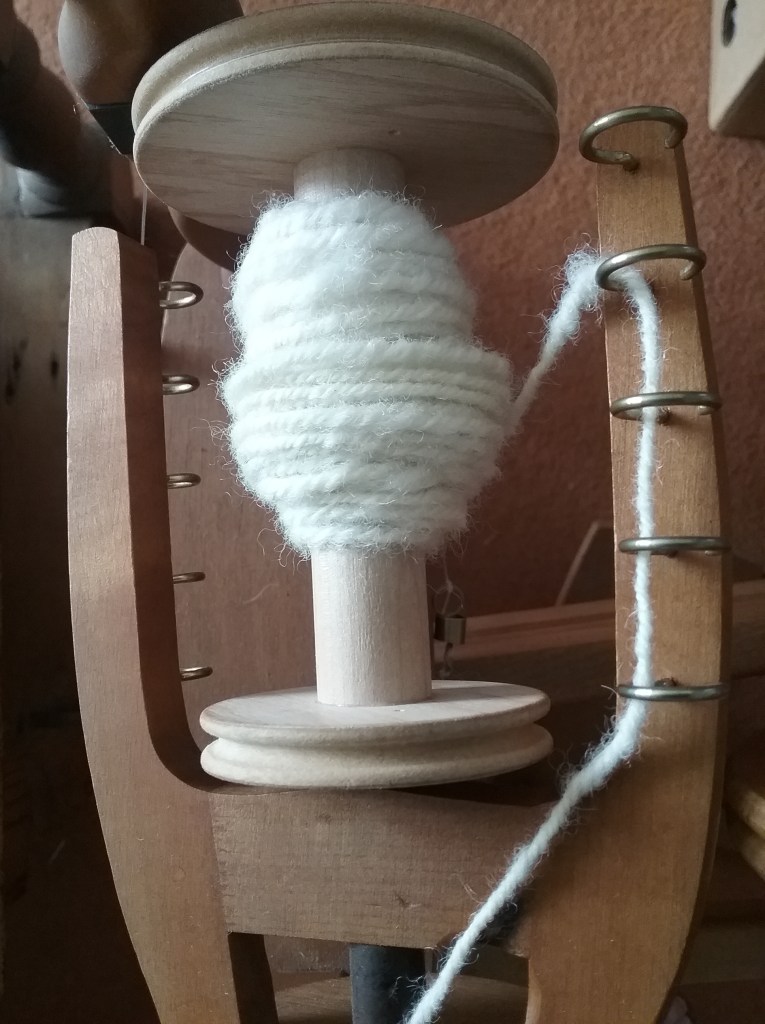
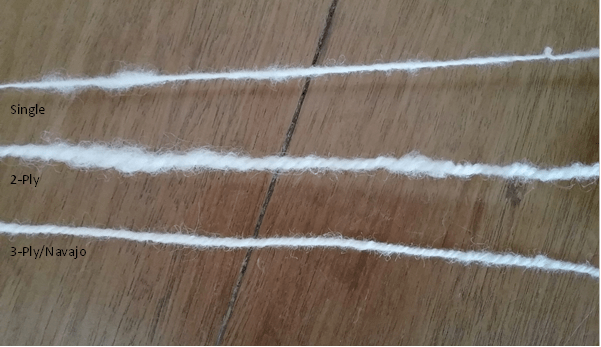
Creating a 2-ply on my wheel was quick and easy, although I had to make sure any kinks were out of the singles as I plied them, since the fibre was so elastic and quite energised (however this could be related to my tensioning of the wheel). Even before washing this created a bouncy woolen 2-ply.
I then experimented with creating a 3-ply by chain plying (or navajo plying) on the wheel using the single spun on my drop spindle. The resulting yarn was soft, but less airy than the 2-ply, which gave it more of a worstead drape with less spring.
Setting the Twist
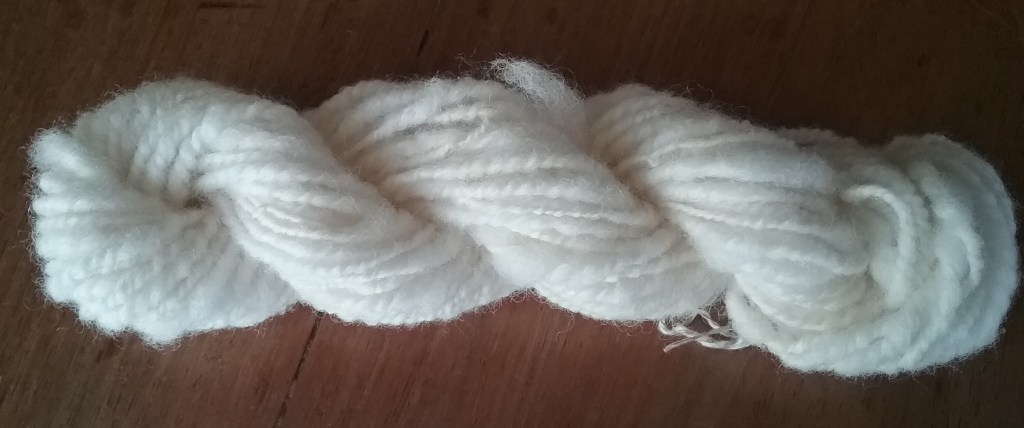
I had assumed that the earlier skeins I had spun short draw would not come out quite as woollen after washing, but to my surprise there was no difference in the finished product. All skeins were soft, squishy and have a surprising crispness about them that you can hear when you squish it. The wool has a subtle lustre and is very bouncy even after plying. On average my one fleece of dorset horn produced around 950m of 2ply (20 skeins) – however I have not yet measured the length of each skein, so this figure may vary considerably to my estimate.
I found this fleece very easy to work with and very adaptable, so would definitely reccommend Dorset Horn for a beginner (it’s definitely made my go to list!). It’s soft and woolen enough to be turned into clothing, however as it’s not prepped commercially, there are areas in the yarn where shorter fibres etc. could cause itchyness to those with sensitive skin. I’m unsure at the moment what to turn it into – though it’s tempting me to make it into a squishy jumper or a blanket!
Happy Crafting!
 Loose Ends